Substrate
technology

Trump Administration Sues Minnesota to Block Prediction Market Ban

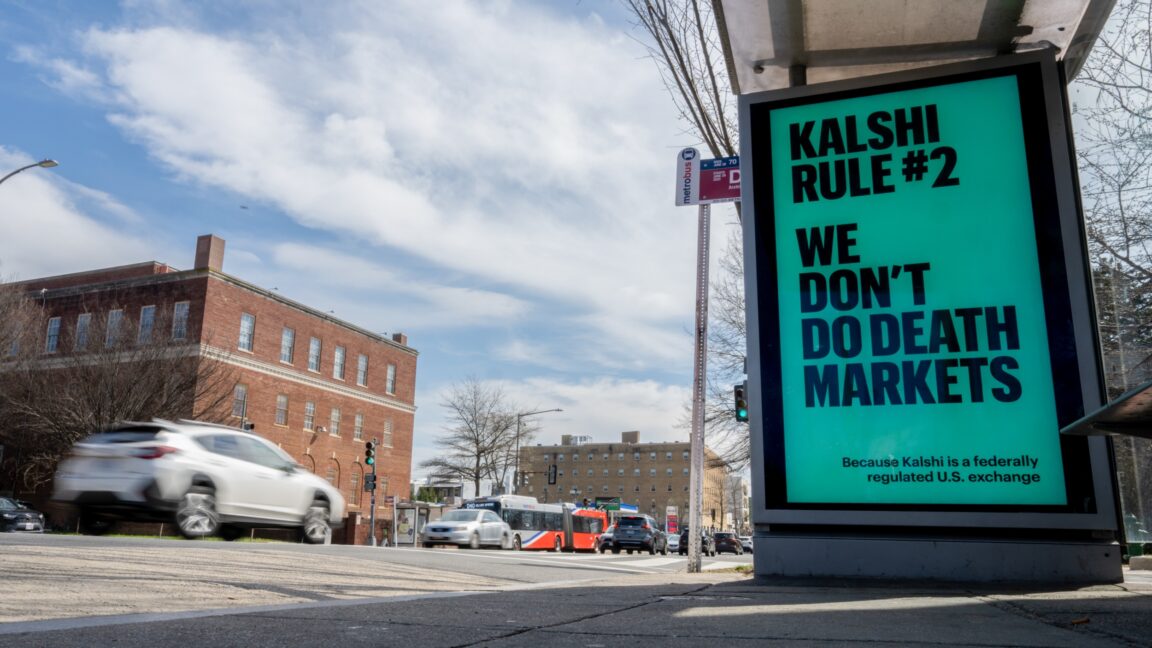
The U.S. Commodity Futures Trading Commission filed suit against Minnesota on Tuesday, seeking to halt enforcement of a new state law that bans prediction markets and imposes felony penalties. The law, signed by Gov. Tim Walz earlier this week, is scheduled to take effect August 1.

Ars Technica
Just the News
2 sources·May 20, 6:20 PM(8 days ago)·1m read
Trump Administration Sues Minnesota to Block Prediction Market BanArs Technica
Audio version
Tap play to generate a narrated version.

U.S. Commodity Futures Trading Commission sued Minnesota on Tuesday in an effort to stop the state from enforcing its new ban on prediction markets. S. District Court for the District of Minnesota, asks the court for preliminary and permanent injunctions. It argues that the state law conflicts with federal authority over CFTC-regulated markets.

Background on the Minnesota Law Gov. Tim Walz signed the legislation on Monday.

The measure makes it a felony to create, operate, or advertise a prediction market in the state. The law defines a prediction market as a system that allows consumers to place a wager on the future outcome of a specified event not determined by the performance of the parties to the contract.

Covered events include sports games, wars, mass shootings, acts of terrorism, elections, court cases, deaths, weather conditions, and pop culture events.

Chairman Michael Selig said the Minnesota law turns lawful operators and participants into felons overnight. " — Michael Selig, CFTC Chairman, May 20, 2026 (Ars Technica) Minnesota Attorney General Keith Ellison said he is concerned about the harms of prediction markets on Minnesotans.

" — Keith Ellison, Minnesota Attorney General, May 20, 2026 (Ars Technica) The CFTC said the new legislation represents the most aggressive move by a state to shut down CFTC-regulated markets and undermine the federal regulatory regime set up by Congress more than 50 years ago.

Key Facts

August 1, 2026
date the Minnesota ban is scheduled to take effect
Felony penalties
for creating, operating, or advertising prediction markets
CFTC lawsuit
seeks preliminary and permanent injunctions against enforcement

Story Timeline

2 events
  1. May 19, 2026

    Gov. Tim Walz signed the Minnesota prediction market ban into law.

    2 sourcesArs Technica · Just the News
  2. May 20, 2026

    CFTC filed suit in U.S. District Court for the District of Minnesota seeking to block the law.

    2 sourcesArs Technica · Just the News

Potential Impact

  1. 01

    Federal courts will decide whether state or federal authority governs prediction markets.

  2. 02

    Minnesota cannot enforce the prediction market ban while the lawsuit proceeds.

Transparency Panel

Sources cross-referenced2
Confidence score74%
Synthesized bySubstrate AI
Word count235 words
PublishedMay 20, 2026, 6:20 PM
Bias signals removed1 across 1 outlet
Signal Breakdown
Amplifying 1

Related Stories

World Urban Forum 2026 Draws 57,000 Participants from 176 CountriesEuronews
technology4 hrs agoDeveloping

World Urban Forum 2026 Draws 57,000 Participants from 176 Countries

The 13th World Urban Forum concluded with discussions on housing, climate resilience and urban governance. Organisers reported that the sessions informed future strategic priorities.

Euronews
1 source
Trump Mobile website still lists T1 phone as American-madetheverge.com
technology4 hrs agoDeveloping

Trump Mobile website still lists T1 phone as American-made

The product page for the T1 phone continues to describe the device as American-made. The Verge reported that the site may conflict with FTC advertising rules. The phone was announced in June 2025.

The Verge
1 source
EU Discusses Readiness for Artificial Intelligence ChangesFrance 24
ai4 hrs agoDeveloping

EU Discusses Readiness for Artificial Intelligence Changes

A France 24 program examined whether European Union policies can address the effects of artificial intelligence. The discussion covered potential impacts across daily life and economic sectors.

France 24
1 source