Substrate
politics

Trump Cites Ceasefire to Bypass Congress on Iran Operations; War Nears 60 Days

President Trump informed Congress that a ceasefire negates the need for war authorization despite the 60-day mark. A senior IRGC commander warned of likely renewed conflict, citing U.S. non-commitment. Economic fallout persists with high energy prices and disrupted global trade.

LI
DI
MA
GG
JA
BBC News
+6
12 sources·Apr 30, 8:18 PM(3 days ago)·6m read
|
Trump Cites Ceasefire to Bypass Congress on Iran Operations; War Nears 60 DaysSubstrate placeholder — needs review · Wikimedia Commons (CC BY-SA 3.0)
Audio version
Tap play to generate a narrated version.

President Trump sent letters to Congress explaining that due to the ceasefire he does not need its authorization for military operations in Iran despite the war hitting the 60-day mark this week, according to NBC. A senior IRGC commander said today that renewed war between Iran and the United States is likely because evidence has shown that the United States is not committed to any promises or agreements.

President Trump rejected Iran's latest peace proposal yesterday, as reported by The New York Times and CNBC.

U.S. might be better off not making a deal at all with Iran. President Trump called Iran's leadership disjointed and messed up yesterday. S.

Military bases using sophisticated and precise weapons. President Trump said late yesterday that we can’t let this thing go on and it’s going on too long.

Tehran declared that the Strait of Hormuz would reopen to commercial shipping, according to The Atlantic. President Trump posted on Truth Social on April 17 that IRAN HAS JUST ANNOUNCED THAT THE STRAIT OF IRAN IS FULLY OPEN AND READY FOR FULL PASSAGE. The Strait of Hormuz opening announced on April 17 did not last, according to The Atlantic.

An indefinite cease-fire kicked in last week following an initial two-week pause in hostilities, according to The Atlantic. The war has lasted eight weeks, according to The Atlantic. S. and Iranian forces have blockades in the Strait of Hormuz, according to The Atlantic.

A retired general, a retired CIA analyst, and an energy-industry executive said at a Vanderbilt University panel discussion this week that the effects of the war might end in anywhere from two to nine months. Iran has greater authority over the Strait of Hormuz than before the war began, according to experts in defense, diplomacy, business, and economics.

Richard Haass said that even if Iran does not have explicit control there is now always an implicit measure of control because they have shut it once and now they know they can do it again.

Roughly 20 percent of global oil and liquefied-natural-gas supplies used to pass through the Strait of Hormuz, according to The Atlantic. Traffic through the Strait of Hormuz has been reduced by about 90 percent from some 120 to 150 daily transits to a handful, according to the United Nations Conference on Trade and Development.

Brent crude reached its highest level in four years at $126 a barrel this week, according to The Atlantic.

18, according to The Atlantic. President Trump met with American energy executives at the White House on Tuesday to warn them that the blockade may persist for weeks or more, according to The Atlantic. The World Bank forecasts a 16 percent rise in food-commodity prices this year driven by increased transport costs and the supply squeeze on the fertilizer industry which relies on exports from the Gulf.

The International Energy Agency said that the world is on the brink of the biggest energy security threat in history. Two major pipelines cross Saudi Arabia to the Red Sea and both are already running at capacity, according to The Atlantic. The Red Sea is vulnerable to disruption by Houthi militias supported by Iran, according to The Atlantic.

The Habshan–Fujairah pipeline brings oil from a major field in the United Arab Emirates to the port of Fujairah which sits on the other side of the strait from Iran, according to The Atlantic. The UAE government could expand facilities at Fujairah, according to The Atlantic.

An Iraqi-Turkish pipeline can move oil to the Mediterranean but that would add miles and time to shipping routes, according to The Atlantic.

The UAE announced on Tuesday that it was leaving OPEC, according to The Atlantic. Daily oil output in Saudi Arabia is down by 600,000 barrels because of Iranian strikes, according to a Saudi state news agency. The Fujairah port has been targeted by Iranian forces in the past two months, according to The Atlantic.

Iran hit energy infrastructure in neighboring countries in the past two months, according to The Atlantic. Anna Kelly said in a statement that the blockade will continue until Iran makes an agreement that is acceptable to the United States and the Strait is international water and we are not going to let Iran toll the Strait.

Richard Haass said that a multinational consortium to administer the waterway perhaps charging a modest toll might be the least bad option but that also would not preclude Iran from someday moving to shut the strait again and one of the ironies of this war is that Iran discovered that it had this weapon and there was so much talk about nuclear ability but they have the strait.

Fred Kagan said that we need to demonstrate we’re actually not prepared to leave the strait that way and US adversaries need to hear that if they are going to try to close a critical waterway or a critical choke point they are going to pay a price one they find unacceptable.

Secretary of State Marco Rubio said in a Monday appearance on Fox News that the US would not tolerate Iran trying to normalize its control of the strait. At least 21 US ships are now in the region a level not seen since the 2003 invasion of Iraq, according to The Atlantic.

Acting Pentagon Comptroller Jules Hurst told Congress yesterday that the conflict so far had cost $25 billion. Representative Ro Khanna of California claimed during the same hearing yesterday that the war will cost the average American household $5,000 a year in increased gas and food prices. A Reuters/Ipsos poll released this week found that President Trump’s approval rating stood at 34 percent.

China has urged reopening of the Strait of Hormuz, according to The Atlantic. President Trump is concerned that the Strait of Hormuz issue could complicate his summit with Xi Jinping in Beijing in a little over two weeks, according to a senior White House official. No further negotiations are scheduled between the US and Iran, according to The Atlantic.

US forces struck more than 13,000 targets in Iran, according to Trump-administration officials. The Foundation for Defense of Democracies estimates that Iran has absorbed roughly $144 billion in economic damage about 40 percent of its prewar GDP since the war began.

Vice President Vance and some Pentagon officials have privately expressed concern about the rate at which the US military burned through weapons supplies in the first two months of the war.

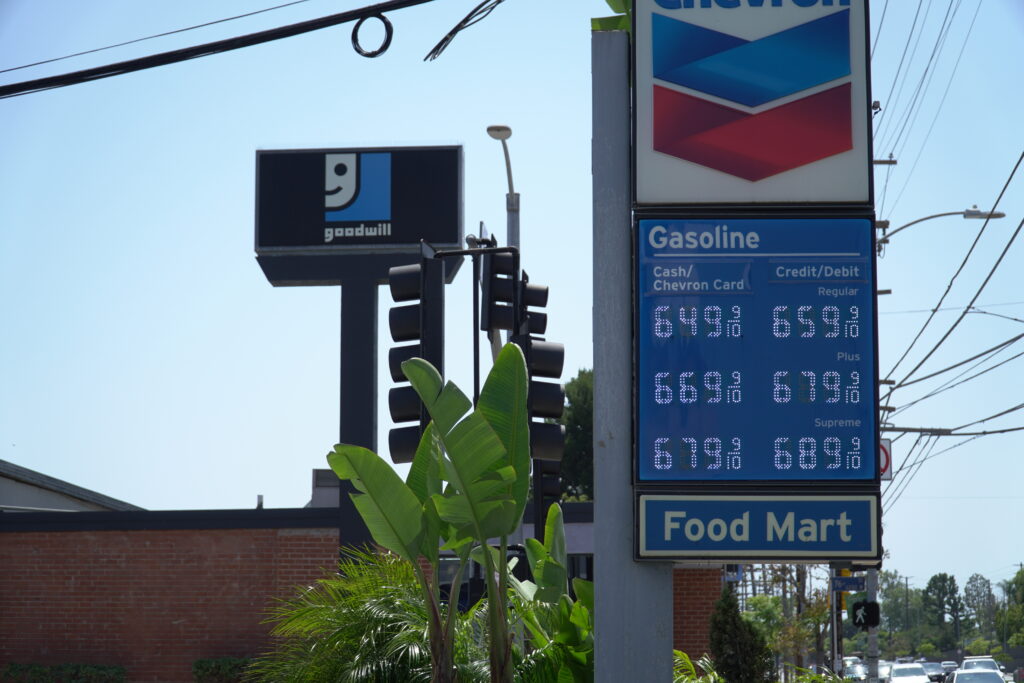
Iran suggested on Sunday to delay dealing with the future of its nuclear program while the two sides figure out how to handle the strait, according to Axios. President Trump asserted on Truth Social on Tuesday that Iran was in a State of Collapse and wanted to soon open the strait which Tehran also relies on to export its oil and gas. 49 cash price per gallon, according to Inside Climate News.

Veronica Cervantes, 54, from Los Angeles said she does not go out as much as she did, goes walking to nearby places, and does not shop to afford the skyrocketing price of gasoline over the last two months. Tehran’s retaliatory missile and drone attacks targeted Gulf Cooperation Council members, according to Responsible Statecraft.

The American-Israeli war on Iran began before February 28, according to Responsible Statecraft.

The Trump administration disregarded Gulf Arab officials’ warnings against attacking Iran, according to Responsible Statecraft. Daniel Levy noted that the Greater Israel project aims to position Israel as a necessary security partner by exploiting Gulf states’ growing fears of Iran.

Israel is the Middle East’s most powerful military force renowned for its advanced technology and intelligence, according to Responsible Statecraft.

Key Facts

War duration
The war has lasted eight weeks.
Economic damage to Iran
Iran has absorbed roughly $144 billion in economic damage, about 40 percent of its prewar GDP.
U.S. military cost
The conflict has cost $25 billion so far.
Oil price surge
Brent crude reached $126 a barrel, its highest in four years.
Strait traffic reduction
Traffic reduced by 90 percent to a handful of daily transits.

Story Timeline

6 events
  1. 2026-05-03

    Senior IRGC commander states renewed war likely due to U.S. non-commitment.

    1 source@MarioNawfal
  2. 2026-05-02

    President Trump rejects Iran's latest peace proposal and comments on potential no-deal scenario.

    1 source@MarioNawfal
  3. 2026-04-30

    UAE announces departure from OPEC.

    1 sourceThe Atlantic
  4. 2026-04-28

    Indefinite ceasefire begins following initial two-week pause.

    1 sourceThe Atlantic
  5. 2026-04-17

    Tehran declares Strait of Hormuz open, but closure resumes shortly after.

    1 sourceThe Atlantic
  6. 2026-02-28

    American-Israeli war on Iran begins.

    1 sourceResponsible Statecraft

Potential Impact

  1. 01

    Saudi oil output down by 600,000 barrels daily from Iranian strikes.

  2. 02

    Trump's approval rating at 34 percent amid war costs.

  3. 03

    Global food prices rise by 16 percent due to transport costs and fertilizer shortages.

  4. 04

    U.S. households face $5,000 annual increase in gas and food prices.

  5. 05

    Potential long-term shift in global trade routes away from Strait of Hormuz.

Transparency Panel

Sources cross-referenced12
Framing risk68/100 (moderate)
Confidence score98%
Synthesized bySubstrate AI
Word count1,271 words
PublishedApr 30, 2026, 8:18 PM
Bias signals removed2 across 2 outlets
Signal Breakdown
Loaded 2

Related Stories

House Republicans Pass Immigration Enforcement Bill With East Wing Security FundingSemafor
politics1 hr agoFraming75High framing risk75/100Rewrite inherits heavy consensus framing that centers the $1B East Wing funding controversy over the immigration enforcement substance, using loaded distraction language and selective GOP quotes.Click to jump to full framing analysis

House Republicans Pass Immigration Enforcement Bill With East Wing Security Funding

Republicans introduced a party-line immigration enforcement bill on May 6, 2026, that allocates $1 billion for security upgrades at President Donald Trump’s East Wing project. The project has an estimated cost of $400 million and includes a ballroom that Trump has said would be f…

The New York Times
Semafor
Forbes
NPR
CBS News
5 sources
politics1 hr agoDeveloping

White House Shares Iran Sanctions Graphic from Foundation for Defense of Democracies as Trump Appoints Former FDD Official to Negotiations Team

The White House rapid response account posted a Foundation for Defense of Democracies graphic last week that incorrectly attributed accelerated Iranian uranium enrichment to sanctions relief under former President Joe Biden. Rep. Russell Fry described Iran as a "petulant child" t…

The Hill
Al Jazeera
2 sources
Spirit Airlines Ceases Operations After Filing for BankruptcyQuintin Soloviev / Wikimedia (CC BY 4.0)
politics1 hr agoFraming65Framing risk65/100Rewrite inherits consensus framing that blames Trump admin for failing to rescue Spirit while downplaying Spirit's chronic mismanagement and crediting Biden-era DOJ action as a neutral fact.Click to jump to full framing analysis

Spirit Airlines Ceases Operations After Filing for Bankruptcy

The budget carrier announced an immediate orderly wind-down on Saturday after negotiations for a $500 million rescue deal failed. Jet fuel costs had doubled since the US-Israel war in Iran began at the end of February, delivering a final blow to the airline as it emerged from its…

BBC News
The Free Press
NPR
Los Angeles Times
4 sources