Substrate
politics

Trump Foreign Policy Shifts NATO Spending and Middle East Ties

Ten years after Donald Trump secured the Republican presidential nomination, several U.S. allies have raised defense spending and expanded diplomatic ties with Israel. The article examines changes in NATO, the Middle East, and trade patterns during that period.

Washington Examiner
1 source·May 20, 4:55 PM(8 days ago)·1m read
Trump Foreign Policy Shifts NATO Spending and Middle East TiesWashington Examiner
Audio version
Tap play to generate a narrated version.
Developing·Limited corroboration so far. This page will refresh as more sources emerge.

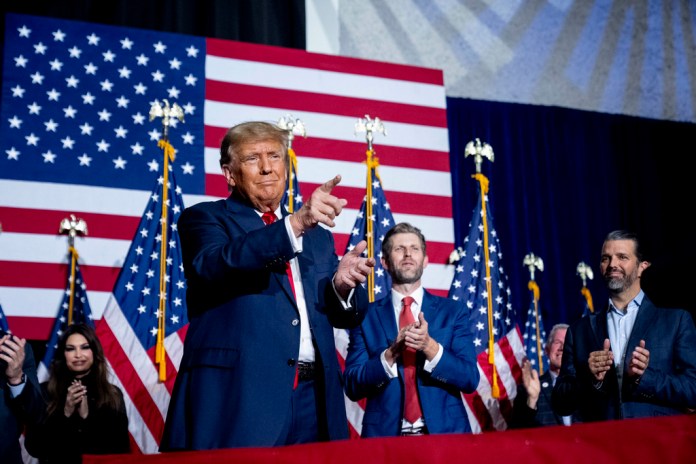
Ten years ago this month, Donald Trump secured the Republican nomination for president on a platform that differed from prior administrations on trade and foreign policy. In 2016 and afterward, Trump criticized European NATO members for insufficient defense contributions.

At the start of his first term, five allies met the 2% of GDP target. The goal has since risen to 5%, and most members are moving toward it. Finland and Sweden joined NATO after Russia threatened its neighbors. Their accession placed the Baltic Sea under alliance control.

Trump advanced the Abraham Accords, establishing diplomatic relations between Israel and several Arab states. Saudi Arabia and the United Arab Emirates have continued cooperation with Israel on efforts to limit Iranian influence.

-China patterns. Ukraine has produced approximately 60,000 drones per day, using them to strike targets inside Russia. The Trump administration has applied pressure on Ukraine to accept Russian control of certain provinces. It has also sought negotiations involving Pakistan to address remaining Iranian regime resistance.

The final assessment of these policies remains open with 32 months left in the current term.
Key Facts

NATO spending target
increased from 2% to 5% of GDP
Finland and Sweden
joined NATO after Russian threats
Abraham Accords
established diplomatic ties between Israel and Arab states
Ukrainian drone output
reaches approximately 60,000 per day

Story Timeline

4 events
  1. May 2016

    Donald Trump clinched the Republican nomination for president.

    1 sourceWashington Examiner
  2. 2016-2026

    NATO defense spending target rose from 2% to 5% of GDP.

    1 sourceWashington Examiner
  3. 2022

    Russia launched full-scale invasion of Ukraine.

    1 sourceWashington Examiner
  4. 2026

    Ukraine produces about 60,000 drones per day.

    1 sourceWashington Examiner

Potential Impact

  1. 01

    Most NATO members continue increasing defense budgets toward the new 5% target.

  2. 02

    Saudi Arabia and UAE maintain cooperation with Israel on Iran-related efforts.

  3. 03

    Trade patterns have shifted away from previous U.S.-China interdependence.

Transparency Panel

Sources cross-referenced1
Confidence score65%
Synthesized bySubstrate AI
Word count189 words
PublishedMay 20, 2026, 4:55 PM
Bias signals removed3 across 2 outlets
Signal Breakdown
Framing 1Editorializing 1Speculative 1

Related Stories

Russian Drone Strikes Romanian Apartment Building, Injuring TwoFrance 24
politics1 hr agoUpdated

Russian Drone Strikes Romanian Apartment Building, Injuring Two

A Russian drone crashed into a residential building in eastern Romania during an overnight attack on Ukraine. Two people were injured and Romania requested faster NATO anti-drone support.

AB
Cbs News
SK
The Hill
France 24
+8
14 sources
Trump Says U.S. Will Lift Iran Naval Blockade After Nuclear and Hormuz Pledgesrealitytea.com
politics1 hr agoDeveloping

Trump Says U.S. Will Lift Iran Naval Blockade After Nuclear and Hormuz Pledges

President Trump stated the U.S. will end its naval blockade of Iran once Tehran commits to forgoing nuclear weapons and opens the Strait of Hormuz to unrestricted shipping. The announcement came via Truth Social and a live statement.

FI
LI
MA
3 sources
Lebanese President Urges Ceasefire in Call With U.S. Secretary of Statednaindia.com
politics1 hr ago

Lebanese President Urges Ceasefire in Call With U.S. Secretary of State

Lebanese President Joseph Aoun spoke with U.S. Secretary of State Marco Rubio about the need for a ceasefire with Israel. Israeli and Lebanese military delegations met at the Pentagon on the same day.

SE
AJ
2 sources