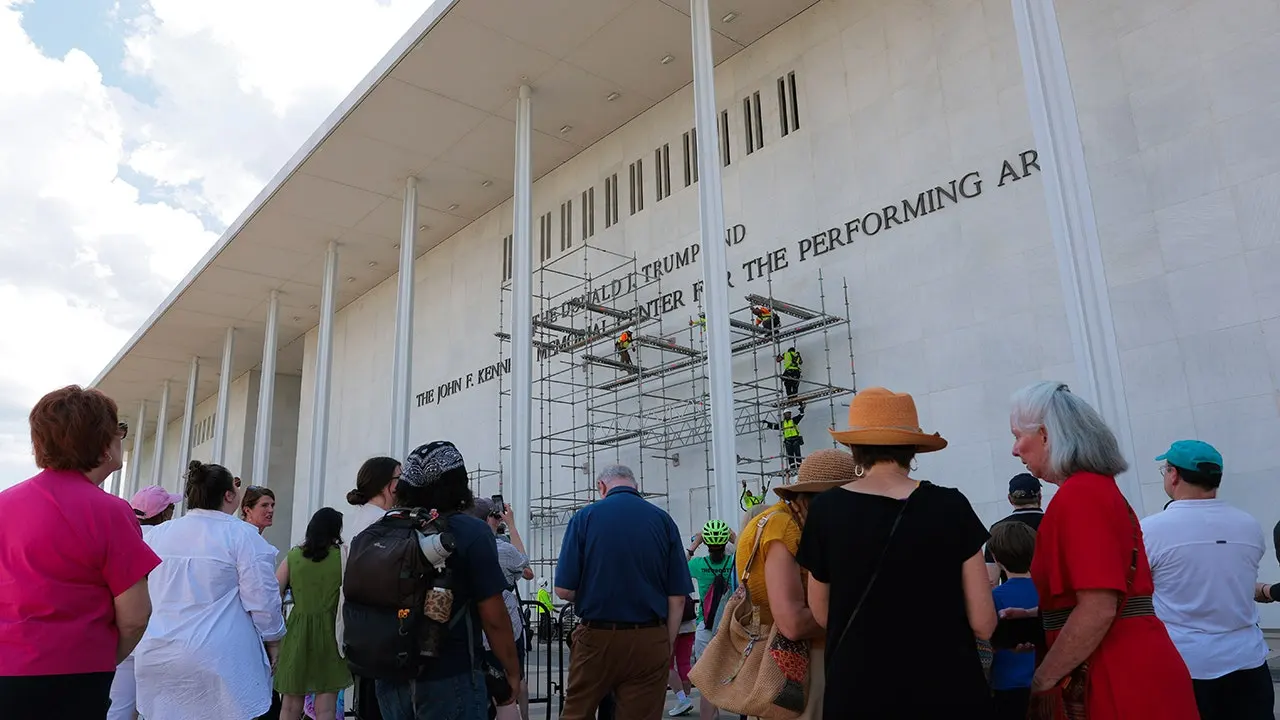
Trump Considers Iran's 14-Point Peace Proposal
President Trump said he is reviewing Iran's latest 14-point proposal to end the ongoing war but indicated it is unlikely to be acceptable, citing Iran's actions over the past 47 years. The proposal, delivered through Pakistan, calls for U.S. force withdrawals, sanctions relief, and guarantees against future attacks. Diplomatic efforts continue amid a fragile ceasefire and elevated oil prices.
The White House from Washington, DC / Wikimedia (Public domain)Iran has submitted a 14-point proposal to the United States via Pakistan, aiming for a permanent end to the ongoing conflict within 30 days, according to details reported in Al Jazeera. The proposal includes provisions for opening the Strait of Hormuz, ceasing hostilities, lifting U.S. sanctions, releasing frozen Iranian assets, providing security guarantees against future attacks, withdrawing U.S. forces from areas around Iran, paying war reparations, and establishing a new mechanism for the strait.
It responds to a prior U.S. nine-point plan and follows Iran's earlier 10-point submission on April 7, as well as a U.S. 15-point plan from March 25 that called for dismantling Iranian nuclear facilities in Natanz, Isfahan, and Fordow, handing over enriched uranium to the IAEA, and committing to never develop nuclear weapons, in exchange for sanctions relief and strait reopening.
President Trump, speaking to reporters in Florida on Saturday, said he is reviewing the proposal but expressed skepticism, stating, "I can't imagine it would be acceptable," according to the New York Post. He added, "If they do something bad, there is a possibility it could happen," referring to potential resumption of military strikes, as quoted by Al Jazeera.
In a post on Truth Social, Trump wrote, "THEY HAVE NOT YET PAID A BIG ENOUGH PRICE FOR WHAT THEY HAVE DONE," per a tweet from @DeItaone. Iran's Deputy Foreign Minister Kazem Gharibabadi, after delivering the proposal, said the decision now rests with the United States to choose diplomacy or confrontation, as reported by Al Jazeera.
A senior Iranian official, speaking anonymously to Al Jazeera, described the plan as deferring nuclear talks to a later stage to enable progress on opening the strait and ending the U.S. blockade.
The proposal comes amid a ceasefire that began on April 8, following the war's start on February 28 with U.S. and Israeli strikes on Iran. Tensions persist, with the Islamic Revolutionary Guard Corps stating on Saturday that it remains on full standby due to perceived U.S. lack of commitment to treaties, according to its intelligence unit's post on X.
The U.S. imposed a naval blockade on Iranian ports on April 13, which the Pentagon estimates has cost Iran $4.8 billion, as stated in The Hill. com. Iran's rial hit an all-time low of 1.9 million to the dollar, according to a tweet from @MarioNawfal.
Expert views vary. Paul Musgrave, associate professor of government at Georgetown University in Qatar, told Al Jazeera that Iran has slightly softened its position by potentially dropping a precondition on the U.S. blockade, though gaps remain on uranium enrichment.
Kenneth Katzman, senior fellow at the Soufan Center, noted mistrust of Trump as a barrier, with Iran reluctant to address nuclear issues until the blockade ends. Trita Parsi of the Quincy Institute for Responsible Statecraft said to Al Jazeera, "The blockade has nothing to do with the Iranians being at the table.
" Fatih Birol of the International Energy Agency described the situation as "the greatest energy security threat in history," in comments to the Atlantic Council.
Broader context includes Trump's order to withdraw 5,000 U.S. troops from Germany, announced by the Pentagon and linked by sources like The Federalist to German Chancellor Merz's inaction in the Iran war. Trump has also tightened sanctions on Cuba, which Cuba's government called "collective punishment," according to The Guardian.
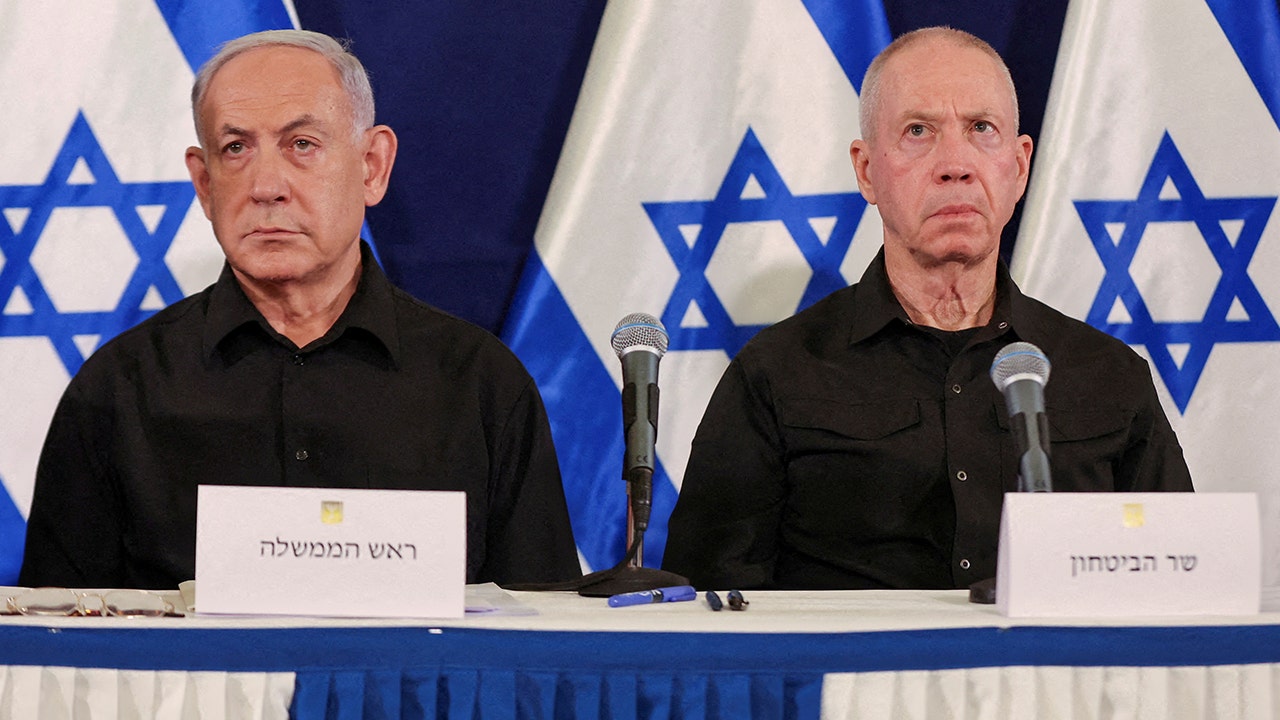
Israel's security cabinet is scheduled to meet amid ongoing exchanges with Lebanese Hezbollah, as reported by @sentdefender. No publicly released evidence has documented claims of Iranian sea mines complicating the Strait of Hormuz reopening, though technical issues are mentioned in sources like The War Zone.
Mediators in Pakistan are attempting to restart talks after a collapsed round in Islamabad in April, per Al Jazeera. Iran's foreign ministry has not commented on Trump's characterization of the blockade as "a very profitable business," but labeled it a "damning admission of piracy" in response.
The conflict has caused thousands of deaths and disrupted global energy supplies, with 20 percent of world oil and gas transiting the strait, according to Grist. Trump told Congress the ceasefire means no authorization is needed for further action, as reported by BBC News.
An upcoming meeting between Israeli Prime Minister Benjamin Netanyahu and Trump is expected to address the issue, per the New York Post.
Key Facts
Story Timeline
6 events- Saturday
President Trump stated he is reviewing Iran's 14-point proposal but doubts its acceptability and warned of possible strikes.
8 sourcesAl Jazeera · The Independent · nypost.com - Thursday
Iran sent its 14-point peace proposal to the US via Pakistan.
2 sourcesAl Jazeera · The Independent - April 13
The US imposed a blockade on Iranian ports to pressure reopening of the Strait of Hormuz.
1 sourceAl Jazeera - April 8
A ceasefire took effect, pausing direct hostilities between the US, Israel, and Iran.
3 sourcesAl Jazeera · The Independent - April 7
Iran proposed a 10-point peace plan in response to the US plan.
1 sourceAl Jazeera - February 28
The war began with US and Israeli attacks on Iran, leading to Iran's blockade of the Strait of Hormuz.
2 sourcesAl Jazeera · The Independent
Potential Impact
- 01
Oil prices will remain elevated if the Strait of Hormuz stays closed.
- 02
Global energy supplies will face further disruption without strait reopening.
- 03
US military strikes on Iran could resume if talks fail.
- 04
Negotiations through Pakistan will continue despite current impasse.
- 05
Israel will discuss resuming strikes on Lebanese Hezbollah with Trump.
- 06
Sanctions relief for Iran becomes less likely without nuclear concessions.
Transparency Panel
Related Stories
France 24Russian Strikes Kill at Least 28 in Ukraine Ahead of Announced Ceasefire
Ukraine announced a unilateral 24-hour ceasefire due to begin at midnight on Wednesday after Russia requested a pause for its Saturday military parade. Russian forces struck multiple cities overnight with 108 drones and three missiles, killing at least 28 civilians on Tuesday in…
Supreme Court Temporarily Restores Mifepristone Access in Louisiana Case
The Supreme Court issued an emergency stay restoring nationwide mail and pharmacy access to the abortion pill mifepristone, following a Fifth Circuit ruling that restricted it. The case, brought by Louisiana, centers on standing issues and could force the Trump administration to…
SemaforCommerce Secretary Howard Lutnick to Testify on Epstein Ties Before House Committee
Commerce Secretary Howard Lutnick will appear Wednesday before the House Oversight Committee for a closed-door transcribed interview about his past relationship with Jeffrey Epstein. The voluntary session follows the release of Department of Justice documents showing contact afte…