Trump and Xi Hold Talks in Beijing With No Trade Deal Reached
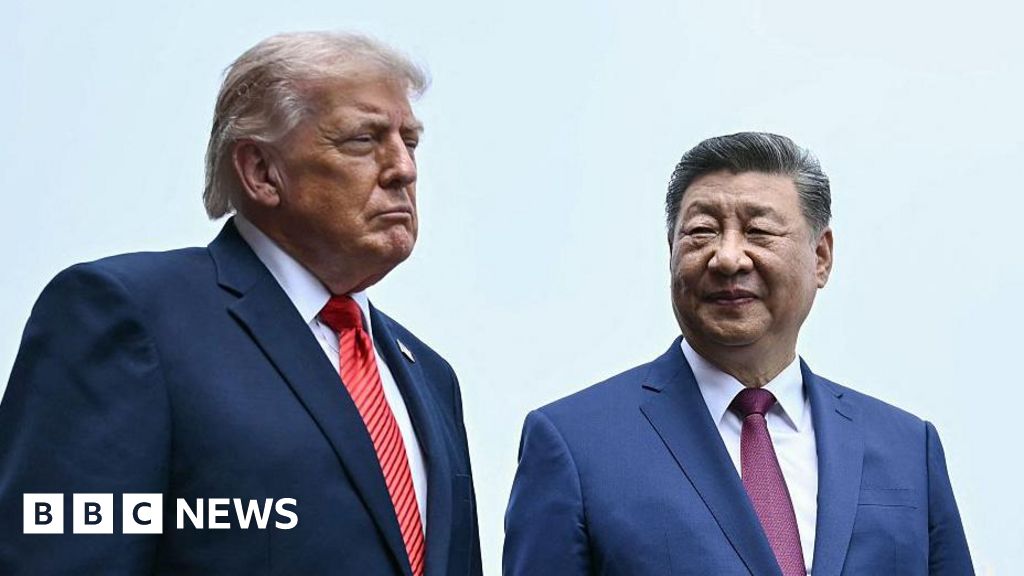
U.S. President Donald Trump met Chinese President Xi Jinping in Beijing on Thursday for more than two hours of talks. The White House described the meeting as highly productive, but no major trade agreement was announced. Both sides agreed to continue an existing trade truce and establish a Board of Trade mechanism.
 The Bbc
U.S. President Donald Trump met Chinese President Xi Jinping in Beijing on Thursday for more than two hours. The meeting took place at the Great Hall of the People and included choreographed ceremonies and staged events. Trump described the U.S.-China relationship as the world's most consequential economic relationship.
The White House said the talks were highly productive. Trump called the summit potentially the biggest ever. President Xi noted progress from earlier trade negotiations held in South Korea, according to China's foreign ministry. No major trade agreement or business deals were announced.
Both sides instead reaffirmed the October trade truce under which Washington suspended steep tariff increases on Chinese goods and Beijing eased restrictions on rare earth exports. Officials said the leaders agreed to create a Board of Trade to manage the relationship.
Musk stepped off Air Force One ahead of senior cabinet officials. Musk and Nvidia chief Jensen Huang remained close to Trump during the welcome ceremony. Their presence highlighted pressure points in the U.S.-China economic relationship involving electric vehicles, artificial intelligence and semiconductor microchips.
Tesla operates a major factory in Shanghai and sells extensively to Chinese consumers. Nvidia's chips are central to the global AI race and subject to U.S. export controls limiting China's access to advanced computing. Huang was not on the original delegation list.
The White House said the talks covered expanding Chinese market access for U.S. companies and increasing Chinese investment into U.S. industries. Beijing signaled it would increase purchases of U.S. agricultural and energy products. No firm details on new commitments were released.
U.S. Treasury Secretary Scott Bessent said he expected large Boeing orders to be announced during the visit along with broader Chinese purchases of U.S. energy and agricultural goods. Bessent downplayed expectations of major new agricultural breakthroughs, noting some soybean commitments had been addressed in previous agreements.
He said there was scope for China to increase purchases of U.S. liquefied natural gas. President Xi told U.S. business leaders that China's doors will open wider and that American firms would have broader prospects in the Chinese market, according to the Xinhua news site.
He called for expanded cooperation in trade, agriculture, healthcare, tourism and law enforcement.
Chinese messaging from the meeting linked Taiwan more directly to the economic relationship. Xi described Taiwan as the most important issue in China-U.S. relations. He warned that if mishandled the two nations could collide or even come into conflict.
Over the past year of trade talks Taiwan had been treated as one of several friction points. Those points included U.S. collaboration with semiconductor companies, U.S.-Taiwan trade ties and arms sales to Taipei. Beijing's readout said the sides agreed to a new positioning for relations based on constructive strategic stability.
Technology remains a key area of disagreement. U.S. export controls on advanced semiconductors and chipmaking equipment remain in place. Beijing continues to seek greater access to advanced technologies. Trump also sought Chinese cooperation on the Iran conflict and oil market stability.
Oil price volatility has increased China's import costs. Chinese readouts indicated the Middle East was discussed but provided few details.
Key Facts
Potential Impact
- 01
U.S. semiconductor export controls stay in place limiting China's access to advanced chips.
- 02
Taiwan remains directly linked to broader U.S.-China economic negotiations.
- 03
Continued trade truce maintains suspended tariff increases on Chinese goods.
- 04
U.S. agricultural and energy sectors may see increased Chinese purchases over time.
Transparency Panel
Related Stories
 investors.com
Tesla Cuts Model Y Starting Price in India by 12 Percent
Tesla introduced a new Premium rear-wheel-drive Model Y in India and removed the Long Range rear-wheel-drive version. The change lowers the entry price by about 12 percent from the original 2025 launch price.
 thesouthafrican.com
South African Researchers Develop Quantum and AI Tools for Cybersecurity
Scientists and startup companies in South Africa are applying quantum communication and AI-powered tools to address rising global cyber threats. The work focuses on strengthening data protection methods.
 Euronews
World Urban Forum 2026 Draws 57,000 Participants from 176 Countries
The 13th World Urban Forum concluded with discussions on housing, climate resilience and urban governance. Organisers reported that the sessions informed future strategic priorities.