U.S. Bars Travelers From Three African Countries Over Ebola
The CDC announced entry limits for foreign nationals who recently visited the Democratic Republic of the Congo, Uganda, or South Sudan. U.S. citizens and lawful permanent residents returning from those countries face screening at designated airports.
 theepochtimes.com
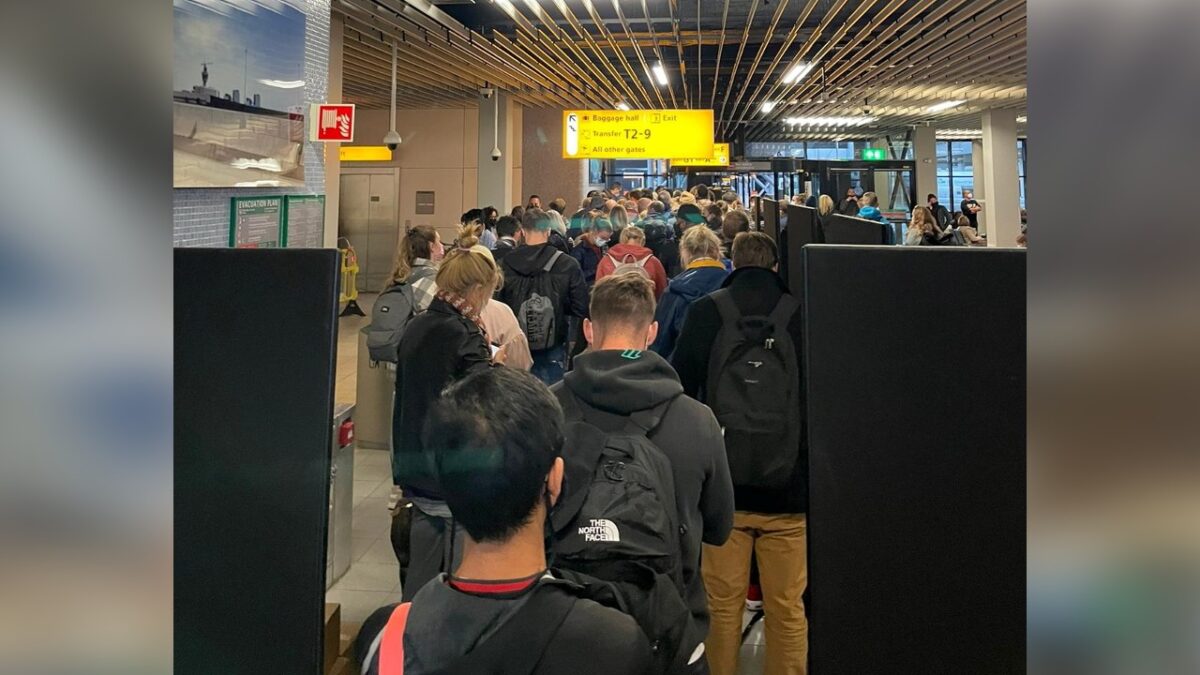
The Centers for Disease Control and Prevention announced this week that foreign travelers who have recently been in the Democratic Republic of the Congo, Uganda, or South Sudan will be barred from entering the United States. Lawful permanent residents who have visited any of the three countries in the last 21 days are also temporarily barred. S.
citizens and nationals returning from the affected countries within the same 21-day window will be directed to Dulles Airport in Virginia for screening and interviews. Enhanced screening began at Hartsfield-Jackson Atlanta airport on Saturday and is scheduled to start at George Bush Intercontinental Airport in Houston on Tuesday.
Public health specialists told ABC News that monitoring travel exposures is an important part of containing and tracing the spread of a disease. They noted that infected individuals may be asymptomatic at the time of entry, limiting the effectiveness of entry restrictions. S.
initially but must be paired with strategies to stop spread at the source. He added that broad restrictions can create a false sense of safety because incubation periods vary and people may not know their own exposures.
Concerns About Broader Effects Dr.
Krutika Kuppalli, a Dallas-based infectious disease physician, said a broad travel ban does not align with current epidemiological understanding. She stated that policies should be based on exposure risk rather than nationality. Amesh Adalja, senior scholar at Johns Hopkins Center for Health Security, said border closures can make it harder to move supplies and personnel into affected areas.
Kuppalli added that restrictions may deter healthcare workers from deploying if they are uncertain about returning home after potential exposure. A Department of Health and Human Services spokesperson told ABC News that the measures are targeted, evidence-based steps rooted in long-standing protocol to protect the American people and support the international response.
Key Facts
Story Timeline
3 events- May 23, 2026
CDC announced entry restrictions for travelers from DRC, Uganda, and South Sudan.
1 source@ABC - May 24, 2026
Enhanced screening began at Atlanta airport; Houston screening set for Tuesday.
1 source@ABC - May 24, 2026
WHO stated broad travel restrictions have no basis in science.
1 source@ABC
Potential Impact
- 01
Screening resources will concentrate at three U.S. airports.
- 02
Healthcare workers may face delays returning from affected regions.
- 03
Medical supplies and laboratory materials could encounter slower delivery.
Transparency Panel
Related Stories
 straitstimes.com
Journalists in Gaza to Receive 2026 Golden Pen of Freedom Award
Three international news agencies will accept the award on behalf of their local staff still reporting from the territory. The World Association of News Publishers cited the journalists' continued coverage under extreme conditions.
 upi.com
Supreme Court Revives Havana Docks Lawsuit Over Confiscated Cuban Property
The U.S. Supreme Court sent a Helms-Burton Act case back to lower courts for further argument. The suit seeks damages from cruise lines that used docks seized by Cuba in 1959.
 France 24
Pakistan Population Growth Outpaces Infrastructure as Male Contraception Stays Taboo
Pakistan's population exceeds 258 million and could reach 300 million by 2030. Contraception remains largely taboo in a society shaped by traditional values. The country continues to lag behind neighbors India and Bangladesh in key social sectors.