Substrate
world

U.S. Blockade of Strait of Hormuz Cuts 90% of Iran's Seaborne Trade in First Days

The U.S. implemented a blockade on the Strait of Hormuz on Monday, shutting down trade to and from Iran's ports and cutting off an estimated 90% of Iran's economy. Military officials reported that the action halted Iran's daily seaborne trade of about $340 million and oil exports of roughly 1.5 million barrels per day. The blockade occurs amid a war with Iran that began nearly seven weeks ago.

The Hill
IN
SC
IE
The New York Times
CNBC
+10
16 sources·Apr 15, 10:03 PM(2 days ago)·3m read
U.S. Blockade of Strait of Hormuz Cuts 90% of Iran's Seaborne Trade in First DaysWashington Examiner
Audio version
Tap play to generate a narrated version.

Blockade Implementation and Immediate Effects

Blockade on the Strait of Hormuz began on Monday and has shut down trade to and from Iran's ports. Military officials stated that the blockade has cut off an estimated 90 percent of Iran's economy.

U.S. Central Command head halted 90 percent of Iran’s economy fueled by international trade by sea in less than 36 hours since the blockade was implemented. 1.5 million barrels of oil per day and conducted about $340 million in seaborne trade per day.

The blockade caused 13 ships to turn around, according to officials. U.S. Central Command.

Military Warnings and Operations

U.S. forces will use force, including boarding ships, if vessels do not comply with the blockade. U.S. forces will actively pursue any Iranian-flagged vessel or any vessel attempting to provide material support to Iran.

U.S. forces will pursue dark fleet vessels carrying Iranian oil in other areas of the world, including the Pacific. U.S. military has set up operations well out into the Gulf of Oman, monitoring 18 ports with intelligence and surveillance, according to officials.

U.S. Navy destroyer intercepted an Iranian-flagged vessel trying to skirt the blockade, according to Defense News. Adm. Brad Cooper issued a statement on Wednesday.

Presidential Statements and War Context President

President Trump praised the blockade as incredible on Thursday and said Iran is unable to do any business because of the blockade.

The war with Iran began nearly seven weeks ago, and the war in Iran is six weeks long. -allied GCC states. Iran enacted a blockade on the Strait of Hormuz. The Strait of Hormuz separates the Persian Gulf and the Gulf of Oman, and 20 percent of the world’s oil and gas traverses the Strait of Hormuz during normal times.

Recent Talks and International Responses Talks

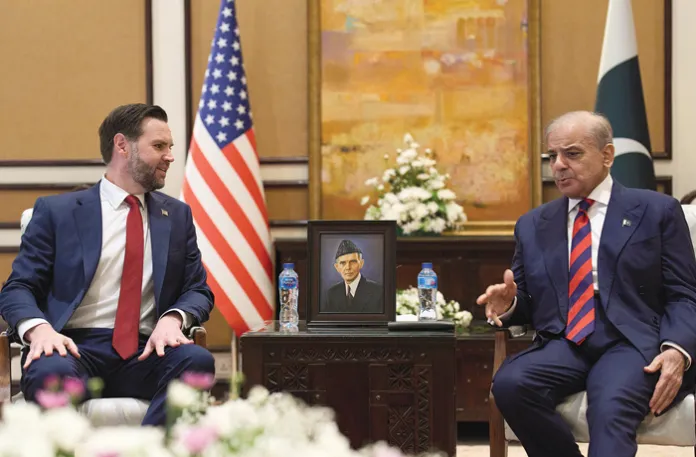
And Iran last week ended with no resolution. U.S. began its blockade of Iranian ports shortly after the talks in Pakistan concluded. The Pakistani-mediated ceasefire went into effect on April 7-8. Iran launched drones at Omani port cities of Duqm, Salalah, and Sohar since the war began.
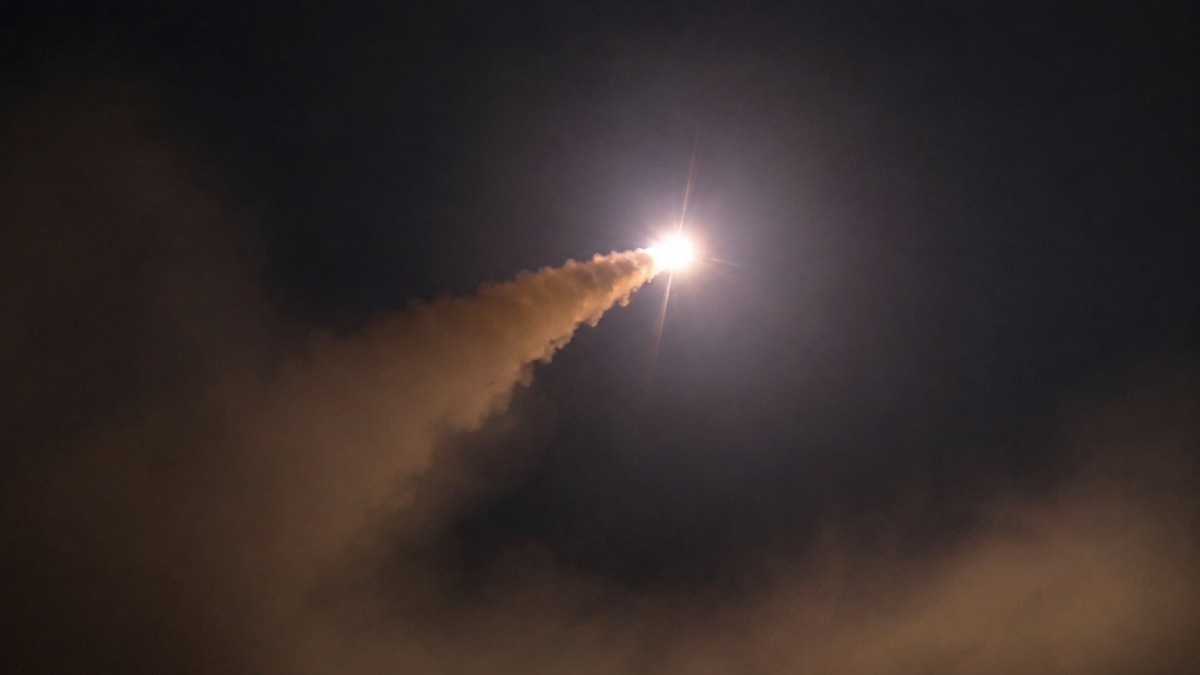
Supreme Leader Mojtaba Khamenei denied Tehran’s involvement in drone attacks on Oman and attributed them to Israel. No missiles have hit Omani territory throughout the conflict, and Muscat is the only GCC capital spared from Tehran’s attacks throughout the conflict. Oman expressed deep regrets in response to Washington and Tel Aviv’s decision to launch a war against Iran on February 28.

Oman was the only GCC state untouched by Iranian military operations following the Pakistani-mediated ceasefire on April 7-8. French President Emmanuel Macron and British Prime Minister Keir Starmer are chairing a meeting of around 40 non-belligerent countries on Friday, focused on securing the Strait of Hormuz, according to France 24.

Shipping Incidents and Broader Impact

A Pakistan-flagged tanker named Shalamar exited through the Strait of Hormuz late Thursday, carrying around 450,000 barrels of crude loaded at Das Island in the United Arab Emirates, according to ship-tracking data.

The Shalamar sailed just south of Iran’s Larak Island and out into the Gulf of Oman, and it entered the Persian Gulf over the weekend. U.S. blockade began on Monday, according to South China Morning Post.

A Hong Kong-flagged tanker passed through the Strait of Hormuz, according to @SCMPNews. The Middle East conflict has largely halted shipping via the Strait of Hormuz, according to @IEA. Officials threatened attacks on Iran’s civilian infrastructure, according to The New York Times.

Story Timeline

6 events
  1. 2026-04-17

    Gen. Dan Caine spoke to reporters at the Pentagon and issued warnings; President Trump praised the blockade; Shalamar exited the Strait late Thursday.

    5 sourcesunattributed · Joint Chiefs of Staff Chair Gen. Dan Cai · President Trump · South China Morning Post
  2. 2026-04-16

    Adm. Brad Cooper issued a statement on social media.

    1 sourceunattributed
  3. 2026-04-14

    U.S. blockade on the Strait of Hormuz began, shutting down trade and causing 13 ships to turn around.

    3 sourcesunattributed · Joint Chiefs of Staff Chair Gen. Dan Cai · U.S. Central Command
  4. 2026-04-07 to 2026-04-08

    Pakistani-mediated ceasefire went into effect.

    1 sourceResponsible Statecraft
  5. Early March 2026

    Iran enacted a blockade on the Strait of Hormuz.

    1 sourceunattributed
  6. 2026-02-28

    Washington and Tel Aviv launched Operation Epic Fury against Iran.

    1 sourceResponsible Statecraft

Potential Impact

  1. 01

    Iran's economy faces further contraction from loss of $340 million daily seaborne trade.

  2. 02

    Shipping routes altered, as seen with tankers like Shalamar exiting amid blockade.

  3. 03

    Global oil prices may rise due to disruption of 20% of world’s oil and gas through the Strait.

  4. 04

    Escalation of military confrontations in the region, including pursuits in the Pacific.

  5. 05

    Diplomatic efforts may intensify with the upcoming meeting on securing the Strait.

Transparency Panel

Sources cross-referenced16
Framing risk0/100 (low)
Confidence score98%
Synthesized bySubstrate AI (grok-4:fact-pipeline)
Word count573 words
PublishedApr 15, 2026, 10:03 PM
Bias signals removed4 across 4 outlets
Signal Breakdown
Loaded 1emotive 1informal 1accusatory 1

Related Stories

Senate Approves Short-Term Extension of Surveillance Program Until April 30washingtontimes.com
world10 hrs agoupdated

Senate Approves Short-Term Extension of Surveillance Program Until April 30

The U.S. Senate passed a 10-day extension of Section 702 of the Foreign Intelligence Surveillance Act, averting an imminent expiration after efforts for a longer renewal failed in the House. The measure, approved by voice vote, now awaits President Trump's signature. The program…

washingtontimes.com
PO
CB
AP
The New York Times
+10
16 sources
Jill Biden Outbid in Auction for Cameo Role in 'Heated Rivalry' Serieswashingtontimes.com
world6 hrs ago

Jill Biden Outbid in Auction for Cameo Role in 'Heated Rivalry' Series

Former first lady Jill Biden bid $35,000 for a guest appearance on the second season of the gay hockey romance drama 'Heated Rivalry' during a charity auction in New York City. She was outbid, with the roles selling for $125,000 each to two bidders, raising $250,000 for the Lesbi…

washingtontimes.com
AB
New York Post
Just the News
ABC News
5 sources
Billy Ray Cyrus Discusses Prayers for Country and President in Sky News InterviewThe Washington Times
world9 hrs ago

Billy Ray Cyrus Discusses Prayers for Country and President in Sky News Interview

Billy Ray Cyrus, aged 64, said in a Tuesday interview with Sky News that he prays for the country, the president, and the world. He described being president as a tough job and stated he has no intention of drawing party lines when performing for U.S. presidents. Cyrus also refer…

The Washington Times
DI
MA
SP
4 sources