Substrate
world

U.S. Defense Officials Consider National Battery Strategy to Reduce China Dependence

The Atlantic Council reported that batteries power military drones, sensors, and robotics. China controls over 80 percent of global battery cell production and 98 percent of LFP cathode output. The report recommends a U.S. strategy focused on new supply chains and advanced battery technologies.

Atlantic Council
1 source·May 19, 5:26 PM(10 days ago)·1m read
U.S. Defense Officials Consider National Battery Strategy to Reduce China DependenceAtlantic Council
Audio version
Tap play to generate a narrated version.

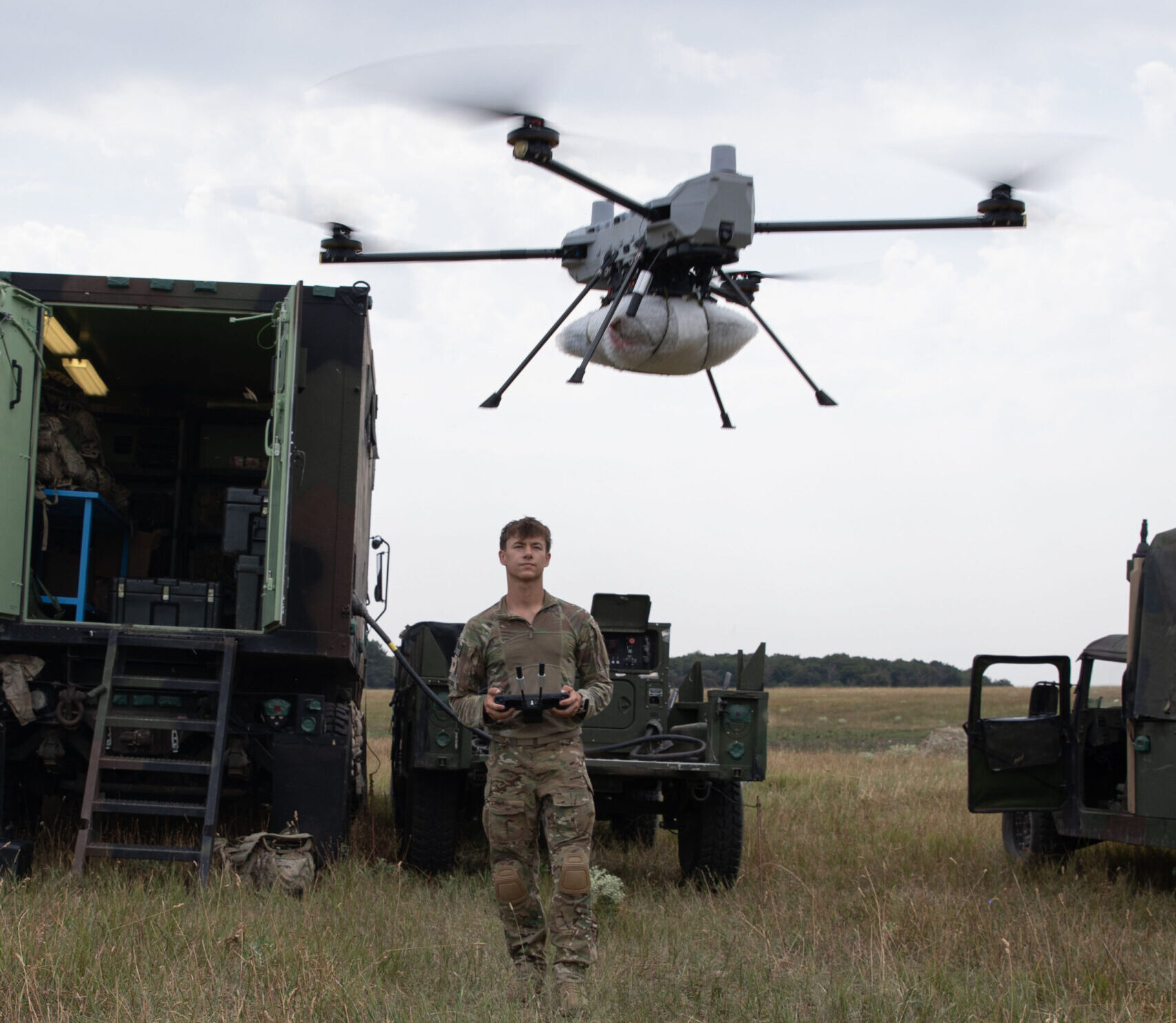
Batteries power military drones, sensor arrays, radio equipment, and robotics, according to the Atlantic Council. The report states that China makes over 80 percent of the world's battery cells and 98 percent of lithium-iron-phosphate cathode production.

The Atlantic Council said Beijing has used state subsidies, protectionist policies, and a domestic electric vehicle market to dominate every stage of the battery supply chain. In 2023, China accounted for 74 percent of global exports of battery packs and components.

Battery-powered systems already support electronic-warfare equipment and unmanned ground vehicles. The Atlantic Council noted that about 80 percent of casualties in one Ukrainian unit were evacuated by battery-powered robots and 90 percent of supplies in the Pokrovsk sector moved by unmanned ground vehicles.

China's military has publicized use of unmanned ground vehicles in exercises, the report added. Korea and Japan operate diesel-electric submarines that use lithium-ion batteries.

Proposed U.S.

The report said joint research could help develop solid-state and lithium-sulfur batteries with higher energy density and faster charge rates. Such batteries could extend submarine endurance, increase drone sortie rates, and reduce the 21 pounds of batteries U.S. soldiers carry on 72-hour missions, according to the Atlantic Council.


Key Facts

China battery cell share
over 80 percent of global production
LFP cathode production
98 percent controlled by China
Ukrainian unit evacuations
80 percent by battery-powered robots

Story Timeline

3 events
  1. 2023

    China accounted for 74 percent of global battery pack and component exports.

    1 sourceAtlantic Council
  2. 2024

    LFP battery cell prices in China fell 51 percent from the prior year.

    1 sourceAtlantic Council
  3. 2025

    China's average battery pack prices dropped 13 percent from prior-year levels.

    1 sourceAtlantic Council

Potential Impact

  1. 01

    U.S. military systems could gain extended range and higher payload capacity if new battery chemistries are developed.

  2. 02

    Joint research with allies may reduce U.S. reliance on Chinese battery supply chains.

Transparency Panel

Sources cross-referenced1
Confidence score75%
Synthesized bySubstrate AI
Word count199 words
PublishedMay 19, 2026, 5:26 PM
Bias signals removed2 across 1 outlet
Signal Breakdown
Loaded 1Amplifying 1

Related Stories

WHO Chief Visits DRC as Ebola Death Rate Reaches 30-50%The Guardian
world37 min ago

WHO Chief Visits DRC as Ebola Death Rate Reaches 30-50%

World Health Organization director-general Tedros Adhanom Ghebreyesus arrived in the Democratic Republic of the Congo to support containment of a new Ebola outbreak. The agency revised the death rate to 30-50% based on confirmed cases and recorded 10 confirmed and 223 suspected d…

SK
The Guardian
2 sources
Greek National Charged in UK With Aiding Iran-Linked Intelligence Servicewesternjournal.com
world37 min ago

Greek National Charged in UK With Aiding Iran-Linked Intelligence Service

A 46-year-old Greek man living in Germany was charged under the UK National Security Act with assisting an intelligence service believed to be Iran by targeting a journalist at Iran International.

Reuters
BBC News
2 sources
Supreme Court Revives Havana Docks Lawsuit Over Confiscated Cuban Propertyupi.com
world2 hrs ago

Supreme Court Revives Havana Docks Lawsuit Over Confiscated Cuban Property

The U.S. Supreme Court sent a Helms-Burton Act case back to lower courts for further argument. The suit seeks damages from cruise lines that used docks seized by Cuba in 1959.

FO
1 source