politics
U.S. and Iran Closer to Interim Deal on Uranium Freeze and Sanctions Relief
The U.S. expects a response from Iran within 48 hours to a framework that would freeze Iranian uranium enrichment in exchange for sanctions relief and unfrozen assets. An Israeli official said continued economic pressure could lead to a change in Iran's government absent a settlement. Iran's currency has fallen sharply and non-oil trade has declined significantly under current sanctions.
May 6, 10:36 AM·1m read4 sources

 +1
+1
 The Free Press
Audio version
Tap play to generate a narrated version.
The U.S. expects Iran's response within 48 hours to a framework that would bring both sides closer to a deal than at any point during the war in the Middle East. The proposed interim pact would trade an Iranian uranium-enrichment freeze for U.S. sanctions relief, unfrozen assets, and a mutually reopened Strait of Hormuz, according to reporting by The Free Press.
The framework is strictly an interim measure. If final negotiations collapse, a return to all-out war remains possible. An Israeli official said the economic pressure on Tehran could force a change in government unless a settlement is reached with the United States.
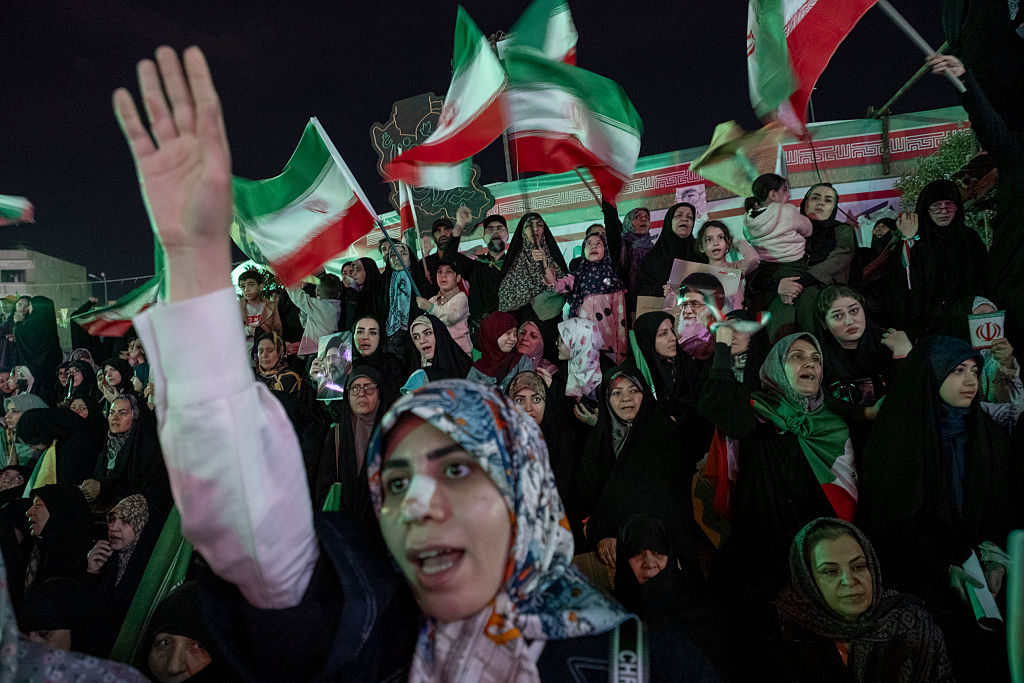
A senior Israeli intelligence source estimated that if the current blockade remains in place, the Islamic Republic will not survive 2026. The Iranian rial has fallen to 1.8 million to the U.S. dollar. That represents a 25 percent plunge from the exchange rate that triggered mass protests in January.
To prevent mass starvation, the government is maintaining a subsidized exchange rate of 285,000 rials per dollar for imports of basic food supplies. Non-oil trade had already plummeted by 50 percent before the latest blockade. Iran's attempted economic pivot to China has seen trade decline by 80 percent.
Regional sanctions-evasion hubs such as the United Arab Emirates have closed their doors to such activity. Two million Iranians have lost their jobs so far, with that number expected to rise sharply. The reporting appeared in The Free Press on May 6, 2026.
The rial's continued decline has worsened conditions beyond the official subsidized rate used for food imports. The broader economy has contracted under sustained sanctions and the current blockade. The Israeli official's assessment links the economic measures directly to potential political change in Tehran by the end of 2026.