world
U.S. Marines Conduct HIMARS Live-Fire Exercise at Camp Fuji
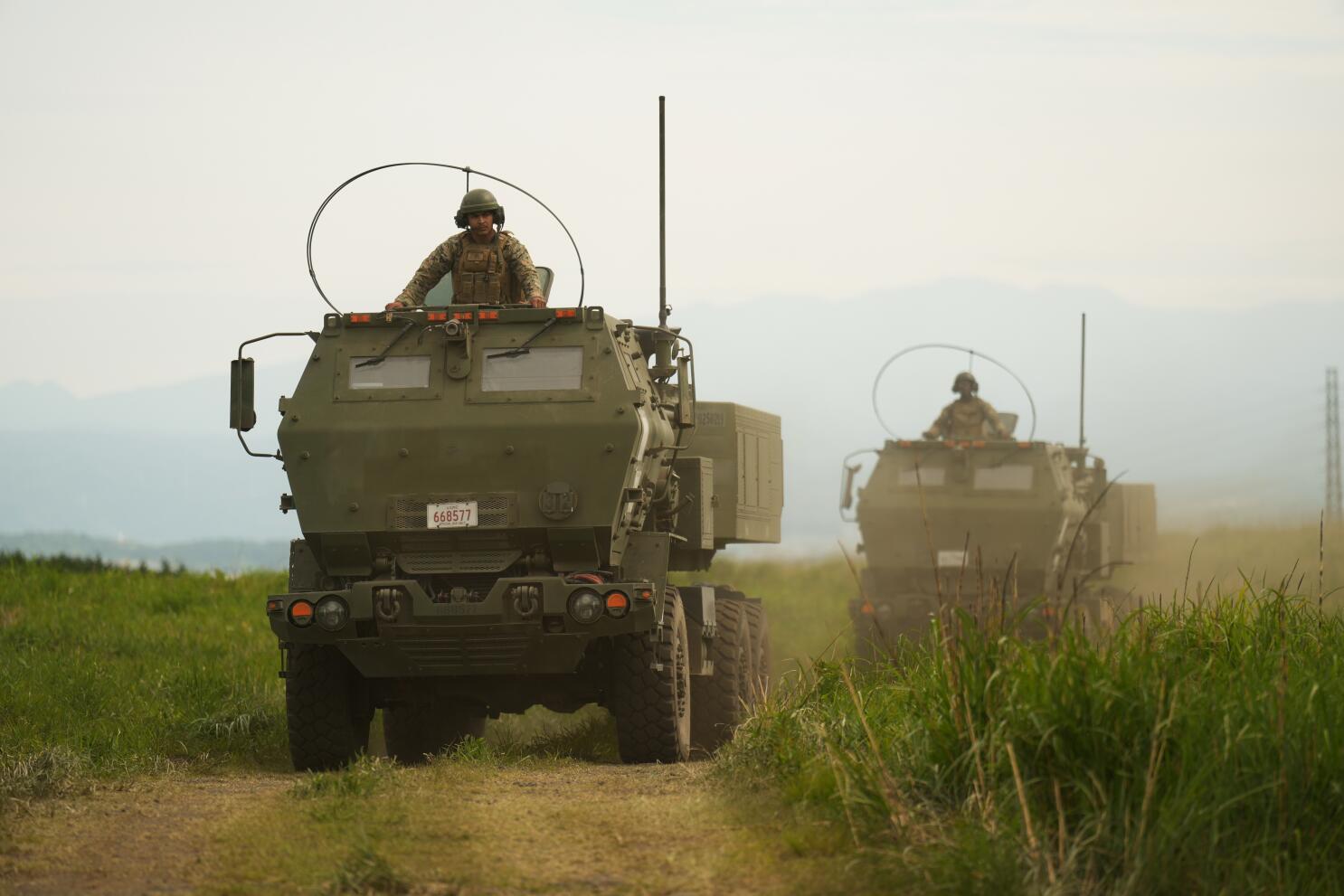
U.S. Marines fired rockets from mobile launchers during a training exercise in Japan this week. The demonstration highlighted the High Mobility Artillery Rocket System and its role in regional deterrence efforts.
May 22, 5:51 PM·1m read1 source
 Los Angeles Times
Audio version
Tap play to generate a narrated version.
Developing·Limited corroboration so far. This page will refresh as more sources emerge.
Six rockets were launched from one truck-mounted launcher, followed by another six from a second launcher that then returned to cover. The exercise lasted only a few minutes and used dummy rockets under strict safety guidelines. Japanese military officials observed the event and closed a nearby road during the firing.
Crews can complete the process in as little as two to four minutes, according to Sgt. Kevin Alvarez, section chief of one of the participating units. The system has been used in Iraq and Afghanistan and gained wider attention after its deployment in Ukraine. Officials said its mobility helps reduce vulnerability to drone or satellite detection compared with traditional artillery.
The Pentagon’s latest annual report to Congress states the goal is to deny any country in the Indo-Pacific the ability to dominate the U.S. or its allies. The report emphasizes deterrence through strength rather than confrontation. Euan Graham, a senior defense analyst with the Australian Strategic Policy Institute, said the U.S. is shifting toward smaller, mobile units because of improvements in China’s military capabilities.
Lt. Col. Ryan Anness, commander of the 3rd Battalion, noted that training with Japanese partners supports readiness in the Pacific region.