U.S. Military Accelerates AI Integration for Targeting and Intelligence While Facing Pushback from AI Contractor
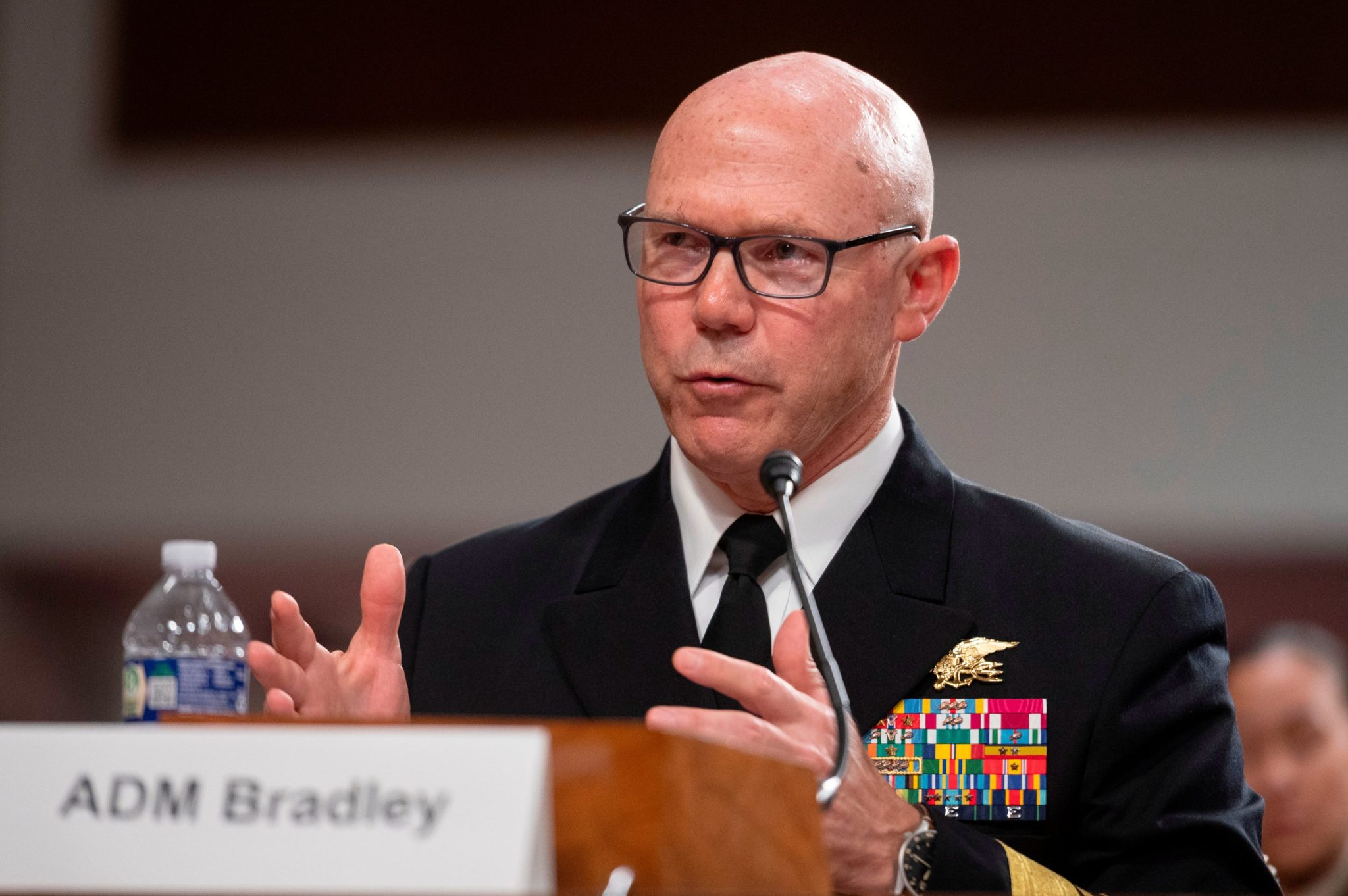
Adm. Frank Bradley cautioned on AI lethality at a Tampa conference while Defense Secretary Pete Hegseth advances rapid AI adoption. The Pentagon ended a $200 million Anthropic contract after a supply-chain designation.
FortuneAdm. S. ” Defense Secretary Pete Hegseth is pressing the military to integrate AI more quickly. ” A Pentagon official, speaking on condition of anonymity, said the department is developing “functional battlefield tools” that help troops identify targets faster and accelerate strikes.
At the same Tampa conference, Sgt. Maj. S. ” Lt. Gen. Michael Conley, head of Air Force Special Operations Command, told a congressional committee in May that AI “bots” converted top-secret intelligence to secret classification within seconds during the Iran war, allowing faster sharing with drone operators.
U.S. artillery unit while employing 2,000 fewer service members. ” The Pentagon formally designated Anthropic a supply-chain risk, terminated its $200 million defense contract, and barred other government contractors from working with the San Francisco-based firm.
Anthropic sued, alleging illegal retaliation after CEO Dario Amodei raised concerns about fully autonomous drones and AI-assisted mass surveillance.
Transparency
0 core facts confirmed by 2+ independent outlets. 19 single-source, 0 disputed.
Corroborating outlets share one lane and are mostly lower-tier — treat as weakly verified.
Source lean classification not available for this article.
- Fortune reported: President Donald Trump canceled plans to sign a new AI executive order hours before the expected White House ceremony because he did not want to hinder U.S. leadership in AI.
- Fortune reported: The Pentagon labeled Anthropic a supply-chain risk, terminated its $200 million defense contract, and barred other contractors from working with the company.
- Fortune reported: Defense Secretary Pete Hegseth is pushing for rapid military adoption of AI.
- Fortune reported: The Pentagon and Anthropic are in a public contract dispute.
- Fortune reported: Anthropic sued the Pentagon, alleging illegal retaliation through the supply-chain risk designation.
- Fortune reported: Pete Hegseth told SpaceX employees he would reject AI models that will not allow fighting wars and wants systems without ideological constraints limiting lawful military applications.
- Fortune reported: Georgetown University Center for Security and Emerging Technology published a case study showing the Army’s 18th Airborne Corps used AI for artillery targeting as efficiently as the best recent U.S. unit while employing 2,000 fewer service members.
- Fortune reported: Anthropic raised concerns about fully autonomous armed drones, AI-assisted mass surveillance that could track dissent, and use of its Claude model in classified Pentagon networks.
- Fortune reported: After Anthropic CEO Dario Amodei refused to change position, President Trump and Defense Secretary Pete Hegseth accused Anthropic of endangering national security.
- Fortune reported: Adm. Frank Bradley, head of U.S. Special Operations Command, stated that troops must be very careful about AI's employment in the delivery of lethality.
- Fortune reported: A Pentagon official stated that AI efforts focus on functional battlefield tools to identify targets faster and accelerate strikes.
- Fortune reported: Helen Toner stated that human operators still make crucial decisions while AI enables new speed and scale.
- Fortune reported: The Pentagon has turned to Google, OpenAI and SpaceX for AI technology to augment warfighter decision-making.
- Fortune reported: Adm. Frank Bradley said he can envision a future in which AI determines targets but humans must have confidence that violence is delivered only where intended.
- Fortune reported: Lt. Gen. Michael Conley testified that Air Force Special Operations Command used AI bots to downgrade top-secret intelligence to secret level within seconds for sharing with drone operators during the Iran war.
- Fortune reported: Melissa Johnson, top acquisition official at U.S. Special Operations Command, stated that AI is being used to reduce cognitive workload on mundane tasks and to enhance rather than replace operator judgment.
- Fortune reported: Helen Toner stated that the U.S. military approaches new technologies with caution to avoid friendly fire, civilian casualties and incorrect target identification while achieving lethal effects at scale.
- Fortune reported: Sgt. Maj. Andrew Krogman stated that AI should handle administrative tasks to free up special operations forces.
- Fortune reported: Helen Toner stated there are many bureaucratic uses of AI that the U.S. military is actively exploring.
Story details
Related Stories
Israeli Forces Cross Litani River, Seize Beaufort Castle in Lebanon
Israeli troops crossed the Litani River and seized the historic Beaufort castle near Nabatieh on Sunday. The move marks Israel's broadest ground incursion into Lebanon in 25 years.
ForbesBundibugyo Ebola Outbreak in Congo: Five Patients Recover as Cases Reach 134 Confirmed with 18 Deaths
WHO reports five recoveries as 134 confirmed cases and 18 deaths are tallied across Congo and Uganda. A new treatment center opened in Bunia amid security and community challenges.