U.S. Navy Plans to Increase Medium Unmanned Surface Vessels to 30 in Indo-Pacific by 2030
The U.S. Navy plans to grow its fleet of medium-sized unmanned surface vessels from four to at least 30 in the Indo-Pacific by 2030, officials said. This expansion aligns with the service's 2045 force vision and includes thousands of small USVs and unmanned aircraft systems. Capt. Garrett Miller outlined the strategy at a recent conference, emphasizing a focus on the region.
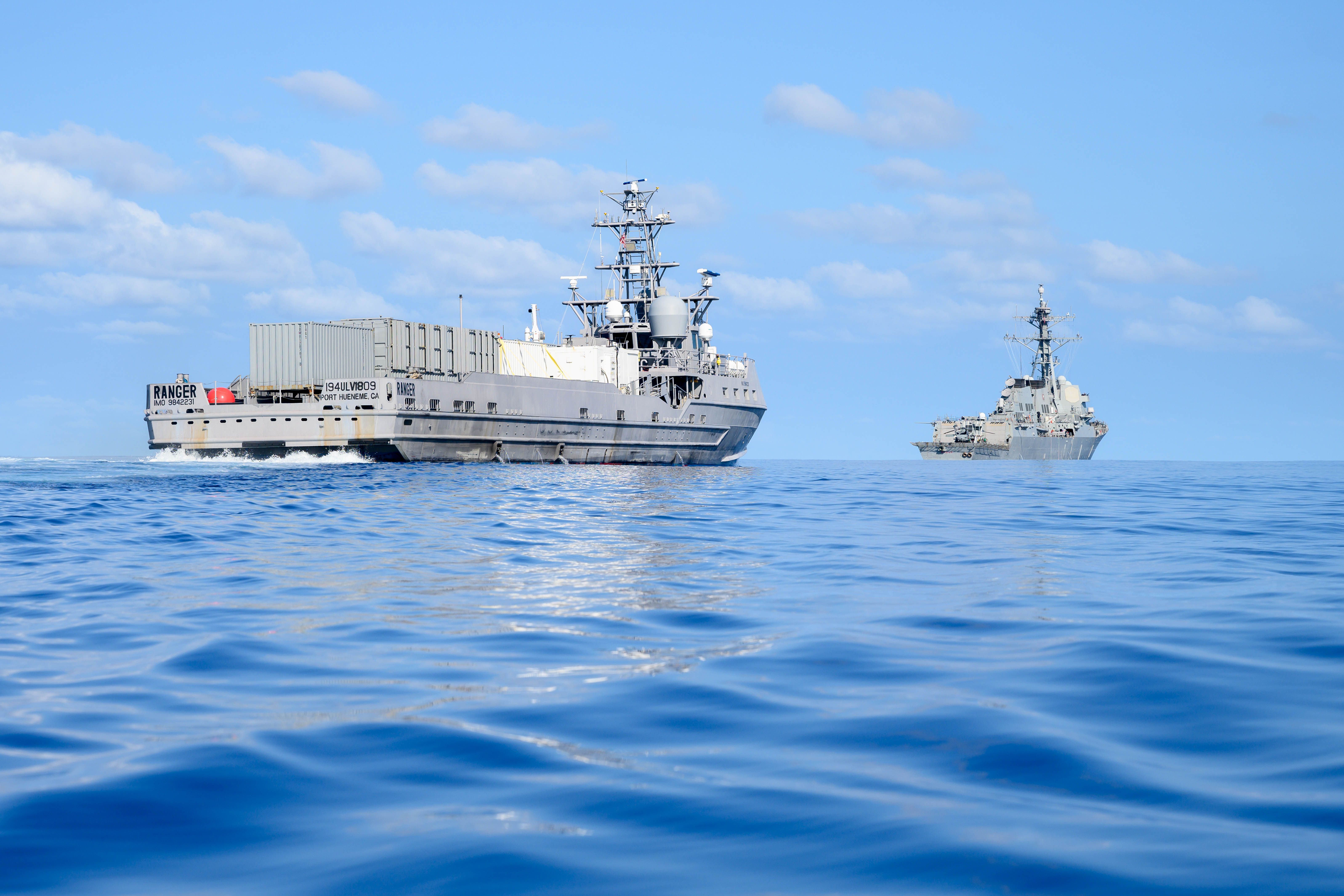
Defense NewsU.S. Navy anticipates expanding its fleet of medium-sized unmanned surface vessels to at least 30 in the Indo-Pacific by 2030, up from the current four, Defense News reported. These four vessels have already completed deployments in the Indo-Pacific region.
The vessels involved were the Sea Hunter, Sea Hawk, Mariner and Ranger, which operated there for five months in 2024. They continue to support the ongoing development of the Navy's USV program. U.S. Navy Capt.
Garrett Miller, commodore of Surface Development Group 1, stated that the fleet could be approximately seven times larger in just four years. He spoke on a panel about uncrewed maritime systems at the Sea-Air-Space Conference on Monday. U.S. Navy’s 2045 force vision, over 30 medium USVs are expected in the Indo-Pacific, Miller said.
Alongside these medium vessels, the Navy expects thousands of small USVs and any number of unmanned aircraft systems operating from manned or unmanned ships in the Indo-Pacific region, according to Miller. He clarified that the numbers of over 30 medium USVs are strictly for the Indo-Pacific and nowhere else at this point.
The Navy is figuring out the numbers for uncrewed fleet size elsewhere, Miller added. In early 2026, Miller announced the creation of three USV divisions at the Surface Navy Association’s 38th National Symposium. The Sea Hawk and Sea Hunter medium USVs were slated to be deployed in 2026, he said.
The Navy has a holistic approach to discussing the number of vessels in regards to where they should house and maintain the potential medium USVs, Miller explained. The Navy needs to look at the numbers in a broader way and toward the Robotic and Autonomous Systems strategy, which aims to build a fleet of manned and unmanned vessels, according to Miller.
'I think you’re going to see things overseas.
' Miller said. Unmanned circuit special squadrons in theaters are going to be operating and maintaining a lot of those things, along with a contractor-led higher-level maintenance, he concluded. The service is going down a path that will allow them to expand at a faster pace than thought previously with any other type of vessel, Miller noted.
This approach reflects the Navy's broader strategy for integrating manned and unmanned systems in key regions. Officials indicated the potential increase to 30 vessels by 2030 specifically in the Indo-Pacific.
The four vessels' prior deployments and ongoing use underscore the program's progress since 2024.
Key Facts
Story Timeline
6 events- 2026-04-20
U.S. Navy Capt. Garrett Miller spoke on a panel about uncrewed maritime systems at the Sea-Air-Space Conference, outlining expansion plans
1 sourceDefense News - 2026-01
Miller announced the creation of three USV divisions and slated Sea Hawk and Sea Hunter for deployment in 2026 at the Surface Navy Association’s 38th National Symposium
1 sourceDefense News - 2024
Four USVs (Sea Hunter, Sea Hawk, Mariner, Ranger) deployed in the Indo-Pacific for five months
1 sourceDefense News - 2030
Expected increase to 30 medium USVs in the Indo-Pacific
1 sourceDefense News - 2045
U.S. Navy’s force vision projects over 30 medium USVs in the Indo-Pacific
1 sourceDefense News - Ongoing
The four USVs continue to be used for developing the Navy’s USV program
1 sourceDefense News
Potential Impact
- 01
Integration of manned and unmanned vessels under broader Robotic and Autonomous Systems strategy
- 02
Increased operational efficiency with contractor-led maintenance and theater-based squadrons
- 03
Enhanced U.S. naval presence in Indo-Pacific through unmanned systems, potentially shifting regional military dynamics
- 04
Faster expansion of unmanned fleet compared to traditional vessels, accelerating Navy's autonomous capabilities
- 05
Development of holistic housing and maintenance strategies for USVs in specific regions
Transparency Panel
Related Stories
thehindu.comExplosion at China Fireworks Factory Kills 26 and Injures 61 in Hunan Province
An explosion at the Huasheng Fireworks Manufacturing and Display Company in Liuyang city, Hunan province, killed at least 26 people and injured 61 on Monday afternoon. Rescue operations have concluded, with authorities detaining company staff and halting all local fireworks produ…
citizen.co.zaMiddle East War Disrupts Global Supply Chains and Aviation Amid Diplomatic Efforts
The ongoing Middle East war has led to falling oil prices, plastic shortages in Asia, and minor flight cancellations in Hong Kong. Diplomatic talks continue, with China urging a ceasefire and the U.S. pausing ship escorts in the Strait of Hormuz. Various nations are addressing ec…
indiatoday.intoday.inTrump Pauses Project Freedom in Strait of Hormuz Amid Progress on Iran Agreement
President Trump announced a temporary pause to Project Freedom, the U.S. effort to escort ships through the Strait of Hormuz, citing mutual agreement with Iran to facilitate finalizing a deal while the blockade remains in place. The decision follows requests from Pakistan and oth…