Substrate
politics

U.S. Officials Describe Cartel Use of Commercial Drones at Southern Border

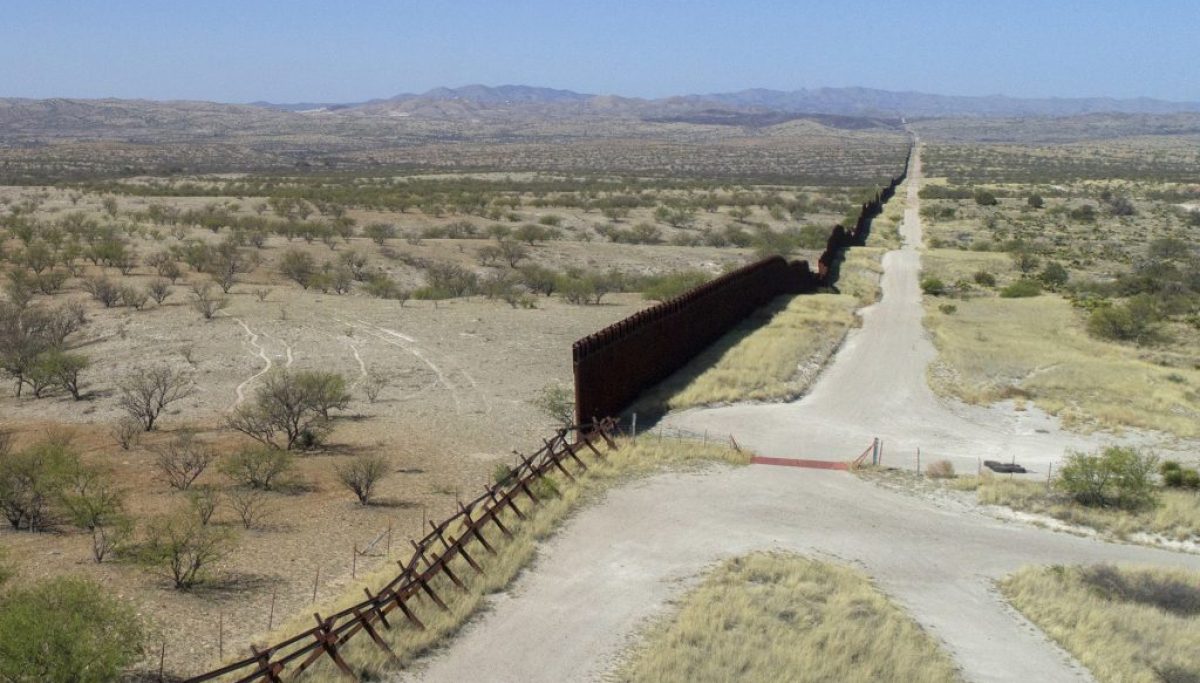
Senior Homeland Security and Defense officials described how cartels have rapidly adopted modified commercial drones to bypass border infrastructure, exploiting low-altitude airspace that offers largely unfettered access. Speakers at the Border Security Expo in Arizona this week outlined both the threats and the federal response, including bulk purchases of drones by Border Patrol.

Washington Examiner
1 source·May 8, 4:36 PM(12 hrs ago)·3m read
|
U.S. Officials Describe Cartel Use of Commercial Drones at Southern Bordernbcnews.com
Audio version
Tap play to generate a narrated version.
Developing·Limited corroboration so far. This page will refresh as more sources emerge.

Officials at the Departments of Homeland Security and War are gravely concerned about the security of the nation’s skies along the land border. They have admitted that the airspace is incredibly easy to penetrate from Canada and Mexico. -Mexico border have already begun to push terrorist organizations and cartels into the air.

The shift comes as they seek to get around ground infrastructure such as walls, river barriers and sensors while smuggling money and guns into Mexico and drugs into the United States. “What happens when you shrink the battle space? S.

Customs and Border Protection’s acting executive director for countering unmanned aircraft systems within the defense capability group. Crane spoke during a discussion at the Border Security Expo in Arizona this week. Crane said it takes a long time to build a tunnel but does not take a long time to go to Walmart, buy a drone, and fly it.

Cartels have deployed fiber optics and GPS-enabled drones in recent years and have tweaked store-bought drones to outsmart detection systems or carry heavier payloads. “Stuff overseas, well, it’s now at our homeland,” Crane said. He added that he is seeing things that scare him and keep him up at night as it relates to the counter-UAS mission.

Steven Willoughby, acting director of the C-UAS program at DHS, explained that drones can be repurposed for virtually any illicit purpose. “You can use drones for whatever you dream up in your imagination, right? You can carry a payload.

You can do surveillance, counter-surveillance. You can have it fly and deliver, deliver munitions. You can carry narcotics, firearms. I mean, the ability to repurpose a drone to carry out some sort of illicit activity is boundless,” Willoughby said.


Drones are used to spy on federal law enforcement on patrol and scout out areas on the border that may be easier to move people or goods across, undetected. S. -Canada border is two and a half times as long as the southern border, making it more vulnerable to such tactics.

Brigadier General Matt Ross, director of the Joint Interagency Task Force 401 DOW, described how the threat now has tremendous access to the third dimension. “We fight wars in the two dimension until the airplane came around, and then we started realizing the Air Force can handle it all,” Ross said.

He added that the threat extends lines of operation and logistics because it is just battery power, which is extensive.

U.S. airspace is “not as controlled as everyone thinks,” according to Ross. Between 100 feet and about 1,000 feet inside the United States, airspace is pretty much unfettered access unless around an airport.

U.S. drones. Border Patrol agents at a station or CBP Office of Field Operations port of entry tactical operations center look at 12 different screens at any given time.

Crane said Border Patrol is buying drones in bulk to “flood the border” with the machines. The new DHS secretary is Markwayne Mullin, who saw and learned about the threats posed by enemy drones during a recent trip to the border and has knowledge of the drone problem from private briefings as a former senator.

Steven Willoughby wants to “normalize” unmanned aerial systems as tools accessible to all personnel across CBP, the Coast Guard, the Federal Protective Service, and other DHS agencies.

He said he would love to see a drone capacity for every Border Patrol agent alongside the shotgun in a truck. Federal police have only 20 to 30 seconds from seeing a drone on a screen to decide how to respond. Crane, Willoughby, and Ross addressed more than 100 attendees at their discussion at the Border Security Expo.

Key Facts

Cartels have rapidly advanced drone capabilities to bypass U
Cartels have deployed fiber optics and GPS-enabled drones in recent years and tweaked store-bought drones to outsmart detection systems or carry heavier payload
Low-altitude U.S. airspace offers largely unfettered access
Between 100 feet and about 1,000 feet inside the United States, airspace is pretty much unfettered access unless around an airport, Brigadier General Matt Ross
Federal response includes bulk drone purchases and normaliza
Border Patrol is buying drones in bulk to “flood the border” with the machines while Steven Willoughby seeks to place drone capacity alongside shotguns in every

Story Timeline

4 events
  1. 2026-05-05 to 2026-05-08

    Border Security Expo takes place in Arizona where officials discussed drone threats

    1 sourceWashington Examiner
  2. Recent weeks

    New DHS Secretary Markwayne Mullin visits the border and receives briefings on enemy drone threats

    1 sourceWashington Examiner
  3. Recent years

    Congress authorizes Border Patrol and other agencies to use and detect drones; cartels advance fiber optic and GPS-enabled drone capabilities

    1 sourceWashington Examiner
  4. Ongoing

    Cartels make billions annually smuggling people and drugs while shifting to aerial tactics to bypass improved border infrastructure

    1 sourceWashington Examiner

Potential Impact

  1. 01

    Federal agents face 20-to-30-second decision windows when detecting rogue drones on tactical screens

  2. 02

    Cartels gain extended lines of operation and logistics through third-dimension access using battery-powered drones

  3. 03

    Increased demand for simplified counter-UAS technology to reduce response complexity for overworked tactical operation centers monitoring 12 screens

  4. 04

    Broader vulnerability along the U.S.-Canada border, which is two and a half times longer than the southern border

Transparency Panel

Sources cross-referenced1
Confidence score65%
Synthesized bySubstrate AI
Word count610 words
PublishedMay 8, 2026, 4:36 PM
Bias signals removed2 across 2 outlets
Signal Breakdown
Loaded 2

Related Stories

Justice Department Files Denaturalization Cases Against 12 Naturalized Citizens for Alleged Fraud, Terrorism Ties and Criminal ConcealmentFox News
politics2 hrs ago

Justice Department Files Denaturalization Cases Against 12 Naturalized Citizens for Alleged Fraud, Terrorism Ties and Criminal Concealment

The Trump administration announced a dozen new cases on May 8, 2026, targeting individuals accused of concealing ties to terrorism, war crimes, espionage and sexual abuse of minors. Acting Attorney General Todd Blanche said those who obtained citizenship through fraud should be w…

Cbs News
The New York Times
The Washington Times
Fox News
Just the News
+1
6 sources
Trump Administration Seeks to Revoke Citizenship of 12 Naturalized AmericansFox News
politics47 min ago

Trump Administration Seeks to Revoke Citizenship of 12 Naturalized Americans

The Justice Department on Friday filed denaturalization actions against a dozen foreign-born U.S. citizens accused of concealing terrorism ties, committing sex crimes, war crimes or immigration fraud. The cases mark a sharp increase in use of a rarely invoked process that prior a…

CBS News
The New York Times
Fox News
ABC News
4 sources
Spirit Airlines Files for BankruptcyThe Japan Times
politics2 hrs agoFraming55Framing risk55/100Rewrite largely sticks to facts on fuel prices and bankruptcy but inherits mild consensus framing around Spirit's 'disruptive' legacy and centers process impacts over core economic drivers.Click to jump to full framing analysis

Spirit Airlines Files for Bankruptcy

The ultra-low-cost carrier launched in 1992 will cease operations in May 2026, removing a major disruptor from the U.S. market. Global airlines canceled 13,000 flights in May amid soaring fuel costs triggered by the closure of the Strait of Hormuz. Toyota reported a £3bn hit from…

The Japan Times
BBC News
The Guardian
CNBC
New York Post
5 sources