U.S. Removes Venezuelan President Maduro
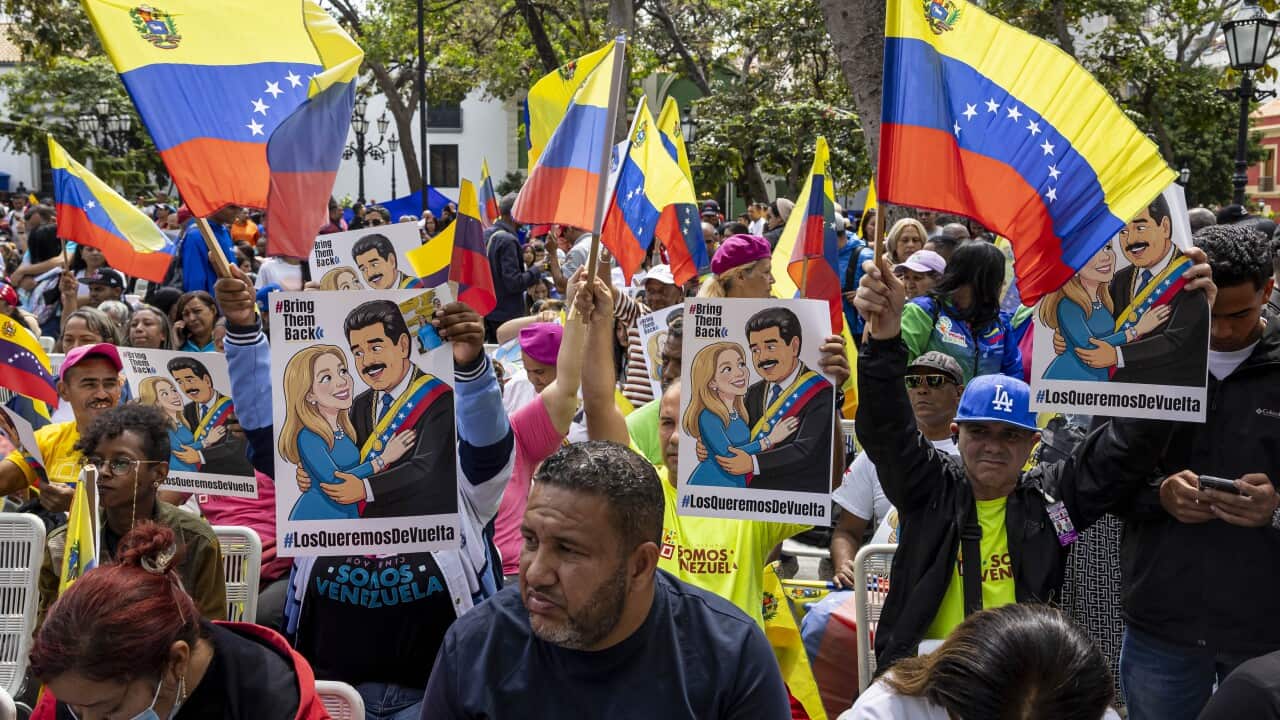
U.S. forces seized Venezuelan President Nicolás Maduro in January 2026, leading to Vice President Delcy Rodríguez assuming the presidency. The Trump administration has supported resumed U.S. oil operations in Venezuela but has not prioritized a political transition. Venezuelan opposition leader María Corina Machado met with U.S. officials in March 2026 to discuss democratization prospects.
Substrate placeholder — needs review · Wikimedia Commons (CC BY-SA 3.0)In January 2026, U.S. custody awaiting prosecution on drug trafficking charges. The operation resulted in Maduro's removal without U.S. fatalities, and Venezuelan officials did not respond militarily. Maduro's vice president, Delcy Rodríguez, subsequently became president of Venezuela.
Leadership Transition and U.S.
No timeline for future elections has been announced. U.S. President Donald Trump stated in March 2026 that the situation in Venezuela was positive under Rodríguez's leadership. The U.S. has issued licenses for American oil companies to resume operations in the country, and the White House reported receiving tens of millions of barrels of Venezuelan oil.
Venezuelan opposition leader María Corina Machado, who received the Nobel Peace Prize in 2025, visited the White House in March 2026. Secretary of State Marco Rubio to seek information on U.S. plans for political transition in Venezuela. During the visit, Trump and Rubio advised Machado not to return to Venezuela at that time.
Earlier, in January 2026, Machado had given her Nobel medal to Trump. It references historical examples in Venezuela where the removal of leaders like General Juan Vicente Gómez in 1935 and Marcos Pérez Jiménez in 1958 led to eventual democratic transitions.
Rodríguez, the Venezuelan government has released some political prisoners and replaced certain cabinet members previously loyal to Maduro. However, the state's security and repressive structures established under Maduro remain in place. The article describes the U.S. action as differing from past interventions in Latin America, such as in the Dominican Republic, Grenada, Guatemala, Nicaragua, and Panama, where regimes were fully removed.
In Venezuela, the ruling party and its allies have continued in power. Every U.S. president since George W. Bush has criticized the human rights record in Venezuela. Nongovernmental organizations have reported approximately 20,000 politically motivated detentions since 2014, along with instances of torture and ties to criminal groups.
Key Facts
Story Timeline
4 events- March 2026
President Trump stated the situation in Venezuela was positive under President Rodríguez and met with opposition leader María Corina Machado.
1 source@ForeignAffairs - January 2026
U.S. forces seized Venezuelan President Nicolás Maduro in Caracas, leading to Delcy Rodríguez becoming president.
1 source@ForeignAffairs - 2025
María Corina Machado won the Nobel Peace Prize.
1 source@ForeignAffairs - 2013
Hugo Chávez died.
1 source@ForeignAffairs
Potential Impact
- 01
U.S.-Venezuela economic ties could strengthen through increased oil imports.
- 02
No elections timeline may prolong the current regime's hold on power.
- 03
Venezuela's opposition may pursue internal strategies for political change without U.S. support.
- 04
Historical patterns suggest potential for slow democratic transition post-founder removal.
- 05
Released political prisoners could alter domestic human rights dynamics.
Transparency Panel
Related Stories
thehindu.comExplosion at China Fireworks Factory Kills 26 and Injures 61 in Hunan Province
An explosion at the Huasheng Fireworks Manufacturing and Display Company in Liuyang city, Hunan province, killed at least 26 people and injured 61 on Monday afternoon. Rescue operations have concluded, with authorities detaining company staff and halting all local fireworks produ…
indiatoday.intoday.inTrump Pauses Project Freedom in Strait of Hormuz Amid Progress on Iran Agreement
President Trump announced a temporary pause to Project Freedom, the U.S. effort to escort ships through the Strait of Hormuz, citing mutual agreement with Iran to facilitate finalizing a deal while the blockade remains in place. The decision follows requests from Pakistan and oth…
citizen.co.zaMiddle East War Disrupts Global Supply Chains and Aviation Amid Diplomatic Efforts
The ongoing Middle East war has led to falling oil prices, plastic shortages in Asia, and minor flight cancellations in Hong Kong. Diplomatic talks continue, with China urging a ceasefire and the U.S. pausing ship escorts in the Strait of Hormuz. Various nations are addressing ec…