world
U.S. Soldiers Train on Bumblebee Drones for Counter-Drone Combat
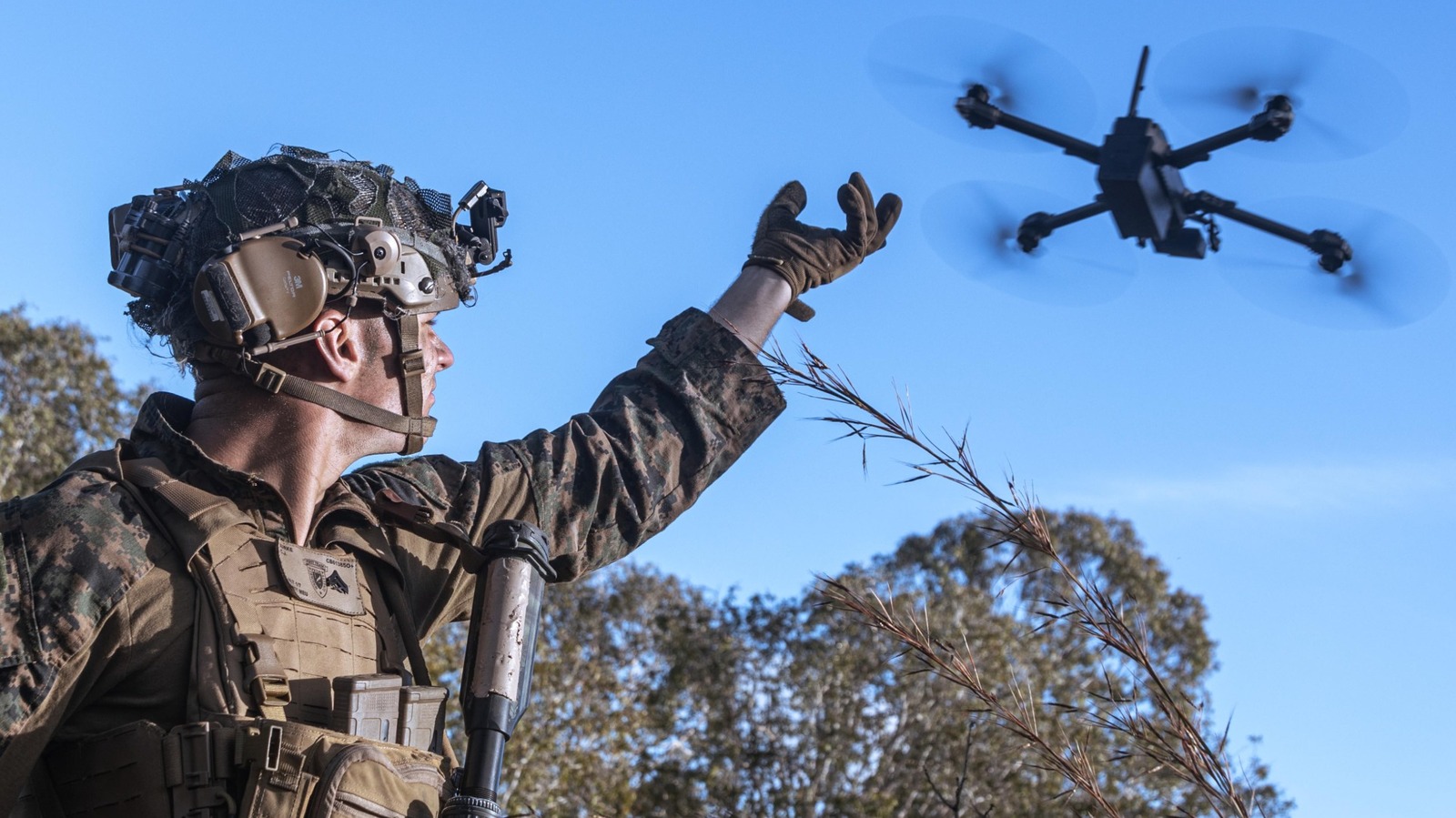
Soldiers from the 82nd Airborne Division conducted training on Bumblebee drones at Fort Bragg last week. The exercises focused on drone-on-drone combat techniques observed in Ukraine. The Pentagon is expanding such training to additional bases and overseas locations.
 slashgear.com
Audio version
Tap play to generate a narrated version.
Developing·Limited corroboration so far. This page will refresh as more sources emerge.
Soldiers from the 82nd Airborne Division participated in training exercises at Fort Bragg in Fayetteville, North Carolina, last week. The sessions involved using Bumblebee drones to simulate drone-on-drone combat, similar to tactics employed in Ukraine.
The training included both the Bumblebee V1 and the newer Bumblebee V2 models. The Bumblebee V1 is a small, first-person-view drone that has been used in thousands of combat flights in Ukraine. It is already in use by soldiers in the 82nd Airborne Division and the 10th Mountain Division.
Sgt. Maj. Kellen Rowley stated that training on the V1 is occurring at several domestic bases and at a U.S. Central Command training center in the Middle East.
The Bumblebee V2 features automatic target recognition designed to counter other drones, though it has not yet been deployed. Lt. Col. Alex Morse noted that these systems address cost challenges, with defensive capabilities costing far less than traditional interceptors.
Both versions are portable, featuring four propeller legs, a camera, and a battery. The V1 requires manual adjustments for targeting, while the V2 includes autonomous software and additional sensors. The drones are intended to neutralize smaller threats, such as those smaller than the 400-pound Iranian-produced Shahed drones used by Iran and Russia.
Perennial Autonomy, a U.S. defense firm backed by former Google CEO Eric Schmidt, produces the Bumblebees and provided experts during the training.
In demonstrations, soldiers piloted Bumblebee V1 drones from laptops, with teams coordinating to collide attacking drones into a stationary target drone. Some attempts resulted in misses or partial takedowns, after which drones were retrieved. Officials described the training as initial marksmanship practice, with plans for advanced scenarios including electronic jamming.


