UAE Leaves OPEC After 60 Years of Membership, Reducing Group to 11 Producers
The United Arab Emirates departed the Organization of the Petroleum Exporting Countries on Tuesday, reducing the group's membership to 11 nations. OPEC members now account for about 33% of global crude oil output. The exit occurs amid high oil prices and the ongoing closure of the Strait of Hormuz.
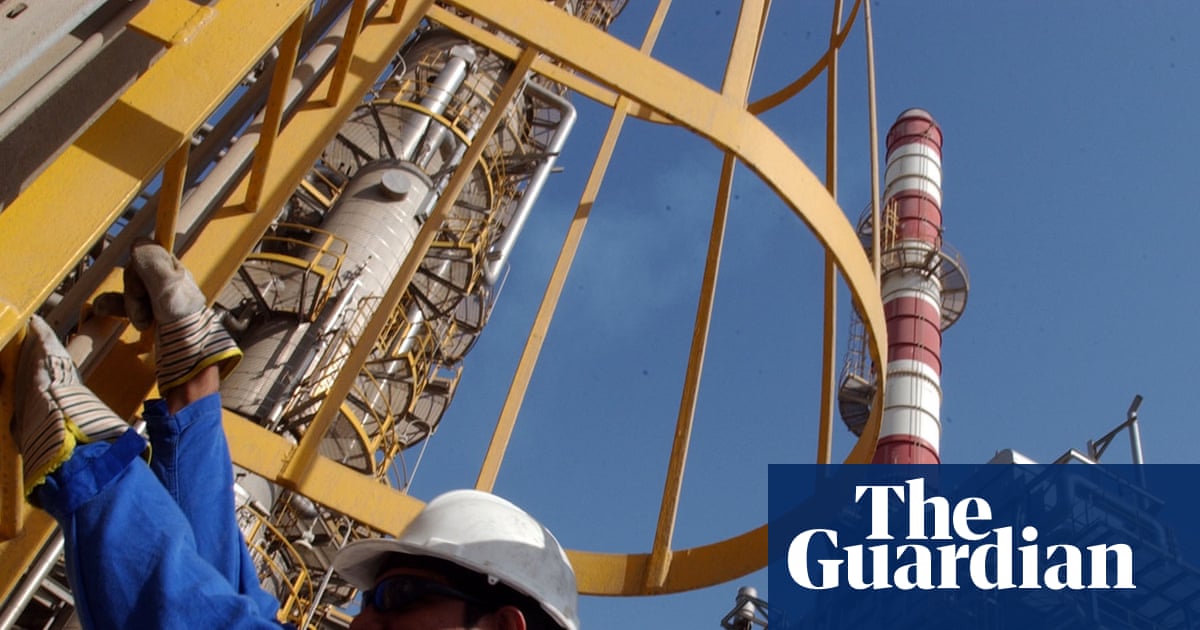
The United Arab Emirates exited the Organization of the Petroleum Exporting Countries on Tuesday after 60 years of membership, leaving the cartel with 11 members. OPEC had 12 members before the UAE's departure at the start of May 2026. The remaining members are Algeria, Republic of the Congo, Equatorial Guinea, Gabon, Iran, Iraq, Kuwait, Libya, Nigeria, Saudi Arabia and Venezuela.
These OPEC members account for around 33% of the world's crude oil output, about 46% of total petroleum traded internationally and roughly 73% of the world's proven oil reserves. 5% in 1973.
In 2016, OPEC joined forces with 10 other oil producers, including Russia, to create the OPEC+ alliance. In its first meeting since the UAE left OPEC, OPEC+ decided members would increase production by 188,000 barrels per day from June 2026. The UAE was the world's third biggest oil exporter behind Saudi Arabia and Iraq in 2025, according to OPEC data.
1 million barrels of oil per day in 2025, while Saudi Arabia produced over nine million barrels per day in the same year. The UAE held its production at below 3 million barrels a day in 2024 at the behest of OPEC. Days after announcing its exit, state-owned oil company Adnoc announced acceleration of growth through projects worth $55 billion between 2026 and 2028.
Global oil prices reached the highest level in four years on Thursday, rising above $126 a barrel. The Strait of Hormuz has been effectively closed for eight weeks as of the article date, through which about a fifth of the world's supplies of oil and liquefied natural gas usually travel. S.
President Donald Trump stated that OPEC has used its influence to keep prices higher by limiting supplies. S. over support for Israel during the Yom Kippur war, alongside a coordinated cut to oil production.
Oil prices more than doubled following the 1973 embargo and production cut. There was a second oil shock in 1979 with the Iranian Revolution. 7 million barrels of oil per day in 2020, representing a 10% cut to global oil demand.

After Russia's full-scale invasion of Ukraine in early 2022, OPEC+ pledged to raise production slightly before slashing it later that year. S. 6 million barrels per day in 2025.
1 million barrels of crude oil per day in 2025. Maurizio Carulli, global energy analyst at Quilter Cheviot, said OPEC's influence on oil prices has 'varied' over the past few decades. He added that a historic difficulty for OPEC in influencing the oil price is that individual members 'often do not actually respect the commitment' and either produce more or less than agreed.
Michael Tamvakis, a commodities professor at Bayes Business School in London, said Saudi Arabia 'will fight back with a vengeance' in response to the UAE's exit. He added that in a postwar standoff, there is a real risk of a price war with unpredictable economic consequences.
Key Facts
Story Timeline
6 events- 2026-05-06
Global oil prices reached the highest level in four years on Thursday, rising above $126 a barrel.
1 sourceunattributed - 2026-05-01
The United Arab Emirates exited OPEC after 60 years of membership.
1 sourceunattributed - 2026-05-01
In its first meeting since the UAE left OPEC, OPEC+ decided members would increase production by 188,000 barrels per day from June 2026.
1 sourceOPEC+ - 2025
The UAE produced 3.1 million barrels of oil per day, and was the world's third biggest oil exporter behind Saudi Arabia and Iraq.
1 sourceOPEC - 2022
After Russia's full-scale invasion of Ukraine in early 2022, OPEC+ pledged to raise production slightly before slashing it later that year.
1 sourceunattributed - 1973-10
In October 1973, Arab oil producers placed an embargo on countries led by the US over support for Israel during the Yom Kippur war, alongside a coordinated cut to oil production.
1 sourceunattributed
Potential Impact
- 01
Symbolic OPEC+ production increase with limited short-term effect due to Hormuz closure.
- 02
Weakened OPEC influence on global oil prices due to loss of UAE as a major producer.
- 03
Shift in global oil production share toward non-OPEC countries like the US and Brazil.
- 04
Potential increase in UAE oil production beyond previous OPEC limits once Strait of Hormuz reopens.
- 05
Greater market volatility in postwar oil markets from possible Saudi-UAE rivalry.
Transparency Panel
Related Stories
Sen. Tim Scott Criticizes Fed Chair Powell's Plan to Stay After Term Ends
Republican Sen. Tim Scott criticized Federal Reserve Chair Jerome Powell for planning to remain on the Fed's Board of Governors after his chair term ends on May 15, 2026. Scott said the move breaks 75 years of precedent and suggested it might be aimed at President Trump. Powell c…
EuronewsUS, Japan, and South Korea Stock Indices Reach Record Highs Despite Iran War Disruptions
Major stock indices in the United States, Japan and South Korea reached new all-time highs this week, even as the war in Iran disrupts global energy markets and shipping routes. Oil prices stand at a four-year high, with 10-12 million barrels a day disrupted in the Strait of Horm…
Sen. Tim Scott Urges Jerome Powell to Leave Fed as Chair Term Ends This Month
Sen. Tim Scott expressed hope that Federal Reserve Chair Jerome Powell will depart after his term ends in May, suggesting Powell might stay to challenge the incoming leadership. Powell plans to remain as a governor until 2028, citing concerns over threats to Fed independence. Sou…