UAE Minister Outlines Strait of Hormuz Priorities in Iran-US Discussions
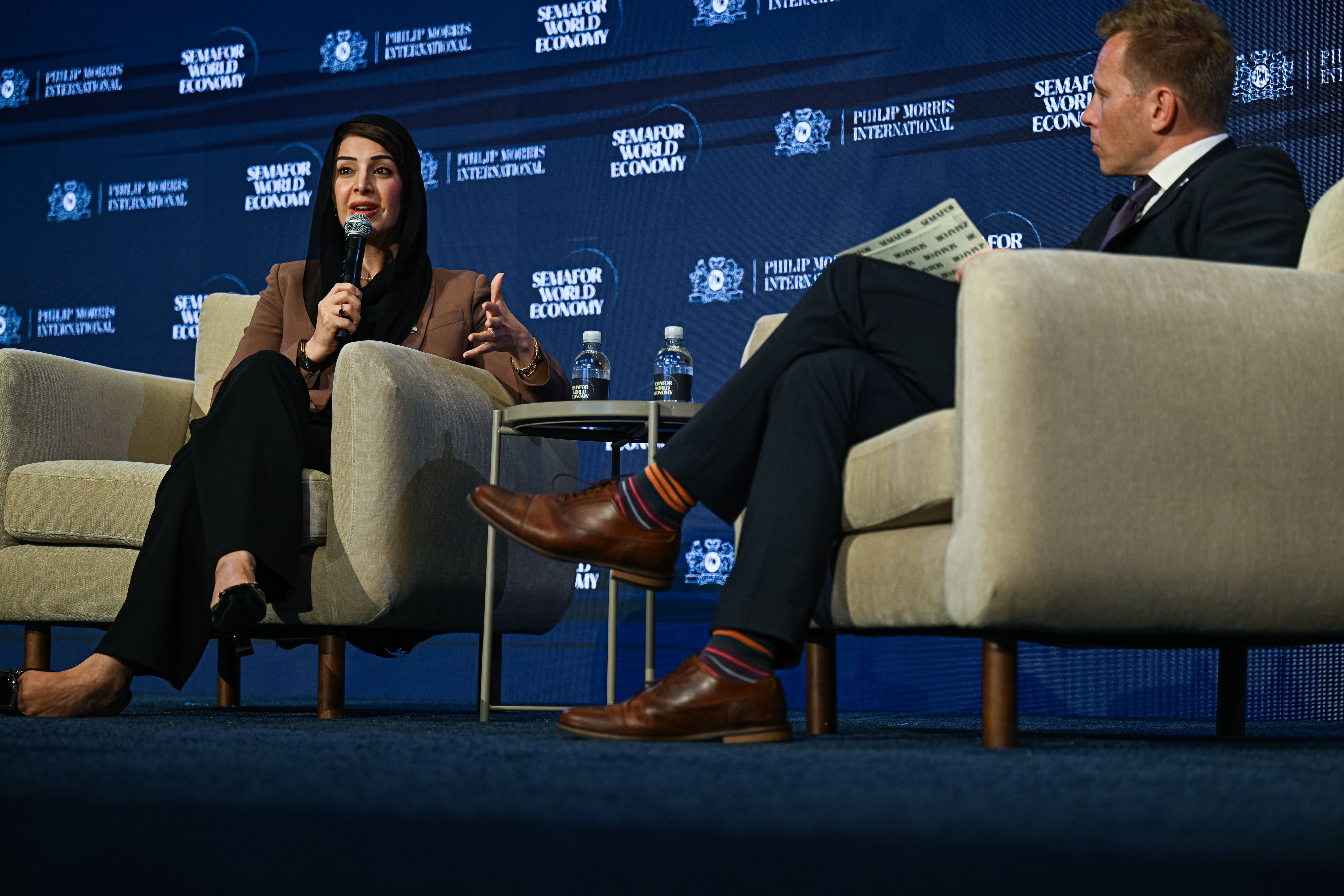
Reem Al Hashimy, UAE Minister of State for International Cooperation, spoke at Semafor World Economy on Wednesday, emphasizing that the Strait of Hormuz should remain free from any single nation's control. She said the UAE prioritizes reopening the strait in any Iran-US security agreement and will not accept deals lacking a final end to Iranian missile and drone technology. Al Hashimy also address
 Semafor
UAE Prioritizes Strait of Hormuz in Iran-US Talks Reem Al Hashimy, UAE Minister of State for International Cooperation, spoke at Semafor World Economy on Wednesday.
She stated that the Strait of Hormuz should not be under anyone’s control. According to Al Hashimy, reopening the Strait of Hormuz as a free and open waterway is the UAE’s top priority in any security agreement between Iran and the US. Al Hashimy said the UAE will not accept an agreement that does not actually put a clear and final conclusion to Iranian missile and drone technology.
She added that Iran’s naval and uranium enrichment capabilities need to be addressed. Nobody should control the Strait of Hormuz, according to Al Hashimy. The Strait of Hormuz remains choked off. The US-Israel war on Iran began on February 28.
The UAE dealt with a barrage of 2,800 missiles and drones from the time the US-Israel war on Iran began.
Gulf Economic Stakes Highlighted Nearly a third of global fertilizer exports come from Gulf countries, according to Al Hashimy.
A quarter of global oil and gas come from Gulf countries, she said. Much of the oil and gas from Gulf countries relies on the Strait of Hormuz for passage to international markets, according to Al Hashimy. The sharpest slowdown will be felt by Gulf economies, according to the International Monetary Fund’s 2026 forecast.
The Gulf bloc of nations includes Kuwait, Saudi Arabia, Qatar, Oman, Bahrain, and the UAE.
Regional Relations and War Context The UAE and Saudi Arabia had been in a diplomatic rift prior to the war.
The UAE and Saudi Arabia's coalition in Yemen collapsed. The public sparring between UAE and Saudi Arabia was the sharpest between Gulf countries since the embargo of Qatar ended in 2021. The public sparring between Gulf countries has been set aside during the war.
The UAE’s relationship to Israel was normalized through the Abraham Accords in 2020, alongside Bahrain. The UAE will continue to work closely with Israel about how to avert some of the bigger challenges that the region faces, according to Al Hashimy.
“The Strait of Hormuz should not be under anyone’s control.”
“— Reem Al Hashimy > "Nobody should control the Strait of Hormuz.”
“— Reem Al Hashimy > "Reopening the Strait of Hormuz as a free and open waterway is the UAE’s top priority in any security agreement between Iran and the US.”
“— UAE official”
Story Timeline
4 events- 2026-04-15 (Wednesday)
Reem Al Hashimy speaks at Semafor World Economy on Strait of Hormuz and Iran-US talks.
1 sourceunattributed - 2026-02-28
US-Israel war on Iran begins; UAE faces 2,800 missiles and drones since then.
1 sourceunattributed - 2021
Embargo of Qatar ends; marks last sharp public sparring between Gulf countries before UAE-Saudi rift.
1 sourceunattributed - 2020
UAE normalizes relations with Israel through Abraham Accords, alongside Bahrain.
1 sourceunattributed
Potential Impact
- 01
Disrupted Strait of Hormuz passage limits Gulf oil and gas exports, affecting 25% of global supply.
- 02
Gulf economies, including UAE, experience sharpest slowdown per IMF forecast due to war and strait closure.
- 03
Set-aside Gulf rivalries, like UAE-Saudi rift, enable unified regional response during war.
- 04
Global fertilizer exports, nearly a third from Gulf, face delays impacting agriculture worldwide.
- 05
UAE pushes for end to Iranian missile, drone, naval, and uranium capabilities in any US-Iran deal.
Multi-source corroboration verifies facts, not framing. This panel scores the Substrate rewrite you just read (top score) and the raw source bundle it came from. A positive delta means the rewrite stripped framing from the sources; a negative or zero delta means our neutralizer let some through.
The UAE's push for unrestricted Hormuz access and curbs on Iran's capabilities could be viewed as an effort to secure Gulf trade routes while protecting allies like Israel from regional threats.
- Lede misdirectionnotable“TITLE: UAE Minister Outlines Priorities...; BODY leads with speech at event”Focuses on messenger's delivery instead of core event of war and strait blockageThe headline leads with who shared, posted, or reacted to the event rather than the substantive event itself — burying the actual news behind the messenger.
- Valence skewminor“'US-Israel war on Iran began on February 28'”Phrasing implies aggressive action by US-Israel against IranAdjectives and adverbs systematically slant toward one interpretation even though the underlying facts are neutral.
Transparency Panel
Related Stories
 dailycaller.com
Federal Jury Finds Live Nation and Ticketmaster Operated Illegal Monopoly in Ticketing Market
A Manhattan federal jury ruled that Live Nation Entertainment and its Ticketmaster subsidiary violated antitrust laws by maintaining a monopoly over major concert venues and ticketing. The verdict followed four days of deliberations in a lawsuit brought by the U.S. Department of…
 The Washington Times
Tax Refunds Average $3,400 in 2026, Up 11% from Prior Year Amid Mixed Economic Signals
A record number of taxpayers received refunds this year, with the average refund amounting to $3,400, an 11% increase from 2025. Approximately 45% of tax filers claimed provisions from President Trump's One Big Beautiful Bill Act.
 indianexpress.com
United States Imposes Blockade on Iran
The United States has initiated a blockade of Iran's ports, prompting condemnation from China and efforts toward peace talks. The conflict, involving the US and Israel against Iran, includes a recent ceasefire announcement and searches for a missing US airman after a plane shootd…