world
UAE Project Pairs 5.2 GW Solar With 19 GWh Battery Storage, Largest Such Installation Reported
The Guardian reported on a range of alternative energy storage projects. These span grid-scale installations in the UAE and smaller innovations using liquid air, molten salt, sand and sweat.
Jul 19, 7:00 AM·2m read1 source
 The Guardian
Audio version
Tap play to generate a narrated version.
Developing·Limited corroboration so far. This page will refresh as more sources emerge.
The Guardian reported that a clean energy project in the United Arab Emirates combines 5.2GW of solar power capacity with 19GWh of battery storage. The installation, described as the largest battery scheme in the world, covers an area roughly the size of 12,600 football fields and will allow solar energy to power the equivalent of half a million homes through the night.
Researchers at the US National Renewable Energy Laboratory in Colorado are developing some of the smallest batteries in use.
These power electronic tags that track 3-inch-long young salmon and eel species. Construction began last year on the Carrington liquid air cryobattery project in Trafford, Greater Manchester. Former mayor Andy Burnham marked the start of work on the Trafford green cluster that includes the facility developed by Highview Power.
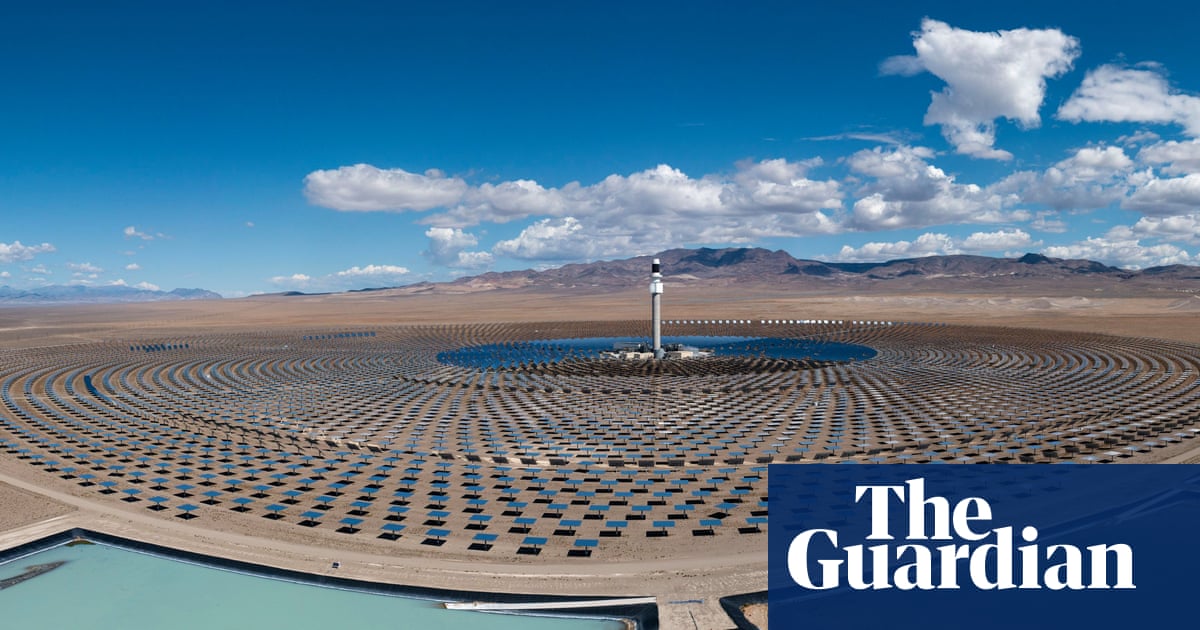
Burnham stated that the development could mean “this decade is the most exciting since the Victorian period for Greater Manchester”. The project has faced delays but is slated to begin operations at the end of the year and will deliver 300MWh of storage and 50MW output for six hours. The Crescent Dunes molten salt storage scheme in the Nevada desert has operated for the past 10 years.
Ten thousand panes heat potassium and sodium nitrate to 560C, a temperature that can be maintained for 10 hours after sunset before conversion to electricity. Denmark unveiled a 1GWh large-scale molten salt battery project earlier this year. The system stores clean electricity for up to two weeks by heating salts to approximately 600C and can produce high-temperature steam for industrial processes.
In Pornainen, southern Finland, a sand battery uses about 2,000 tonnes of crushed soapstone to store clean energy as heat. The installation provides 1MW of thermal power and 100MWh storage capacity. It stands about 13 metres tall and 15 metres wide and is about 10 times larger than an earlier version launched in the country in 2022.