technology
Uber to Offer Stadium Shuttles at Four U.S. World Cup Venues
Uber will run shuttle services from stadiums in New York-New Jersey, Boston, Miami and Dallas during the 2026 FIFA World Cup. Advance booking is required and fares range from $45 to $49 per seat.
May 29, 7:00 AM·1m read1 source
 Engadget
Audio version
Tap play to generate a narrated version.
Developing·Limited corroboration so far. This page will refresh as more sources emerge.
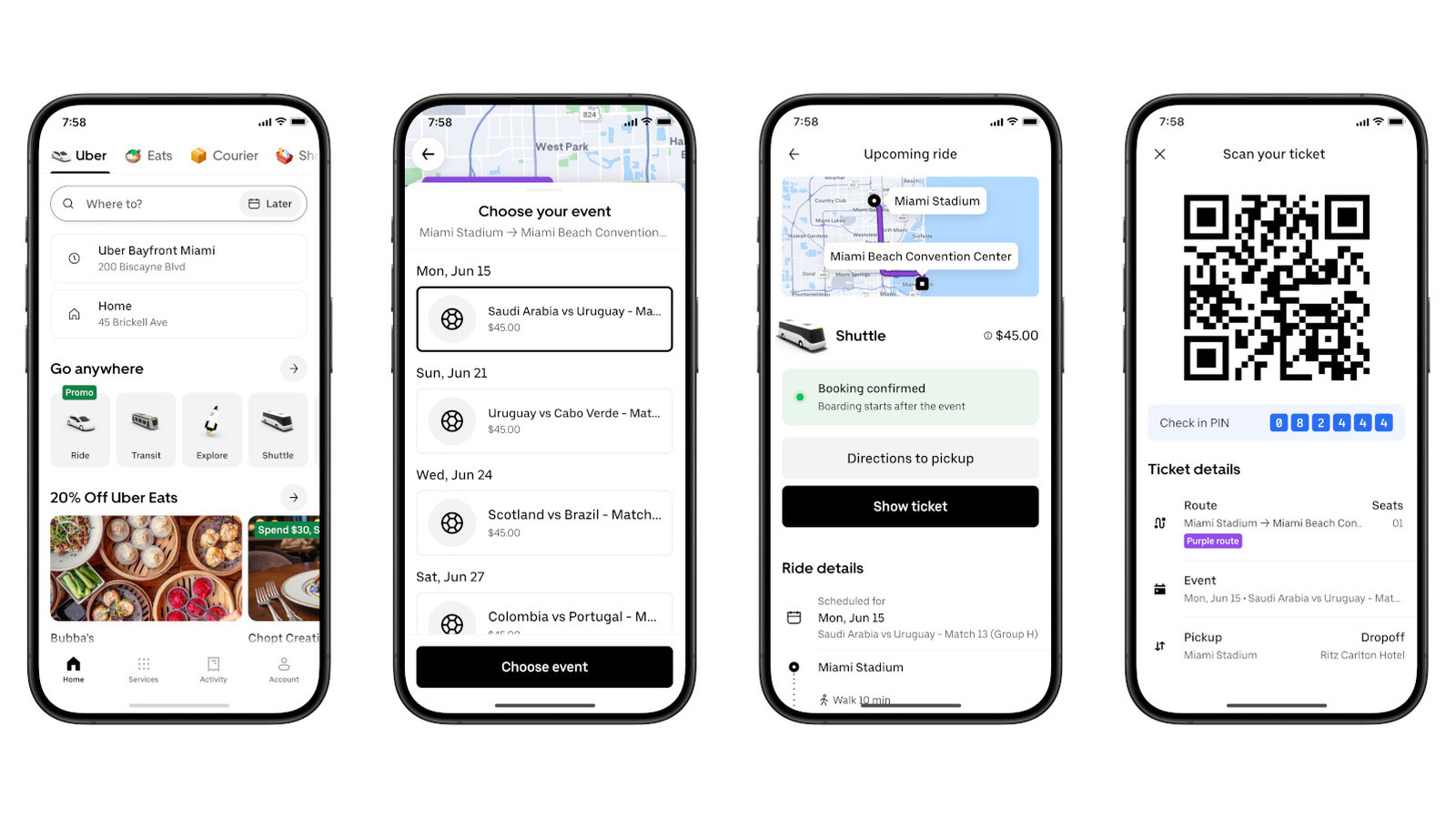
FIFA World Cup stadiums to help fans reach hotels or homes after matches. The service covers venues in New York-New Jersey, Boston, Miami and Dallas. Shuttles departing the stadium will run at all four sites; round-trip service will be available only in Miami.
Riders must reserve seats in advance through the Uber app by selecting the shuttle icon and paying a flat fare. A QR code is presented at the boarding point.
Canada and Mexico. Similar directions will be available at stadiums in San Francisco, Seattle, Los Angeles, Atlanta, Vancouver and Toronto. Fans traveling in groups can reserve Uber Max 14-seat vans for matches in New York, Miami and Los Angeles. Bookings are made through the Hourly tile for periods of up to eight hours.
Transparency
How sources framed this
Single source — no framing comparison available.
CorroborationLimited · 1 source