Substrate
world

UK Government Weighs Climate Argument in North Sea Oil Debate

The UK government has focused on energy security and economic arguments when defending its policy against new North Sea drilling licenses. A climate-based case is now being presented as the stronger position for winning the debate.

The Independent
1 source·May 21, 3:20 PM(8 days ago)·2m read
UK Government Weighs Climate Argument in North Sea Oil DebateThe Independent
Audio version
Tap play to generate a narrated version.

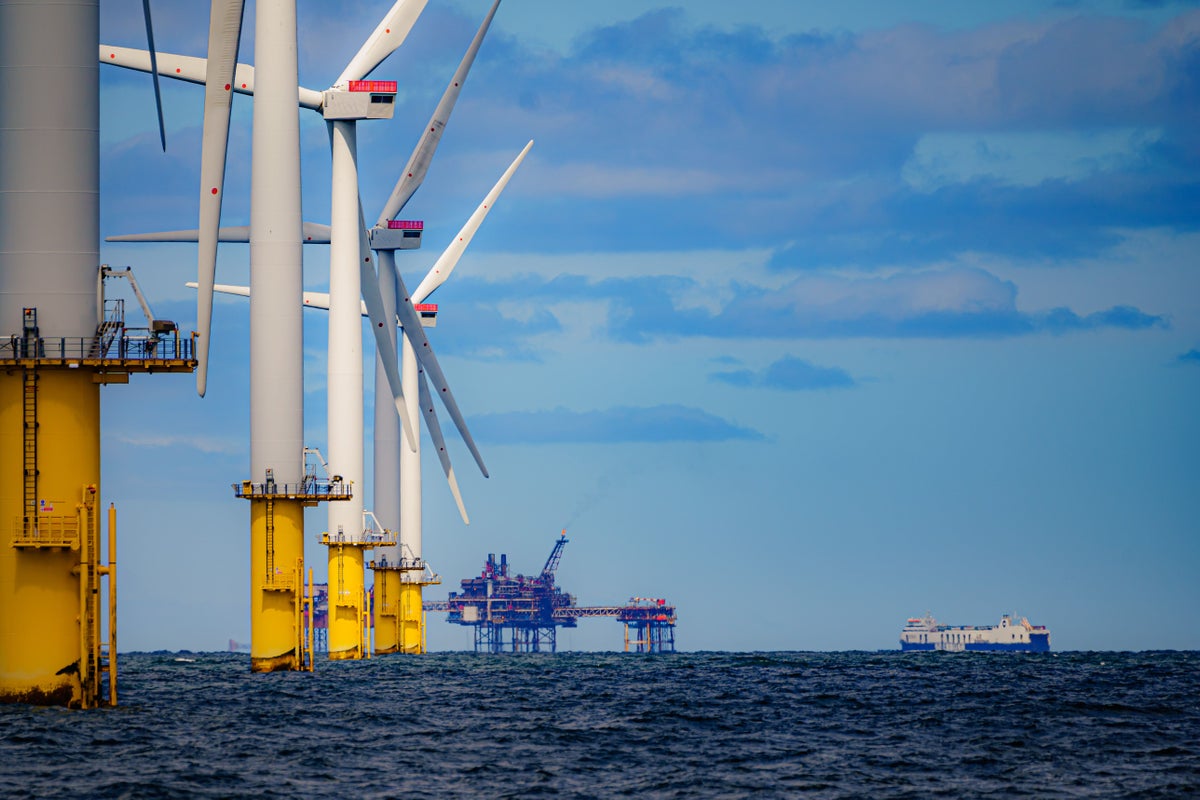
When ministers defend the government's position against new North Sea drilling, they have typically relied on two arguments. The first is that oil and gas prices are set on global markets regardless of UK production levels. The second is that the North Sea Basin is already 90 percent extracted and new licenses would not change that reality.

Trade minister Chris Bryant said issuing new licenses would not affect energy prices amid the situation in the Middle East. Recent months have seen government ministers repeat similar points. Only a rapid shift to renewables will free energy bills from global hydrocarbon price swings, the article states.

Fourteen years of maximizing drilling licenses under the previous policy produced discoveries that would supply just 36 additional days of gas per year. Opponents have countered that even a small gain in extraction would still be worthwhile.

The International Energy Agency reported in 2021 that no new drilling licenses are needed for the world to meet its net-zero emissions target by 2050. The UK has a legally binding climate target aligned with that timeline. Countries continuing to expand fossil fuel production have been warned that this path risks 4-5C of warming and civilizational collapse.

Ed Matthew, director of the UK programme at think tank E3G, said adopting a policy of extracting every last drop would send a signal to other nations. He added that a world of uncontrolled climate change would create a cost-of-living crisis far worse than current conditions.

One study projects a $38 trillion annual hit to the global economy by 2050 without action.

Sea fields already approved for extraction remain blocked by a Scottish court ruling that required fuller climate impact assessments. Jackdaw is a gas field 150 miles east of Aberdeen owned by Shell. Rosebank is an oil and gas field northwest of Shetland jointly owned by Shell and Equinor.

Shell has called for the government to approve the fields. Energy secretary Ed Miliband is expected to decide on the projects. Research shows Jackdaw and Rosebank would displace only about two percent and one percent of annual UK gas imports respectively.

The government must weigh whether any marginal production gain would outweigh the principle of signaling a shift away from fossil fuels toward clean energy opportunities.

Key Facts

North Sea Basin
90 percent extracted
New drilling licenses
Not required for 2050 net-zero target per IEA
Jackdaw and Rosebank
Would displace 2 percent and 1 percent of UK gas imports
Global economy
Could face $38 trillion annual hit by 2050 from climate change

Story Timeline

4 events
  1. 2021

    International Energy Agency released report on net-zero pathway by 2050.

    1 sourceThe Independent
  2. Recent months

    Government ministers focused on energy security and economic arguments.

    1 sourceThe Independent
  3. Last year

    Scottish court blocked two approved North Sea fields over climate assessments.

    1 sourceThe Independent
  4. Recent days

    Shell publicly called for government approval of Jackdaw and Rosebank fields.

    1 sourceThe Independent

Potential Impact

  1. 01

    Government decision on Jackdaw and Rosebank could affect UK fossil fuel production levels.

  2. 02

    UK policy stance may influence other countries' fossil fuel extraction decisions.

  3. 03

    Continued focus on climate argument could shape future energy licensing debates.

Transparency Panel

Sources cross-referenced1
Confidence score65%
Synthesized bySubstrate AI
Word count386 words
PublishedMay 21, 2026, 3:20 PM
Bias signals removed1 across 1 outlet
Signal Breakdown
Diminishing 1

Related Stories

WHO Chief Visits DRC as Ebola Death Rate Reaches 30-50%The Guardian
world38 min ago

WHO Chief Visits DRC as Ebola Death Rate Reaches 30-50%

World Health Organization director-general Tedros Adhanom Ghebreyesus arrived in the Democratic Republic of the Congo to support containment of a new Ebola outbreak. The agency revised the death rate to 30-50% based on confirmed cases and recorded 10 confirmed and 223 suspected d…

SK
The Guardian
2 sources
Greek National Charged in UK With Aiding Iran-Linked Intelligence Servicewesternjournal.com
world38 min ago

Greek National Charged in UK With Aiding Iran-Linked Intelligence Service

A 46-year-old Greek man living in Germany was charged under the UK National Security Act with assisting an intelligence service believed to be Iran by targeting a journalist at Iran International.

Reuters
BBC News
2 sources
Supreme Court Revives Havana Docks Lawsuit Over Confiscated Cuban Propertyupi.com
world2 hrs ago

Supreme Court Revives Havana Docks Lawsuit Over Confiscated Cuban Property

The U.S. Supreme Court sent a Helms-Burton Act case back to lower courts for further argument. The suit seeks damages from cruise lines that used docks seized by Cuba in 1959.

FO
1 source