Ukraine Produces Over 2,000 Interceptor Drones Daily
Brave1 CEO Andrii Hrytseniuk said Ukraine has developed a new class of low-cost interceptor drones that destroy the majority of incoming Russian Shahed-136s. More than 150 Ukrainian companies manufacture variants ranging from small FPV types to long-endurance aircraft, achieving a 97 percent success rate against the latest mass barrage.
The War ZoneUkraine has built a new class of low-cost interceptor drones that now account for the majority of Russian Shahed-136s destroyed in its airspace, Brave1 CEO Andrii Hrytseniuk said in an interview conducted hours after the most intense drone barrage of the war.
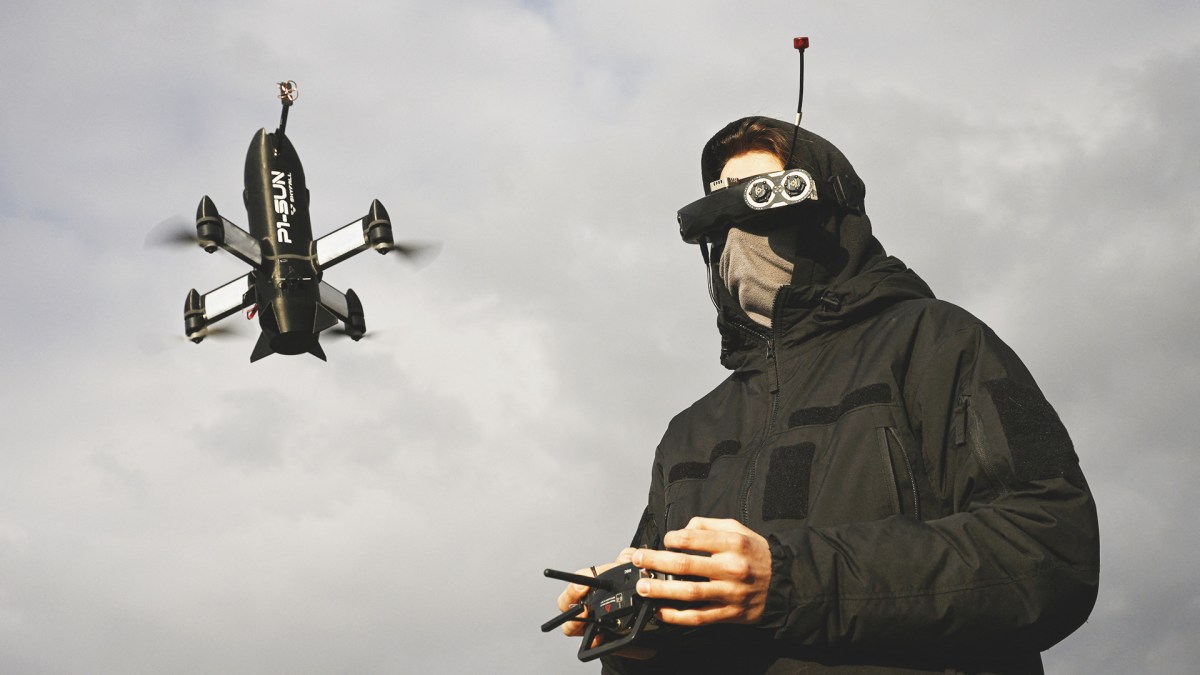
The interceptors, some costing about $1,000 each and reaching nearly 200 miles per hour, offer a far cheaper alternative to Patriot missiles that cost more than $5 million per shot. Hrytseniuk said more than 150 Ukrainian companies produce them in varied architectures, including small rocket-style FPV drones, fixed-wing aircraft resembling small planes, and X-wing hybrids.
Different designs serve different needs. Small interceptors engage Shaheds only in the final kilometers near coastal cities such as Odesa, while longer-endurance aircraft loiter for hours and hundreds of kilometers to locate and destroy targets. The variety allows commanders to match platforms to regional conditions and threat axes.
During Russia's latest 24-hour attack that exceeded 1,300 Shaheds, Ukrainian air defenses hit 97 percent of the incoming drones, according to public data from the air defense command. Hrytseniuk declined to specify how many were downed specifically by interceptors but confirmed they dominate current aerial defense.
Ukraine can manufacture more than 2,000 interceptors per day and could scale higher for export contracts. Hrytseniuk said the current output is not a ceiling, noting the need for large volumes given the scale of Russian attacks. Washington supplied its Merops interceptor drone system to Ukraine in 2024; that system later deployed to the Middle East to protect U.S. assets during the now-paused conflict with Iran.

Hrytseniuk said Ukrainian military feedback and Brave1 expertise contributed directly to Merops becoming a high-performing system.
Hrytseniuk said his team holds regular discussions, calls, and conferences with the majority of allied countries, sharing operational results and the rapid transformation of Ukraine's defense industry. Interest has shifted dramatically since the early months of the war, when it was almost nonexistent, to become the top priority today.
He recommended that the U.S. focus on three principles: recognize that preparation time has run out, ensure defense costs remain lower than enemy attack costs, and pursue asymmetrical solutions. Ukraine developed interceptors when it lacked air-defense missiles, FPV drones when it ran short of 155mm artillery shells, and naval drones when it lacked a surface fleet.
At least 10 different interceptor architectures are required to address the full spectrum of threats, Hrytseniuk said. These include platforms optimized against ISR drones, heavyweight Shahed-type kamikaze drones, decoys, high-altitude targets, fast jet-powered kamikazes, and designs offering rapid throttle response or extended range.
The systems form part of a broader drone-based aerial defense segment that also requires radars, navigation, remote-control stations, and secure command shelters located away from front lines. Ukrainian operators can already control interceptors from anywhere in the world, including potentially from U.S. Central Command headquarters in Tampa or even New York and California.
Hrytseniuk said this method produces higher hit rates against Shaheds than full human-in-the-loop control, while maintaining ethical oversight. Observing U.S., Israeli, and Gulf allies defending against Iranian Shahed-type drones yielded a key lesson, he said.
No nation should assume its technologies are sufficient or that it is secure enough, because adversaries continually develop unexpected capabilities. Speed of reaction and continuous improvement are therefore critical. Hrytseniuk noted close cooperation between Russia and Iran, with technologies flowing in both directions, but said he observed no fundamentally new Iranian employment methods.
Ukrainian companies monitor the Middle East fighting closely and have expressed willingness to adapt their weapons based on fresh lessons. Interceptor drones augment but do not replace high-end systems such as Patriot, which remains essential for ballistic and hypersonic threats.
“Interceptors have extremely high potential, and the main advantage of the interceptors is extremely low price.”
“The majority of Shaheds are destroyed by interceptors. So this is the dominance of interceptors in aerial defense already. And Ukraine built the new class of weapon globally. It didn’t exist before.”
Brave1 now works with more than 2,300 Ukrainian companies developing weapons, a sharp increase from the state-dominated sector that existed when the full-scale war began. The organization evaluates ideas from industry and the military to accelerate innovation across multiple domains.
Key Facts
Story Timeline
5 events- May 14, 2026
Russia launches its most intense Shahed-136 barrage of the war exceeding 1,300 drones in 24 hours.
2 sourcesThe War Zone · TheWarZoneWire - May 2026
Brave1 CEO Andrii Hrytseniuk gives hour-long interview on interceptor drone program hours after the barrage.
2 sourcesThe War Zone · TheWarZoneWire - 2025
U.S. supplies Merops interceptor drone system to Ukraine; later deploys it to Middle East.
1 sourceThe War Zone - 2024
Ukraine begins fielding diverse domestic interceptor drones against Russian Shahed attacks.
2 sourcesThe War Zone · TheWarZoneWire - Early 2022
Ukraine's defense industry shifts from mostly state-run to more than 2,300 private and state companies.
1 sourceThe War Zone
Potential Impact
- 01
Ukraine scales interceptor output beyond 2,000 units per day under potential export contracts.
- 02
Remote operation technology allows Ukrainian pilots to control interceptors from anywhere in the world.
- 03
High-cost systems like Patriot are reserved for ballistic threats while interceptors handle Shaheds.
- 04
U.S. military continues technical exchanges with Brave1 on drone defense systems.
- 05
Allied nations are adopting Ukrainian interceptor concepts for defense against Iranian Shahed-type drones.
Transparency Panel
Related Stories
The GuardianWHO Chief Visits DRC as Ebola Death Rate Reaches 30-50%
World Health Organization director-general Tedros Adhanom Ghebreyesus arrived in the Democratic Republic of the Congo to support containment of a new Ebola outbreak. The agency revised the death rate to 30-50% based on confirmed cases and recorded 10 confirmed and 223 suspected d…
westernjournal.comGreek National Charged in UK With Aiding Iran-Linked Intelligence Service
A 46-year-old Greek man living in Germany was charged under the UK National Security Act with assisting an intelligence service believed to be Iran by targeting a journalist at Iran International.
physicianonfire.comBilt Rewards reports $1 billion revenue target for 2026
Bilt Rewards CEO Ankur Jain said the company's flagship credit card accounts for less than 11 percent of revenue. The firm now processes more than $100 billion in annual housing spend across one in four U.S. apartment buildings.