world
US Air Force Seeks $1 Million To Study Future Heavy Bomber Needs
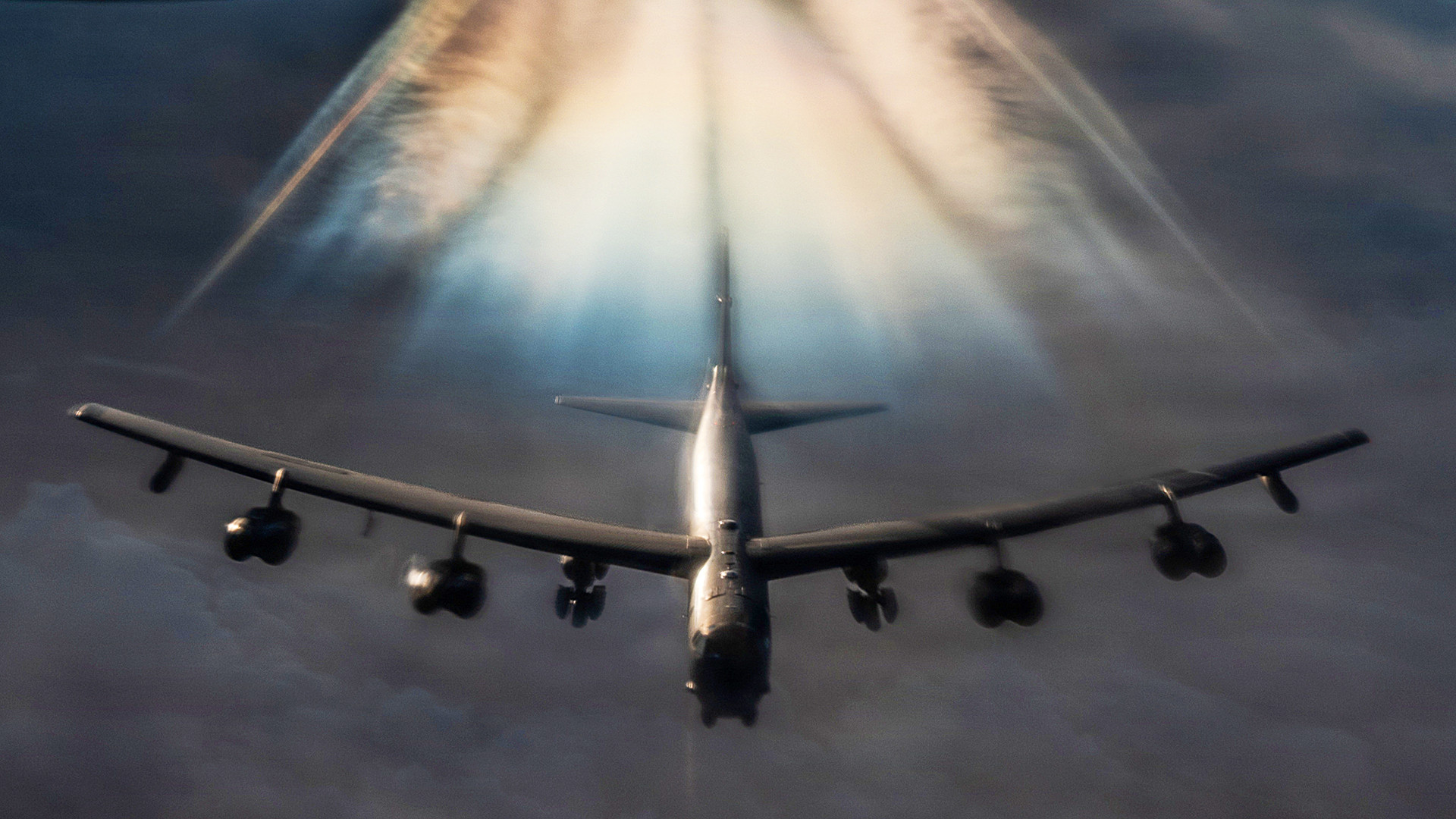
The U.S. Air Force has requested $1 million in its fiscal 2027 budget to begin a New Heavy Bomber Analysis of Alternatives. The study will examine long-range strike requirements and assess whether a successor to the B-52 is needed. The service plans to operate upgraded B-52s into the 2050s when the youngest airframes will be nearly 90 years old.
May 7, 7:59 PM·2m read1 source
 The War Zone
Audio version
Tap play to generate a narrated version.
Developing·Limited corroboration so far. This page will refresh as more sources emerge.
The U.S. Air Force is requesting $1 million in its fiscal year 2027 budget proposal to conduct a New Heavy Bomber Analysis of Alternatives. The review will assess future long-range strike requirements and evaluate options that could include continued upgrades to the B-52 or development of a new heavy bomber aircraft.
Aviation Week first reported the inclusion of the study in the service's budget documents. The Air Force currently operates 76 B-52H Stratofortress bombers. The last of these aircraft was built in 1962. The bombers have received multiple upgrades over the decades and remain in demand for both conventional strike missions and as part of the air leg of the U.S. nuclear triad.
The Air Force is already conducting a multi-billion-dollar upgrade program that will redesignate the aircraft as the B-52J. The upgrades include new engines, radars and communications systems. New ordnance such as hypersonic missiles and updated nuclear weapons are also being integrated onto the fleet.
Based on current plans, the B-52J is expected to outlast both the B-1 and B-2 bombers and operate alongside the forthcoming B-21 Raider. The B-52's design allows it to carry large payloads under its wings, a capability that has proven useful for both operational missions and test programs.
The $1 million for the new study would be allocated under a budget line item titled "Advanced Concept Demonstration" within the B-52 System Improvements account. The service did not request funding for this line item in fiscal 2026 but received nearly $4 million for it in fiscal 2025.
That earlier funding supported a classified proof-of-concept demonstration on the B-52.