Substrate
politics

US and China Accelerate Competing Sanctions and Regulations

The United States and China have intensified efforts to issue rival legal and regulatory measures on trade, technology and security issues. Companies from multiple countries report they face conflicting requirements that make compliance with one side likely to violate the other. Beijing invoked its Blocking Rules in early May to shield five Chinese oil refiners from U.S.

South China Morning Post
1 source·May 14, 10:00 PM(14 days ago)·2m read
US and China Accelerate Competing Sanctions and RegulationsSouth China Morning Post
Audio version
Tap play to generate a narrated version.
Developing·Limited corroboration so far. This page will refresh as more sources emerge.

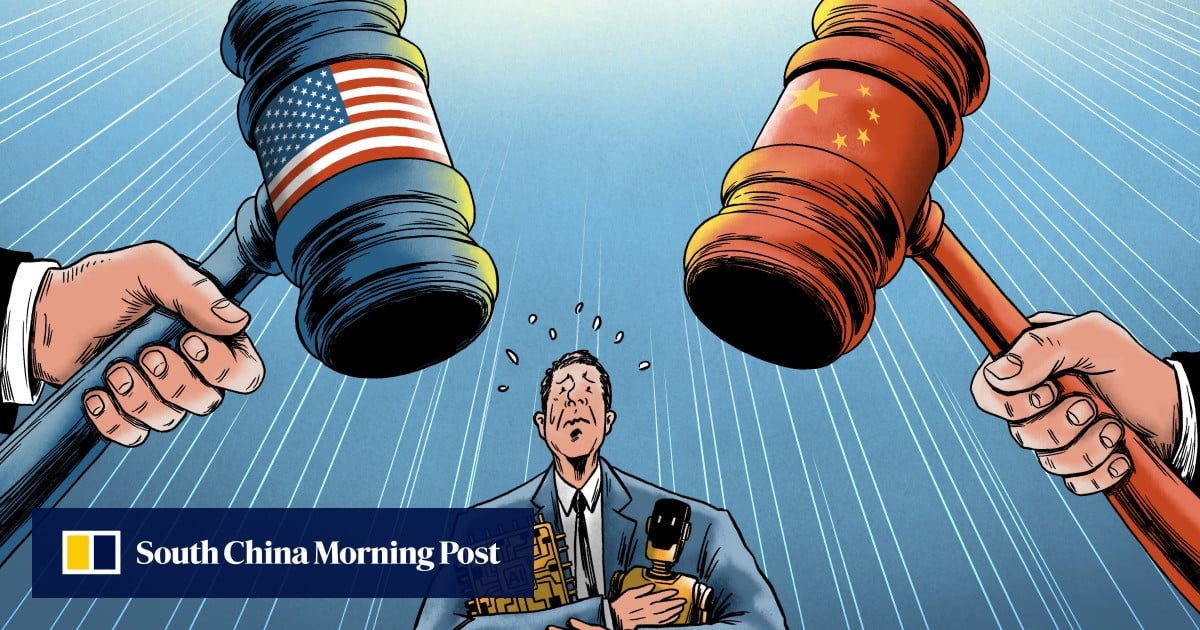
The United States and China are issuing competing sanctions, rules and regulations at an accelerating pace as both governments seek leverage in their trade, technology and security disputes. Global businesses are caught between the two sets of requirements, often finding that meeting the demands of one country would breach the rules of the other.

A recent example occurred in early May when Beijing invoked its Blocking Rules for the first time. The measure, adopted in 2021, was used to order companies not to comply with U.S. sanctions against five Chinese oil refiners. That action followed several steps taken by Chinese authorities in April, including unwinding the Meta-Manus deal, issuing new security rules aimed at protecting supply chains from foreign threats, and introducing tougher regulations to counter the unjustified extraterritorial use of foreign laws.

Meanwhile, U.S. authorities have imposed sanctions on multiple Chinese entities accused of maintaining trade links with Iran. The sanctioned parties include the same five oil refiners that Beijing moved to protect.

Background on the Legal Measures Both governments have expanded their use of legal tools in recent months. Washington has focused on sanctions targeting entities linked to Iran, while Beijing has responded with blocking statutes and supply-chain security regulations.

The Blocking Rules allow Chinese authorities to prohibit compliance with certain foreign legal actions deemed improper. Their first use against U.S. sanctions on oil refiners marks a new stage in the regulatory standoff. Companies now face the practical challenge of navigating overlapping and contradictory mandates.

Observers note that full compliance with both jurisdictions simultaneously is frequently not possible.

Trump’s visit to China takes place against the backdrop of the U.S.-Iran war, which has disrupted global energy supplies and added uncertainty to economic conditions. The legal developments between Washington and Beijing form one element of the wider bilateral relationship.

Trade tensions between the two countries have persisted for years, with businesses already accustomed to shifting regulatory demands. The latest phase centers on parallel legal regimes rather than tariffs alone. The measures affect sectors including energy, technology and manufacturing supply chains.

How companies respond in the coming months will determine the practical impact of the competing rules.

Key Facts

Competing legal regimes
US and China issuing rival sanctions and rules
Blocking Rules invoked
Beijing's first use in early May 2026
Five Chinese oil refiners
Targeted by US sanctions and protected by Beijing
April actions
Unwound Meta-Manus deal and issued supply chain rules
Affected companies
Firms from South Korea, Netherlands, US and China

Story Timeline

4 events
  1. Early May 2026

    Beijing invoked Blocking Rules to protect five Chinese oil refiners from U.S. sanctions.

    1 sourceSouth China Morning Post
  2. April 2026

    Chinese authorities unwound the Meta-Manus deal and issued new supply chain security rules.

    1 sourceSouth China Morning Post
  3. Recent months 2026

    U.S. authorities sanctioned Chinese entities including the five oil refiners over Iran trade links.

    1 sourceSouth China Morning Post
  4. 2021

    China adopted its Blocking Rules to counter improper foreign actions.

    1 sourceSouth China Morning Post

Potential Impact

  1. 01

    Multinational companies must choose between violating U.S. or Chinese requirements on sanctioned entities.

  2. 02

    Energy sector firms face heightened compliance risks due to sanctions on Chinese oil refiners.

  3. 03

    Legal costs for businesses navigating dual regimes are expected to increase.

  4. 04

    Global supply chains in technology and manufacturing encounter additional regulatory friction.

Transparency Panel

Sources cross-referenced1
Confidence score75%
Synthesized bySubstrate AI
Word count364 words
PublishedMay 14, 2026, 10:00 PM
Bias signals removed3 across 2 outlets
Signal Breakdown
Loaded 2Framing 1

Related Stories

Trump Meets Advisers to Decide on Iran Ceasefire ExtensionBBC News
politics44 min ago

Trump Meets Advisers to Decide on Iran Ceasefire Extension

President Trump said he is holding a Situation Room meeting to make a final decision on a possible deal with Iran. The proposed agreement would extend the ceasefire by 60 days and reopen the Strait of Hormuz.

Al Jazeera
JA
MA
AF
AJ
+6
11 sources
Trump to Decide on Iran Deal in Situation Room Meetingmiddleeasteye.net
politics44 min ago

Trump to Decide on Iran Deal in Situation Room Meeting

President Trump said Friday he is heading into the Situation Room to make a final determination on a potential agreement with Iran. The proposed deal would reopen the Strait of Hormuz without tolls and require destruction of Iran's highly-enriched uranium.

LI
Just the News
CBS News
3 sources
Trump Says U.S. Will Lift Iran Naval Blockade After Nuclear and Hormuz Pledgesrealitytea.com
politics2 hrs agoDeveloping

Trump Says U.S. Will Lift Iran Naval Blockade After Nuclear and Hormuz Pledges

President Trump stated the U.S. will end its naval blockade of Iran once Tehran commits to forgoing nuclear weapons and opens the Strait of Hormuz to unrestricted shipping. The announcement came via Truth Social and a live statement.

FI
LI
MA
3 sources