US Deploys Three Aircraft Carriers to Middle East; Iran Attacks Ships in Strait of Hormuz
The U.S. has positioned three aircraft carrier strike groups in the Middle East for the first time since 2003, as Iran continues attacks on shipping in the Strait of Hormuz despite a ceasefire extension by President Trump. Iranian forces fired on and seized multiple vessels, escalating tensions during ongoing peace talks. The deployment supports blockade measures and operations in the region.
The War ZoneThe United States has deployed three aircraft carrier strike groups to the Middle East, marking the first such presence since 2003, according to U.S. Central Command. The carriers George H.W. Bush, Abraham Lincoln, and Gerald R. Ford are operating in the region amid heightened tensions with Iran.
This deployment occurs as Iran has ramped up attacks on ships in the Strait of Hormuz following President Trump's extension of a ceasefire. Iranian forces fired on and seized at least two container ships in the strait, with reports of a third incident.
The attacks took place shortly after the ceasefire extension, highlighting ongoing hostilities despite diplomatic efforts.
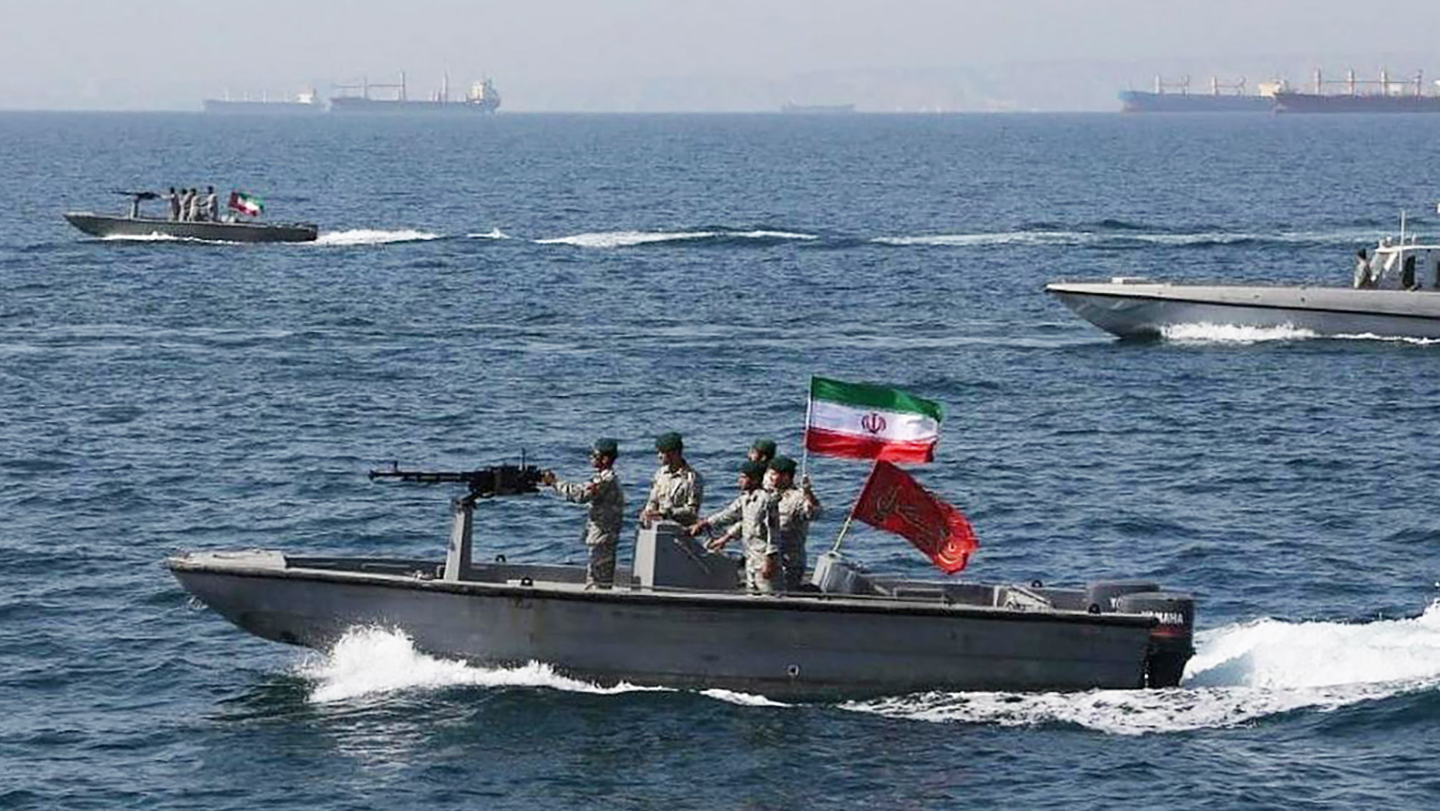
The United Kingdom Maritime Trade Operations reported that a container ship was approached by an Islamic Revolutionary Guard Corps gunboat and fired upon, causing heavy damage to the bridge. All crew members were reported safe, with no fires or environmental impact.
A second incident involved an outbound cargo ship that was fired upon and stopped in the water, though the crew remained safe and the vessel undamaged. Iranian officials stated that the Islamic Revolutionary Guard Corps seized the Liberian-flagged Epaminodes and the Panamanian-flagged MSC-Francesca for endangering maritime security by operating without permits and tampering with navigation systems.
The vessels were directed to the Iranian coast for inspection. Iranian media also reported firing on the Panamanian-flagged Euphoria.
“The two vessels are currently in the territorial waters of the Islamic Republic of Iran for inspection of their cargo, documentation, and related records.”
Satellite imagery showed a flotilla of at least 33 IRGC fast attack craft near the Kargan coast, potentially linked to enforcing the strait's closure. The IRGC has invested in small boats armed with anti-ship missiles and other weapons, with U.S. forces having destroyed over 150 such vessels.
Trump extended the ceasefire with Iran, but attacks continued as Tehran refused to commit to peace talks until the U.S. ends its blockade of Iranian ports. White House Press Secretary Karoline Leavitt stated that Operation Economic Fury persists, strangling Iran's economy with losses of $500 million per day through the blockade.
“There's a ceasefire with the military and kinetic strikes, but Operation Economic Fury continues and… we are completely strangling their economy through this blockade. They're losing $500M/day… He's satisfied with that as we await their response.”
The George H.W. Bush carrier strike group arrived in the U.S. 5th Fleet area last week, joining the Abraham Lincoln group in the Arabian Sea and the Gerald R. Ford in the northern Red Sea. These carriers support blockade measures and Operation Epic Fury, embodying 14 acres of sovereign U.S. territory with over 200 aircraft and 846 vertical launch system tubes on accompanying destroyers.
Iran has proposed extracting a $2 million payment from tankers using the Strait of Hormuz, which could raise energy costs long-term. The strait is a critical route for oil and gas, and recent actions have pushed up prices. Iranian media highlighted the vulnerability of undersea telecommunications cables in the strait, noting that at least seven main cables carry 97% of the world's internet traffic.
This includes cables like FALCON, AAE-1, TGN-Gulf, and SEA-ME-WE, connecting to major data centers. The Pentagon informed Congress that clearing mines from the strait could take six months, unlikely to begin until the conflict ends, potentially extending economic impacts.
Peace talks between the U.S. and Iran have begun amid these renewed attacks and the blockade.
The three carriers represent the largest U.S. naval presence in the region in over two decades. The George H.W. Bush sailed around the southern tip of Africa to arrive, coinciding with the ceasefire extension timeline of three to five days. Other U.S. carriers include the Theodore Roosevelt training in the U.S. 3rd Fleet area, integrating with unmanned surface vessels like the Seahawk.
Eisenhower completed sea trials on April 24 after a 15-month maintenance period. Four of America's 11 carriers are currently in maintenance.
Key Facts
Story Timeline
5 events- Apr 26, 2026
U.S. Central Command confirms three aircraft carriers operating in Middle East for first time since 2003.
4 sourcesTheWarZoneWire · Defense News · Breaking Defense · The War Zone - Apr 25, 2026
George H.W. Bush Carrier Strike Group sails in Indian Ocean en route to Middle East.
1 sourceTheWarZoneWire - Apr 22, 2026
Iranian forces fire on and seize container ships in Strait of Hormuz.
2 sourcesThe War Zone · The Guardian - Apr 22, 2026 — evening
White House Press Secretary Karoline Leavitt states Operation Economic Fury continues despite ceasefire.
1 sourceThe War Zone - Last week
George H.W. Bush CSG arrives in U.S. 5th Fleet area.
1 sourceTheWarZoneWire
Potential Impact
- 01
US blockade will continue causing $500 million daily losses to Iran.
- 02
Energy prices will remain elevated due to strait disruptions.
- 03
Peace talks between US and Iran will face delays from ongoing attacks.
- 04
Mine clearance in Strait of Hormuz will extend economic effects into late 2026.
- 05
Additional US naval assets will bolster blockade enforcement in Arabian Sea.
- 06
Telecommunications cables in strait risk disruption from escalated tensions.
Transparency Panel
Related Stories
Trump Pauses US Operation in Strait of Hormuz to Advance Iran Deal Talks
President Trump announced a temporary pause to Project Freedom, the U.S. effort to guide ships through the Strait of Hormuz, citing progress toward a settlement with Iran. The blockade on Iranian ports remains in effect, while Secretary of State Marco Rubio stated that the offens…
inquisitr.comTom Homan Discusses Minneapolis Immigration Enforcement After Shooting
Tom Homan, White House Border Czar, stated that mass deportations can proceed in a smarter way. He acknowledged imperfections in the Minneapolis immigration crackdown following a deadly shooting. Homan highlighted efforts to address and fix issues after President Trump sent him t…
Canadian House Committee Hears Testimony on EV Import Deal with China
Industry experts and policy leaders testified before a Canadian parliamentary committee on the economic and security risks posed by a new trade agreement permitting low-tariff imports of Chinese electric vehicles. The deal, signed in January 2026, reduces tariffs and sets import…