Unbiased AI-powered news
US President Donald Trump announced the extension of a two-week ceasefire with Iran on April 23, 2026, citing requests from Pakistan's Field Marshal Asim Munir and Prime Minister Shehbaz Sharif. The move follows Pakistan-mediated talks amid ongoing regional tensions. Munir's role highlights his rising influence in international diplomacy since a 2025 conflict with India.
Substrate placeholder — needs reviewUS President Donald Trump announced the extension of a two-week ceasefire between the United States and Iran on April 23, 2026, hours before it was due to expire on Wednesday. Trump named Pakistan’s defence forces chief Asim Munir and Prime Minister Shehbaz Sharif as those who urged him to extend the ceasefire.
Asim Munir held direct consultations with US officials and Iranian officials. Munir welcomed the US delegation and the Iranian team in Islamabad on April 11 for the first round of direct talks, which failed to yield a breakthrough. Following the unsuccessful talks, Munir undertook a visit to Tehran, the first by a regional military leader since the US-Israel war on Iran began on February 28.
Asim Munir gestures before US-Iran peace talks in Islamabad, April 11, 2026 [Jacquelyn Martin/Pool via Reuters]. A ceasefire was announced on April 8, negotiated by Munir and officials.
During the final days of March, Munir held repeated conversations with Trump. On March 24, Pakistan formally offered to host talks between the US and Iran, and Pakistani officials delivered a US proposal to Iran on March 25. The foreign ministers of Pakistan, Turkiye, Egypt, and Saudi Arabia met in Islamabad on March 29 for the second time in 10 days.
On March 7, Munir travelled to Riyadh to meet Saudi Defence Minister Khalid bin Salman Al Saud. Munir returned to Riyadh with Sharif for talks with Crown Prince Mohammed bin Salman on March 12. In May 2025, Munir travelled to Iran with Sharif and met an Iranian general, who was killed weeks later in Israeli air strikes.
Pakistan maintained channels with the US and Iran during and after the 12-Day War involving Israel, Iran, and the US. The US and Israel launched their offensive on Iran on February 28. Munir's global rise stems from a four-day conflict with India last year.
Armed men killed 26 tourists, most of them Hindu men, in Baisaran Valley in Indian-administered Kashmir’s Pahalgam on April 22, 2025. India blamed Pakistan for the Pahalgam attack, while Islamabad denied involvement and called for an independent investigation. India and Pakistan went to war within two weeks of the Pahalgam attack, with the war lasting four days.
India launched Operation Sindoor on May 7, 2025, striking targets inside Pakistan and Pakistan-administered Kashmir. Pakistan responded by downing multiple Indian jets, losses that New Delhi partially acknowledged. A ceasefire between India and Pakistan was reached on May 10 through backchannel diplomacy involving Washington.
Trump repeatedly claimed credit for the India-Pakistan ceasefire, saying so dozens of times. Pakistan thanked Trump for the ceasefire and nominated him for the Nobel Peace Prize, while India denied Trump’s claims and insisted it resulted from bilateral communication with Pakistan.
Pakistan’s federal cabinet unanimously approved Munir’s promotion to field marshal on May 20, crediting his leadership during the war with India.
Munir became Pakistan's army chief in November 2022 and was elevated to field marshal after the four-day conflict with India. Munir is the second officer in Pakistan’s history to hold the rank of field marshal after Ayub Khan, and he retained his position as chief of army staff after the promotion.
An analyst said the conflict with India proved pivotal for Munir’s global rise, although its roots lay in domestic developments. “The May 2025 conflict with India was pivotal for Munir’s rise on the global stage. In an era of middle powers and great-power competition, everyone noticed.
Given the broader backsliding of democracy globally, nobody was particularly focused on civil-military imbalance in Pakistan,” he said. “They saw a powerful leader of a nuclear-armed, Muslim-majority swing state. There was serendipity to it too: when Pakistan demonstrated its capabilities against India, Trump was in power – a president who responds to strength – and the rules-based order was already showing cracks,” the analyst said.
Trump hosted Munir at the White House, the first time a US president had privately received a Pakistani military chief without the civilian leadership present. Trump described Munir as “a great fighter” and “a very important guy”, adding he was “honoured” to meet him.
Trump noted publicly that Pakistanis “know Iran very well, better than most”. Pakistan coordinated with the US Central Command (CENTCOM) on operations. Islamabad also sought to broaden ties with Washington through offers linked to rare earth minerals and cryptocurrency cooperation.
Munir was in Washington, DC, in September alongside Sharif for meetings. At the October summit in Egypt, where a Gaza ceasefire was signed, Trump referred to Munir as “my favourite field marshal”.
Parliament passed the 27th Constitutional Amendment in November 2025. It created the post of Chief of Defence Forces (CDF), held concurrently by the army chief. The amendment made the rank of field marshal permanent for life. It also reset Munir’s tenure.
Instead of retiring in November 2027, he began a five-year term as CDF, extending his service to at least November 2030, with the possibility of further extension. Removing the CDF requires a two-thirds parliamentary majority, whereas unseating an elected prime minister requires only a simple majority.
The bill passed the Senate in 16 minutes, amid protests from opposition lawmakers aligned with the jailed former PM, Khan.
Israeli warplanes struck a compound in Doha on September 9, 2025. Eight days later, Pakistan and Saudi Arabia signed a Strategic Mutual Defence Agreement in Riyadh, with Munir present alongside Sharif and Crown Prince Mohammed bin Salman (MBS). The pact commits each country to treat an attack on one as an attack on both.
It is the first such agreement Pakistan has signed, and Munir is seen as its driving force. In December, visiting Riyadh again, Munir received a medal – recognition, the citation said, of his efforts to advance bilateral relations.
Political riots and attacks on military installations occurred on May 9, 2023, following the arrest of former Prime Minister Imran Khan, with protests targeting military sites. The military responded with widespread arrests and a years-long crackdown against the former PM and his Pakistan Tehreek-e-Insaf (PTI) party, marking a decisive shift in the balance of power.
Single source — no framing comparison available.
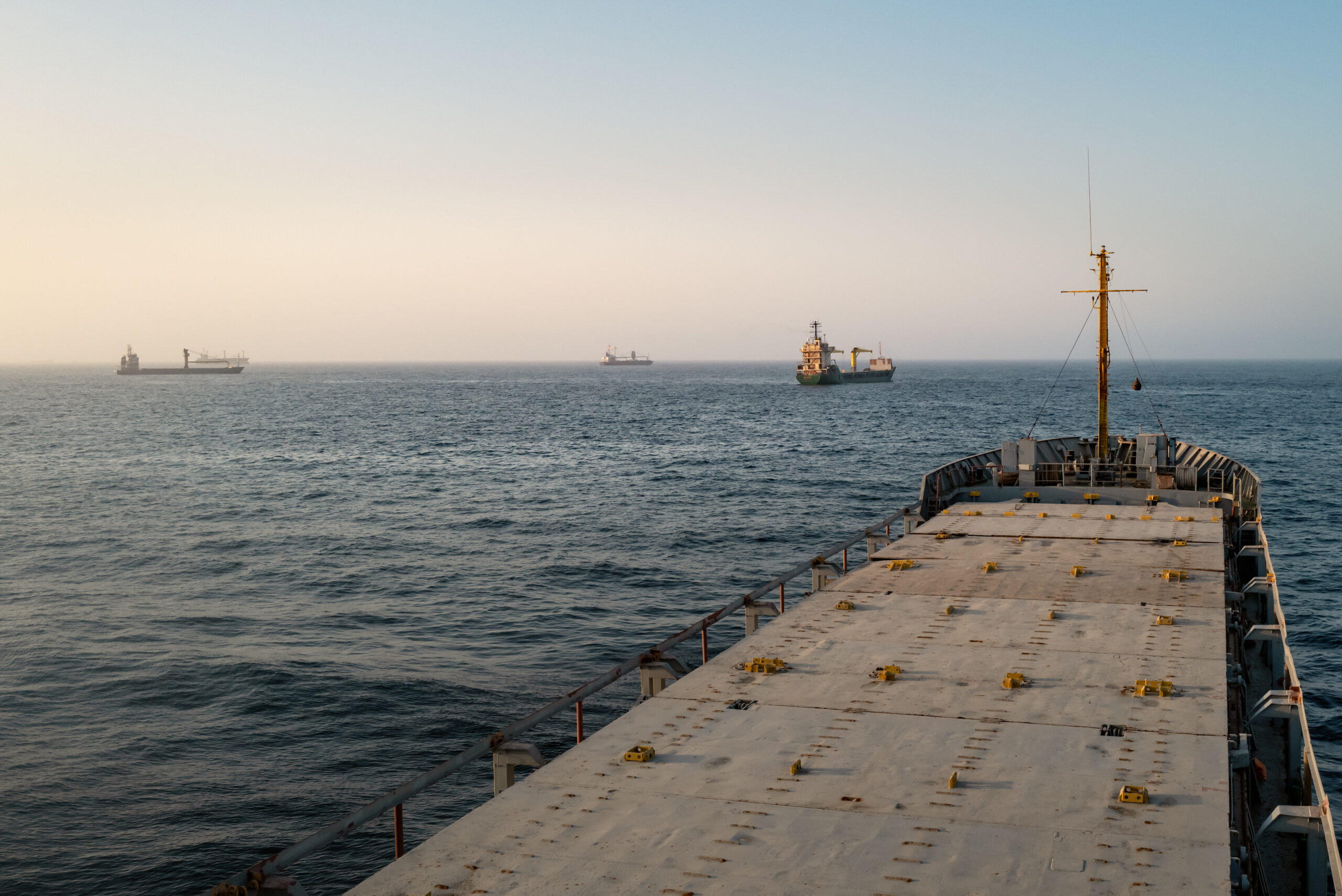
insurancejournal.comPreliminary data show every vessel that transited the waterway on July 12 did so without active tracking signals. Dark crossings have outnumbered observable passages in recent days as attacks reshape routes.
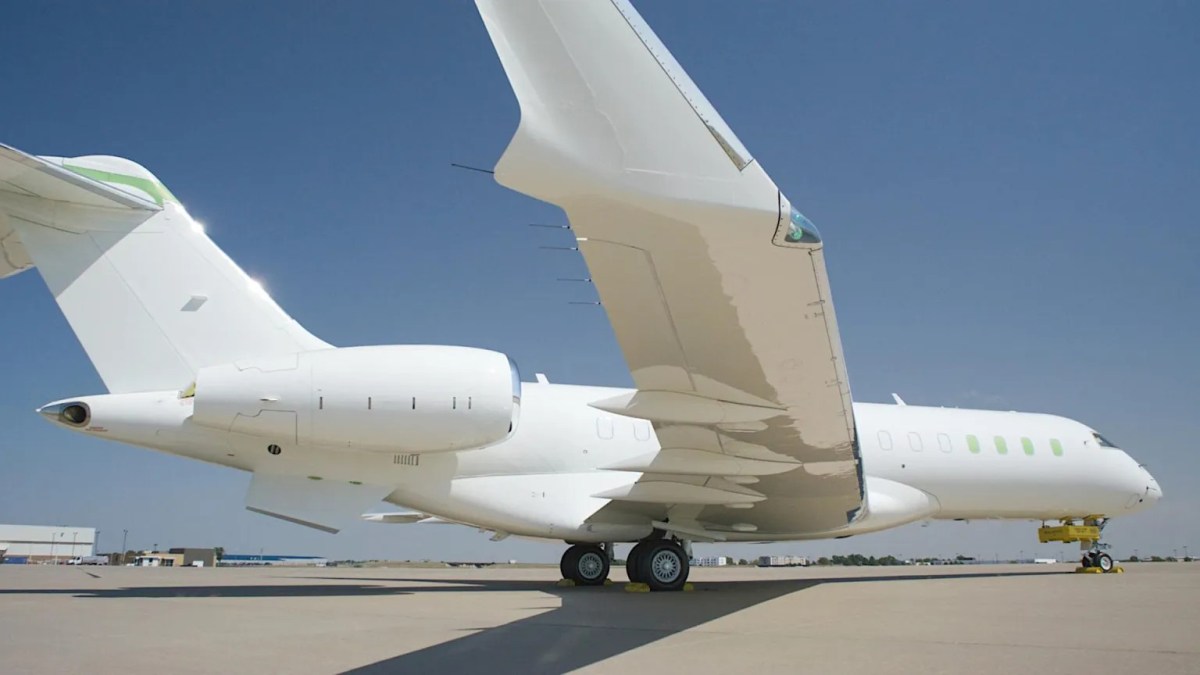
The War ZoneThe U.S. Army will station its ME-11B HADES aircraft and form a new unmanned aircraft system battalion at Fort Hood, Texas. The moves consolidate aerial intelligence units previously spread across multiple bases.
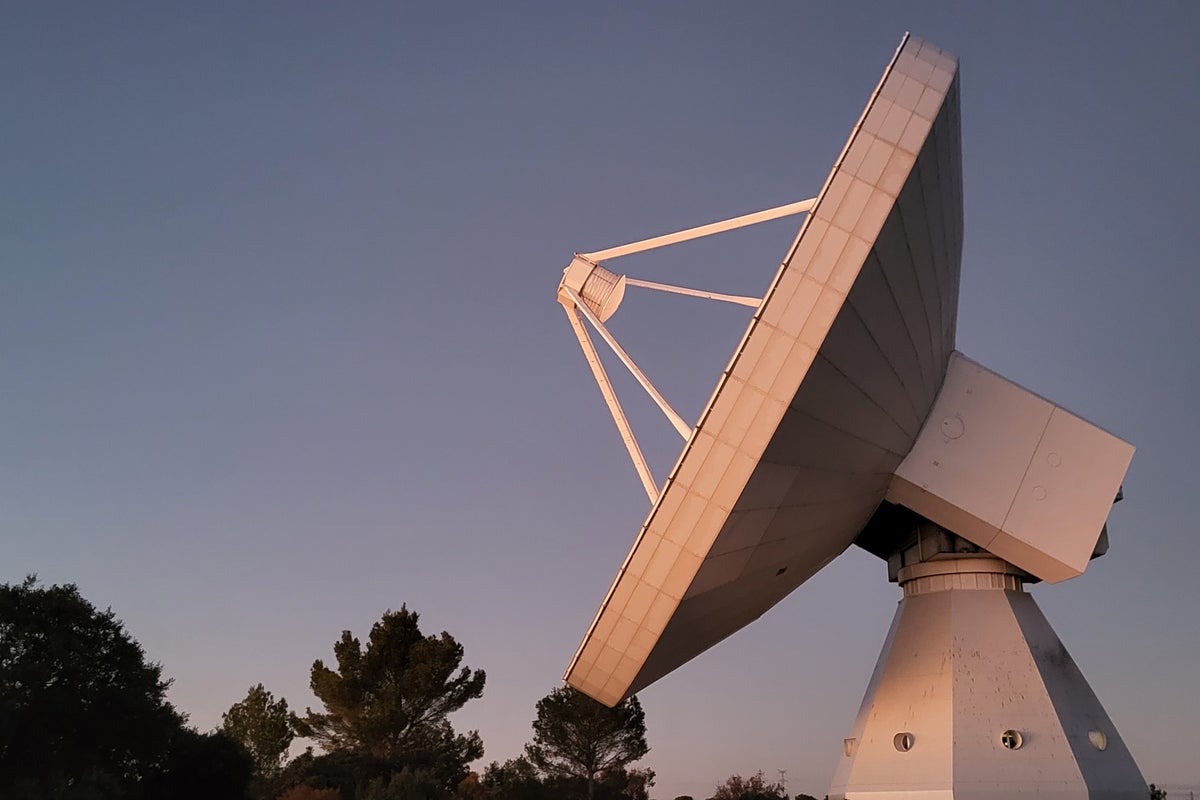
The IndependentResearchers identified the four-carbon sugar erythrulose in gas cloud G+0.693-0.027 using two Spanish radio telescopes. The finding adds to evidence that complex organic molecules form in interstellar space before stars and planets.