Unbiased AI-powered news
A US-brokered ceasefire between the US, Israel, and Iran took effect on April 8, 2025, but uncertainty persists due to disagreements on whether it covers Lebanon. Israel conducted strikes in Lebanon on the first day, prompting Iran to close the Strait of Hormuz and halt tanker traffic. Hundreds of vessels remain stranded, affecting global energy supplies.
NewsweekA 14-day ceasefire between the United States, Israel, and Iran was announced by President Donald Trump on April 7, 2025, and took effect early on April 8.
The agreement includes a 10-point framework for negotiations with Washington. However, on the first day, Israel carried out a bombing raid in Lebanon, described as the largest in its campaign against Iran-backed Hezbollah. Tehran responded by shutting down the Strait of Hormuz, through which one-quarter of global seaborne oil trade and one-fifth of liquefied natural gas supplies pass during peacetime.
No tankers have passed through the strait since the ceasefire began, according to shipping trackers. Hundreds of vessels are stranded in the Persian Gulf. S.
“— President Donald Trump, April 8, 2025 (Truth Social, via Newsweek)”
and Pakistan, which helped broker the ceasefire, insist that Lebanon is covered by the deal. Diplomatic sources told CBS that Trump personally agreed to include Lebanon, with Israel accepting the terms. However, Israeli Prime Minister Benjamin Netanyahu stated there is no ceasefire in Lebanon and that strikes against Hezbollah will continue until northern Israel is secure.
An Israeli official told Axios that Israel does not consider Lebanon part of the current ceasefire framework. Netanyahu instructed his cabinet to begin negotiations with Lebanese decision-makers on the disarmament of Hezbollah to achieve a cessation of hostilities in southern Lebanon.
Lebanon's Hezbollah lawmaker Ali Fayyad said the group rejects direct negotiations with Israel and that the Lebanese government should demand a ceasefire as a precondition. The Israeli strikes in Lebanon killed at least 254 people and injured more than 1,100, according to Lebanese health authorities.
Another report from Lebanon's Health Ministry placed the death toll at 303 from attacks on April 8. The United Nations Secretary-General António Guterres condemned the attacks unequivocally, warning that continued violence could jeopardize the ceasefire and wider peace efforts.
analytics firm Kpler reported that no tanker has transited the strait into the Gulf of Oman since the ceasefire, down from an average of 138 ships per day before the conflict. Lloyd's List Intelligence analysis showed just three ships with links to Iran passing through since the announcement, with another three preparing to transit via a Tehran-approved route around Larak Island.
An estimated 1.0 million metric tons of liquefied natural gas are stored across 14 tankers trapped in the Persian Gulf. Iran recently implemented a vetting system allowing non-hostile ships to pass through its waters, with some companies paying transit fees; this was expected to continue under the ceasefire.
Iranian Supreme Leader Ayatollah Ali Khamenei vowed retribution for attacks on Iran and stated that management of the strait would enter a new phase. Iran's Speaker of Parliament said regarding the ceasefire deal that time is running out. The United Kingdom Maritime Trade Operations center reported no incidents in the Arabian Gulf, Gulf of Oman, or Strait of Hormuz for the second consecutive day on April 10.
Energy prices are climbing amid concerns over minimal shipping through the strait.
April 9, the United Nations Security Council voted on a draft resolution encouraging states with commercial interests in the strait to coordinate navigation protection efforts and demanding Iran refrain from further attacks on shipping; China and Russia vetoed the measure.
The US Department of State will host a meeting next week to discuss ongoing ceasefire negotiations with Israel and Lebanon. The first ceasefire negotiations between Israel and Lebanon will be held at the US State Department in Washington. The Israeli Army expects rocket attacks from Lebanon in the coming hours.
President Trump said on April 10 he was very optimistic about a deal with Iran. Uncertainty over Lebanon's inclusion and control of the Strait of Hormuz represent major hurdles to the ceasefire's success.
These outlets didn't split into competing frames — coverage was uniform.
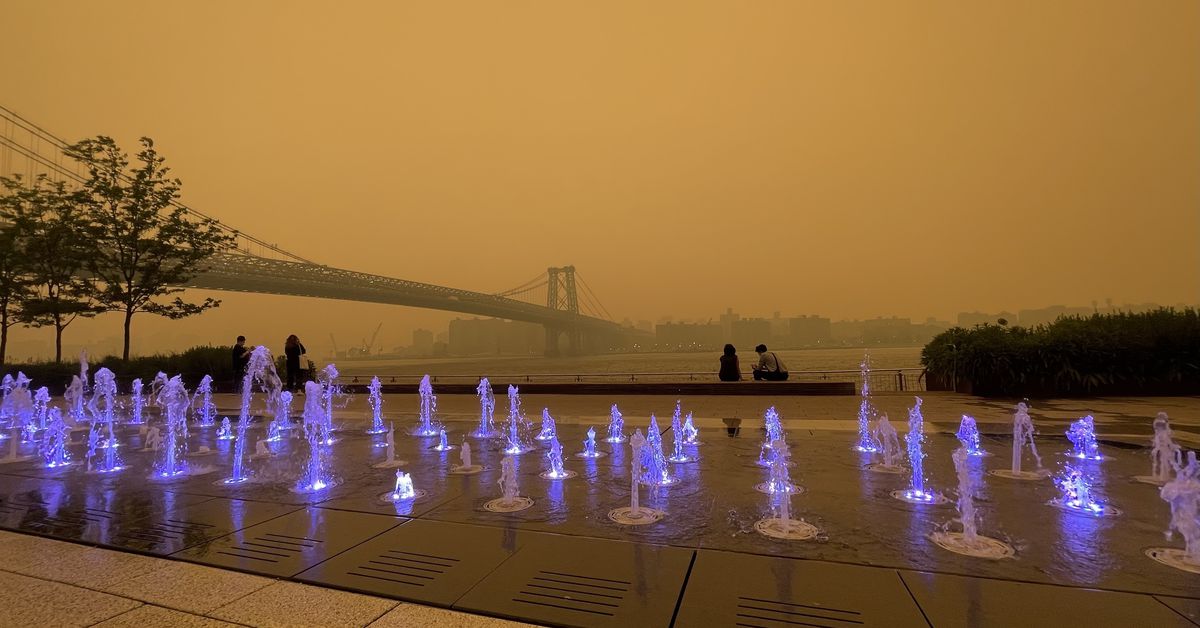
Smoke from more than 800 Canadian wildfires and fires in Minnesota reached the United States on Thursday, triggering air quality alerts from New York to the Great Lakes region. Officials in multiple states issued health advisories and distributed masks as conditions coincided wit…
Smoke from fires in northern Minnesota and western Ontario reached the New York area on July 15, 2026, driving air quality indices into the 201-300 range. The city also issued a Code Red heat advisory as indices were forecast to hit triple digits.
nbcnews.comSecretary of Defense Pete Hegseth announced July 15 that service members age 30 and older will receive annual testosterone screenings during routine health assessments. The policy makes testing optional for those under 30 and permits diagnosed personnel to select replacement ther…