Substrate
world

US and Iran Clash in Strait of Hormuz

Tensions persist in the Strait of Hormuz as the US and Iran exchange fire despite a ceasefire, with commercial shipping halted and vessels clustering near Dubai. US Defense Secretary Pete Hegseth affirmed the truce holds but warned of devastating responses to attacks on shipping. Iran's economic strain deepens with high inflation and job losses following the conflict.

The Guardian
DE
LI
SE
MA
SP
+58
64 sources·May 5, 1:28 AM(15 hrs ago)·3m read
|
US and Iran Clash in Strait of HormuzOpenStreetMap / Wikimedia (CC BY 4.0)
Audio version
Tap play to generate a narrated version.

The fragile ceasefire between the United States and Iran faced new strains on Monday when the two sides launched fresh attacks in the Gulf, including exchanges of fire in the Strait of Hormuz. US forces sank Iranian boats and escorted merchant ships, while Iran struck a refinery in the UAE's Fujairah, escalating risks in the vital waterway.

President Trump stated that not one ship has passed through the blockade, emphasizing Iran's awareness of boundaries to avoid further conflict. US Central Command reported directing 51 vessels to turn back from entering the strait, rejecting Iranian media claims of strikes on US ships.

For its part, Iran established a new body to manage vessel transit and warned that deviations from its designated corridor would face decisive action by the Islamic Revolutionary Guard Corps. The US announced Project Freedom to escort stranded cargo ships, though analysts noted it may not immediately reopen the strait.

Tehran, daily life has resumed with bustling streets and public spaces, but underlying economic hardships persist after the war began on February 28. Inflation is surging, with the International Monetary Fund estimating it could reach 70% this year, leading to widespread job losses and business closures.

Residents like Sara, a 24-year-old art teacher, have been unemployed since the conflict started, relying on free activities amid rising costs for essentials. Vendors in Tehran's Grand Bazaar report unstable conditions, with many shutting down due to economic difficulties.

Teachers like Mohammad Reza have returned to online classes, but tuition fees have increased, straining families. Political repression continues, with over 20 executions on national security charges since late February, drawing criticism from UN High Commissioner for Human Rights Volker Türk, who expressed dismay at the ongoing rights violations amid the conflict's impacts.

I was appalled that on top of the already severe impacts of the conflict, the rights of the Iranian people continue to be stripped from them.

Volker Türk, UN High Commissioner for Human Rights (The Guardian)

Iran's judiciary head, Gholamhossein Mohseni Ejeai, defended the executions as necessary punishments for crimes. On the streets, discussions of these events are muted, with most Iranians focused on economic survival rather than protests.

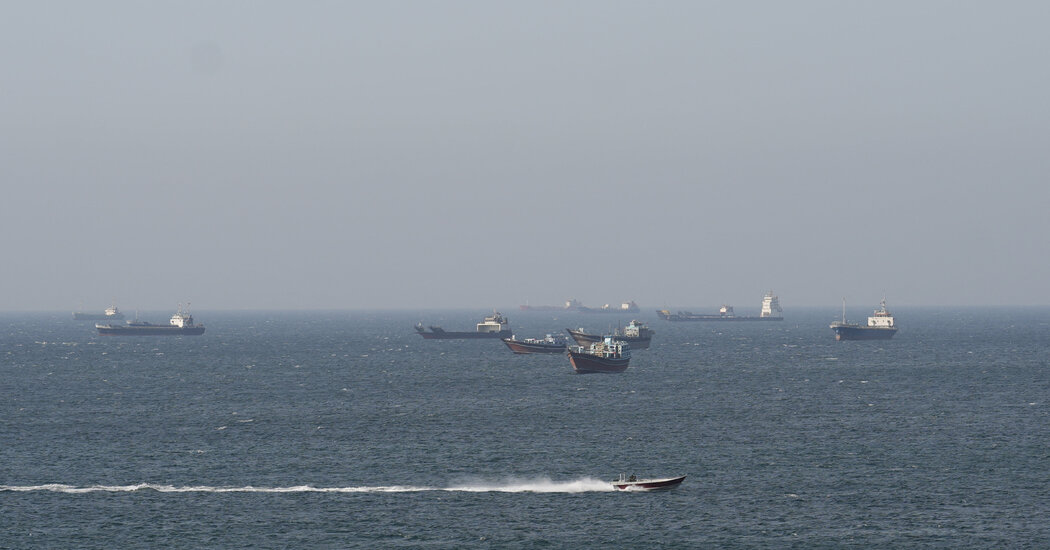
The Strait of Hormuz remains largely deserted, with no new commercial ship crossings recorded on Tuesday despite US efforts. Hundreds of vessels, at least 363, have clustered off Dubai as Iran expanded its claimed control area around the chokepoint, including new mandated shipping lanes.

AIS tracking signals show limited activity confined to Iranian-approved routes, complicated by widespread spoofing. Two US destroyers entered the Persian Gulf, providing missile defense near UAE anchorages, while outbound transits included a few Iran-linked carriers under military escort.

US Defense Secretary Pete Hegseth stated during a Pentagon briefing that the ceasefire holds and the US is not seeking a fight, but any attack on commercial shipping would prompt a devastating response. He added that Washington has not capitulated on demands and maintains the upper hand.

President Trump expressed reluctance to escalate violence but affirmed willingness to pressure Iran's economy to achieve objectives.

We don’t want to go in and kill people, really don’t. Iranian strikes on the UAE were described by some as a blow to US credibility, with Lt. Gen. Ben Hodges suggesting it was calculated ahead of international summits. In Tehran, sentiments have shifted for some, like Sara, who now participates in anti-US protests after criticizing her government previously. The standoff has put the ceasefire in jeopardy, with both sides determined to maintain pressure. While visible normalcy returns to Iranian cities, underlying uncertainties about the truce's durability persist among residents.

Key Facts

51 vessels
directed to turn back by US Central Command
70% inflation
estimated for Iran this year by IMF
363 ships
clustered off Dubai amid expanded Iranian control
8% decline
in global LNG production year-on-year in March
20 executions
in Iran on security charges since late February

Story Timeline

5 events
  1. Today — May 5, 2026

    US Defense Secretary Pete Hegseth affirmed the ceasefire holds but warned of devastating responses to attacks on shipping.

    5 sourcesAFP · AJEnglish · BBCWorld · CBS News
  2. Monday — May 4, 2026

    US forces sank Iranian boats, escorted merchant ships, and exchanged fire in the Strait of Hormuz, while Iran struck UAE's Fujairah refinery.

    8 sourcesFrance24_en · MarioNawfal · New York Times · ZeroHedge
  3. Recent weeks

    Fragile ceasefire took hold after war began on February 28, with life in Tehran returning to partial normality amid economic strains.

    3 sourcesGuardian · Semafor · IEA
  4. March 2026

    Global LNG production declined 8% year-on-year due to Strait closure.

    1 sourceIEA
  5. February 28, 2026

    War between US, Israel, and Iran began, leading to Strait of Hormuz blockade.

    2 sourcesGuardian · War Zone

Potential Impact

  1. 01

    Oil prices will remain elevated due to ongoing Strait disruptions.

  2. 02

    Global LNG markets face continued supply shortages from production decline.

  3. 03

    US-Iran negotiations stall, increasing risks of renewed full conflict.

  4. 04

    Iran's economy sees further job losses and inflation spikes.

  5. 05

    Commercial shipping reroutes, raising global transport costs.

  6. 06

    UAE faces infrastructure damage from Iranian strikes on refineries.

Transparency Panel

Sources cross-referenced64
Framing risk55/100 (moderate)
Confidence score65%
Synthesized bySubstrate AI
Word count609 words
PublishedMay 5, 2026, 1:28 AM
Bias signals removed7 across 4 outlets
Signal Breakdown
Amplifying 2Loaded 1Speculative 1Diminishing 1Editorializing 1Framing 1

Related Stories

Explosion at China Fireworks Factory Kills 26 and Injures 61 in Hunan ProvinceEric Jones / Wikimedia (CC BY-SA 2.0)
world1 hr ago

Explosion at China Fireworks Factory Kills 26 and Injures 61 in Hunan Province

An explosion at the Huasheng Fireworks Manufacturing and Display Company in Liuyang, Hunan province, killed at least 26 people and injured 61 on Monday afternoon. Rescue operations concluded with evacuations and production halts at local fireworks manufacturers. President Xi Jinp…

SC
The Guardian
BBC News
South China Morning Post
4 sources
Trump Pauses Project Freedom in Strait of Hormuz Amid Progress on Iran Agreementindiatoday.intoday.in
world1 hr agoUpdated

Trump Pauses Project Freedom in Strait of Hormuz Amid Progress on Iran Agreement

President Trump announced a temporary pause to Project Freedom, the U.S. effort to escort ships through the Strait of Hormuz, citing mutual agreement with Iran to facilitate finalizing a deal while the blockade remains in place. The decision follows requests from Pakistan and oth…

The Independent
cnbc.com
DE
NE
FI
+89
96 sources
Australian Government Introduces Levy on Tech Platforms to Support Local News PublishersSouth Australian Railways photographer / Wikimedia (Public domain)
world1 hr ago

Australian Government Introduces Levy on Tech Platforms to Support Local News Publishers

Australia's government introduced the News Bargaining Incentive to shield publishers from big tech's use of news content. President Trump imposed a 100% tariff on imported pharmaceuticals, but Australia stated it would not raise drug prices. On International Day of the Midwife, g…

WH
The New York Times
The Guardian
NPR
4 sources