US and Iran Exchange Fire in Strait of Hormuz
Three US Navy destroyers came under attack from missiles, drones and small boats while transiting the Strait of Hormuz on Thursday. The US military intercepted the threats and carried out retaliatory strikes on Iranian military sites. President Trump said the ceasefire remains in effect and warned Tehran to sign a deal quickly, while both sides accused each other of initiating the clashes.
 Substrate placeholder — needs review
Three US Navy destroyers came under attack from missiles, drones and small boats in the Strait of Hormuz on Thursday, the US military said. All incoming threats were intercepted with no damage to the American vessels. In response, the United States struck Iranian military facilities including launch sites and command centers.
President Trump stated that the ceasefire between the US and Iran remains in place despite the exchange. He described Iranian leaders as "lunatics" and warned that failure to sign a deal quickly would bring far more violent American action in the future.
Trump posted on Truth Social that the destroyers transited successfully, with Iranian missiles and drones destroyed in the air or at sea. Iran portrayed the incident as an "exchange of fire" after the US allegedly targeted vessels near the strait, including an oil tanker.
Iranian state media claimed its forces inflicted significant damage on American ships, a assertion contradicted by US statements. The clashes occurred as both sides were reviewing a one-page US plan to reopen the Strait of Hormuz and pause hostilities for 30 days while pursuing a broader agreement.
The US military announced it had eliminated inbound threats and targeted Iranian military facilities responsible for the assault. Central Command described the Iranian actions as unprovoked. Iranian officials countered that the US had violated the ceasefire first by striking two ships and civilian areas along the coast.
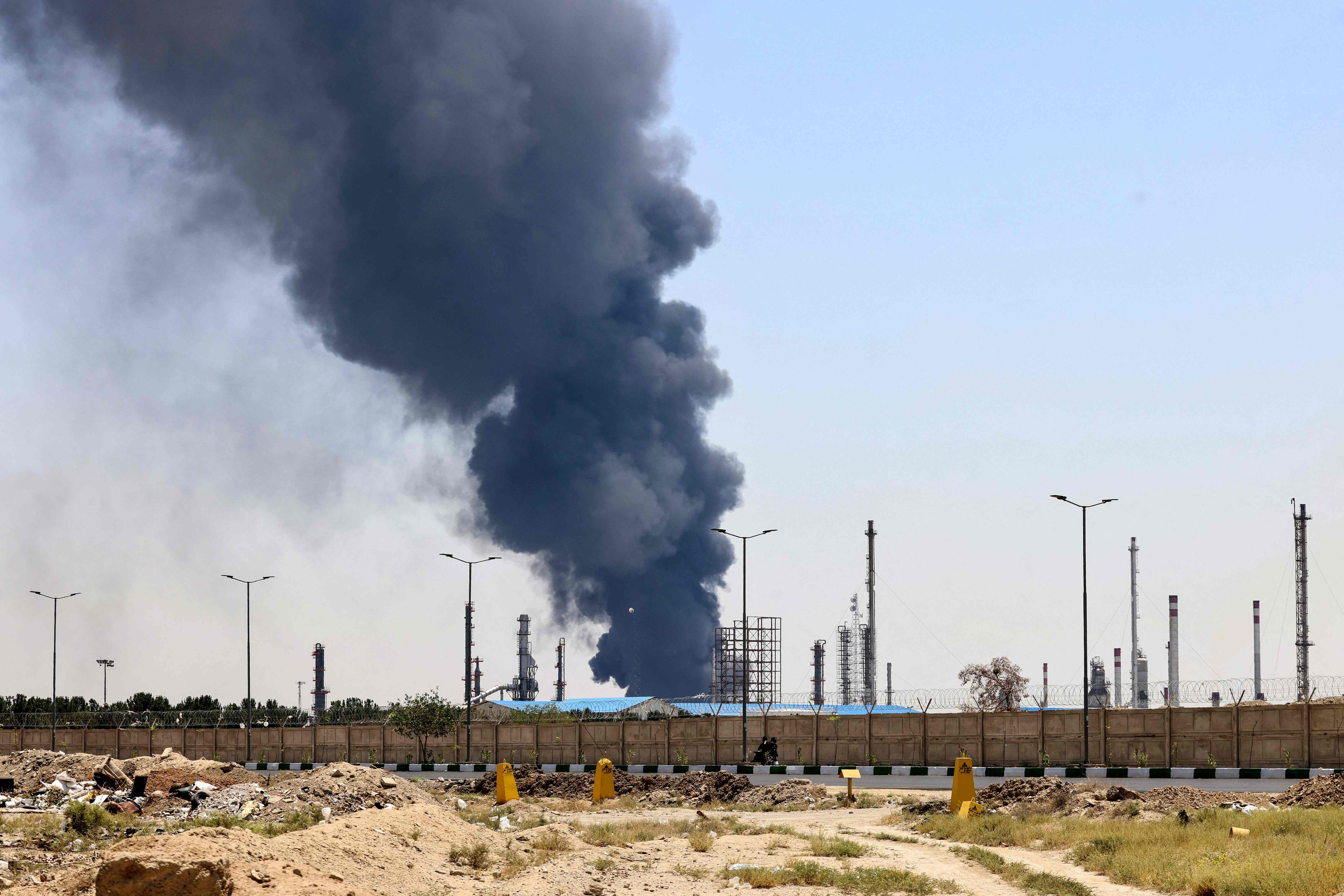
Explosions were reported on Qeshm Island in the strait, with Iranian state television confirming the blasts during the exchange. Local media later described the situation on nearby islands and coastal cities as back to normal. No casualties were reported from either side in the immediate aftermath.
“Drones came, and were incinerated while in the air. They dropped ever so beautifully down to the Ocean, very much like a butterfly dropping to its grave!”
The three destroyers — identified in one report as the Truxtun, Peralta and Mason — will rejoin what Trump called a naval blockade described as a "wall of steel." The incident took place on the 70th day of the US-Israel war on Iran, according to one briefing.
Three senior Iranian officials told The New York Times that Tehran and Washington are discussing a plan under which both sides would reopen the Strait of Hormuz and end hostilities for 30 days. The proposal would include Iran freezing nuclear enrichment while leaving the nuclear program issue unresolved in the longer term.
US officials expect a response from Iran within two days. Trump, when asked whether the engagement ended the nominal ceasefire, said it does not and urged both sides to sign a lasting agreement fast. Negotiations have involved Middle East envoy Steve Witkoff and Jared Kushner, who had been traveling to Pakistan for talks.
A planned late-April visit was canceled after Trump said the US held all the cards. The flare-up further endangers a ceasefire that Trump extended indefinitely on April 21. Some 20,000 seafarers remain stranded in the Gulf amid the strait’s closure.
Oil prices rose following news of the exchange.
“The ceasefire is going. It's in effect.”
Trump also stated the United States has ample oil supplies and faces no energy crisis. A short-lived exercise known as Project Freedom had earlier exposed limits on US maneuvering in the Persian Gulf, one report noted.
Key Facts
Potential Impact
- 01
Negotiations for a one-page 30-day pause in hostilities are continuing with Iranian response expected soon.
- 02
Approximately 20,000 seafarers remain stranded in the Gulf amid continued closure of the strait.
- 03
Oil prices rose immediately after reports of the naval exchange in the Strait of Hormuz.
- 04
The US naval blockade described as a wall of steel will be reinforced by the three destroyers.
Transparency Panel
Related Stories
 deccanchronicle.com
U.S. Strikes Iranian Military Sites After Iran Attacks Navy Destroyers in Strait of Hormuz
President Trump dismissed Iranian attacks on three U.S. Navy destroyers as a "trifle" Thursday after the vessels came under intense assault by missiles, drones and fast attack boats in the Strait of Hormuz. The U.S. military confirmed strikes on Iranian military sites hours later…
Substrate placeholder — needs reviewLula Says Trump Told Him U.S. Has No Plans to Invade Cuba After White House Meeting
Brazilian President Luiz Inacio Lula da Silva met with President Trump at the White House on May 7, 2026, for three hours. Lula later quoted Trump as saying the U.S. will not invade Cuba, calling the statement a great sign. The comments follow Trump's recent statements and an exe…
 usatoday.com
Trump-Appointed FEMA Review Council Recommends Cutting Agency Staff by Half and Giving States More Control Over Disaster Response
The FEMA Review Council released its 75-page final report on May 7, 2026, calling for a 50 percent staff reduction at the agency and a fundamental transfer of responsibilities to state and local governments. Chaired by Defense Secretary Pete Hegseth and Homeland Security Secretar…