US Revokes Visas of Costa Rican Newspaper Executives
The United States has revoked tourist visas for several board executives at La Nación, a leading Costa Rican media outlet. The newspaper attributes the action to its criticism of the outgoing Costa Rican president, an ally of President Trump, and views it as an attempt to intimidate dissent. Press freedom organizations and opposition figures have demanded explanations from U.S.
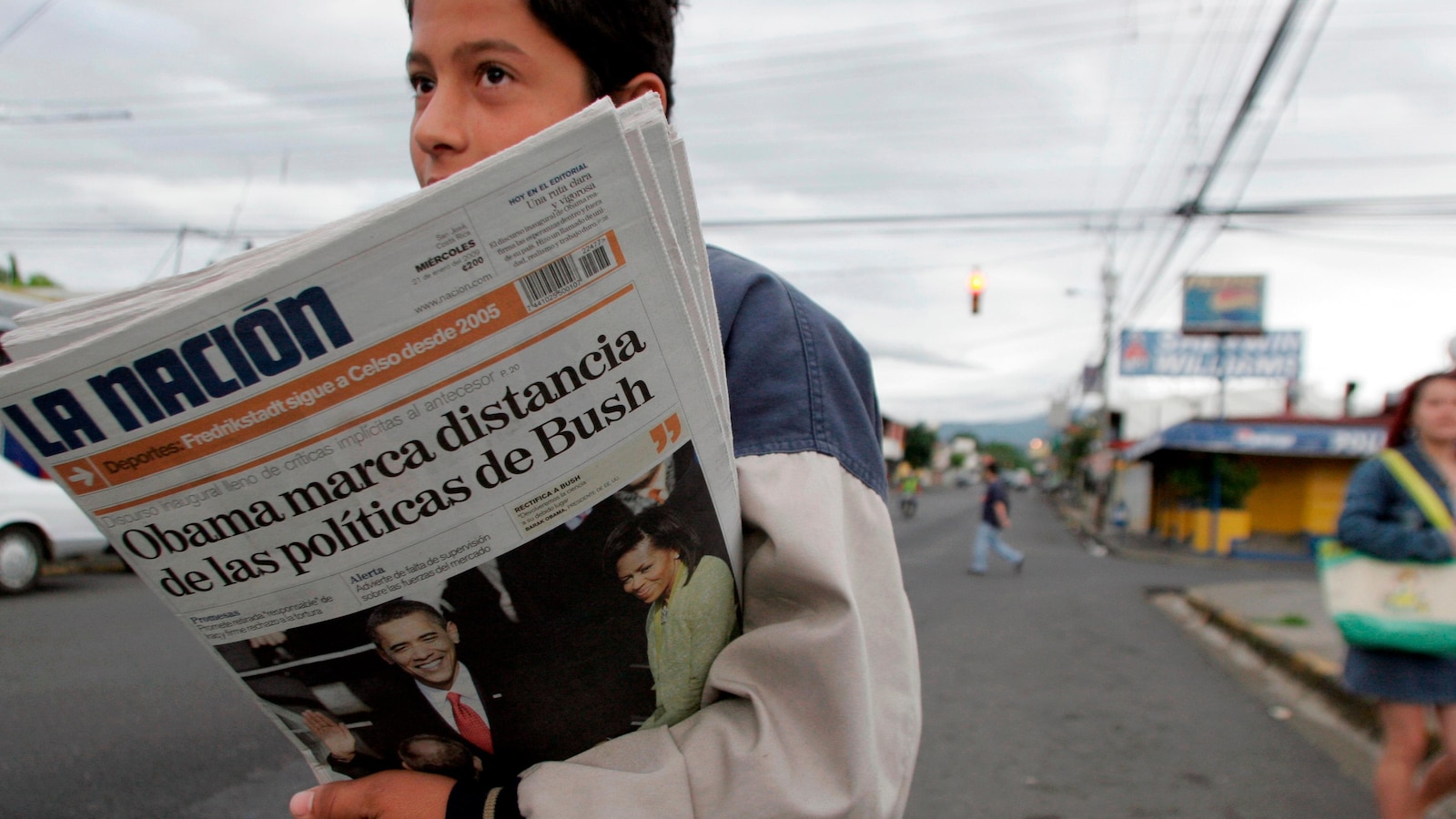
dohanews.coThe United States has revoked the tourist visas of several executives on the board of La Nación, one of Costa Rica's leading newspapers, according to a statement from the outlet. The affected board members learned of the revocations through reports in pro-government media, with no explanation provided by U.S. authorities.
This development has raised accusations that the U.S., working with the Costa Rican government, is using visa restrictions to target critics and political opponents. La Nación has been a persistent critic of outgoing Costa Rican President Rodrigo Chaves, who has cooperated closely with the Trump administration on deportation efforts.
The newspaper published allegations of sexual harassment against Chaves during his 2022 presidential campaign, drawing public rebukes from him. Chaves has agreed to accept up to 100 third-country deportees per month as part of U.S. initiatives to increase deportations.
In its front-page statement on Sunday, La Nación acknowledged the U.S. right to control entry but described the revocations as unprecedented for board members of an independent newspaper in Costa Rica's recent history.
“We fully recognize that the United States, like any sovereign state, has the power to determine the terms of entry into its territory. However, it is unprecedented in Costa Rica’s recent history for visas to be revoked from members of the board of a general-interest and independent newspaper.”
Political opposition and press freedom organizations in Costa Rica criticized the move, calling for transparent explanations from both governments. They stated that if the decision stemmed from the executives' critical stance, it would signal trouble for the country's democratic system.
The organizations added that a lack of information would amount to complicity in suppressing dissent. Mauricio Herrera, a journalist and former Costa Rican communications minister from 2015 to 2018, told reporters there was no doubt the revocations responded to a request from the Costa Rican government.
He described the action as an effort to intimidate those exercising freedom of expression.
This incident fits a pattern of U.S. visa cancellations affecting high-profile critics in Costa Rica. Last year, the U.S. revoked the visa of Nobel laureate and former President Óscar Arias, an outspoken critic of President Trump, along with that of his brother, then-legislative president Rodrigo Arias, who believed the decision came at Chaves' request.
In recent months, opposition lawmakers Francisco Nicolás from the centrist National Liberation Party and independent Cynthia Córdoba, both vocal critics of Chaves, also lost their U.S. visas. Constitutional Court Judge Fernando Cruz, an advocate for migrant rights, had his visa canceled last month, preventing him from traveling to receive an award.
“The sanction seeks to intimidate those who dare to dissent and exercise their freedom of expression.”
Chaves, known for an aggressive governing style that has drawn criticism for eroding democratic norms, cooperates with the U.S. on extraditing suspected drug traffickers. He is set to leave office on Friday and hand over power to his successor. The U.S. State Department did not respond to requests for comment on the La Nación revocations.
The visa actions have intensified concerns about press freedom and political retaliation in Costa Rica, a country with strong democratic traditions. Opposition figures argue that such measures undermine transparency and free expression, particularly amid close U.S.-Costa Rican collaboration on immigration and security.
While sources agree on the revocations and reactions, they do not provide details on the number of affected executives or specific reasons from U.S. officials.
Key Facts
Story Timeline
4 events- Sunday
La Nación published a front-page statement about the visa revocations of its board executives.
3 sourcesABC News · Washington Times · The Washington Times - Recent months
U.S. revoked visas of opposition lawmakers Francisco Nicolás and Cynthia Córdoba, and Judge Fernando Cruz.
1 sourceABC News - Last year
U.S. revoked visas of former President Óscar Arias and his brother Rodrigo Arias.
1 sourceABC News - 2022
La Nación published allegations of sexual harassment against Rodrigo Chaves during his presidential campaign.
1 sourceABC News
Potential Impact
- 01
U.S.-Costa Rica relations could face strain from accusations of political interference.
- 02
Press freedom organizations will push for investigations into U.S. visa policies toward critics.
- 03
Opposition in Costa Rica may intensify criticism of outgoing president's U.S. alliances.
- 04
International human rights groups could highlight the case in reports on democratic erosion.
- 05
Media outlets might self-censor coverage of government to avoid similar retaliations.
Transparency Panel
Related Stories
Explosion at China Fireworks Factory Kills 26 and Injures 61 in Hunan Province
An explosion at the Huasheng Fireworks Manufacturing and Display Company in Liuyang, Hunan province, killed at least 26 people and injured 61 on Monday afternoon. Rescue operations concluded with evacuations and production halts at local fireworks manufacturers. President Xi Jinp…
indiatoday.intoday.inTrump Pauses Project Freedom in Strait of Hormuz Amid Progress on Iran Agreement
President Trump announced a temporary pause to Project Freedom, the U.S. effort to escort ships through the Strait of Hormuz, citing mutual agreement with Iran to facilitate finalizing a deal while the blockade remains in place. The decision follows requests from Pakistan and oth…
Australian Government Introduces Levy on Tech Platforms to Support Local News Publishers
Australia's government introduced the News Bargaining Incentive to shield publishers from big tech's use of news content. President Trump imposed a 100% tariff on imported pharmaceuticals, but Australia stated it would not raise drug prices. On International Day of the Midwife, g…