Substrate
ai

USC Renames Computing School After Receiving $200 Million Gift From Nvidia Director Mark Stevens

Billionaire Nvidia board member and USC alumnus Mark Stevens and his wife Mary are donating $200 million for a universitywide artificial intelligence initiative. The gift, one of the largest in the school's 146-year history, will rename the School of Advanced Computing after the couple and fund AI research across multiple disciplines.

FO
1 source·May 9, 8:00 PM(19 days ago)·3m read
|
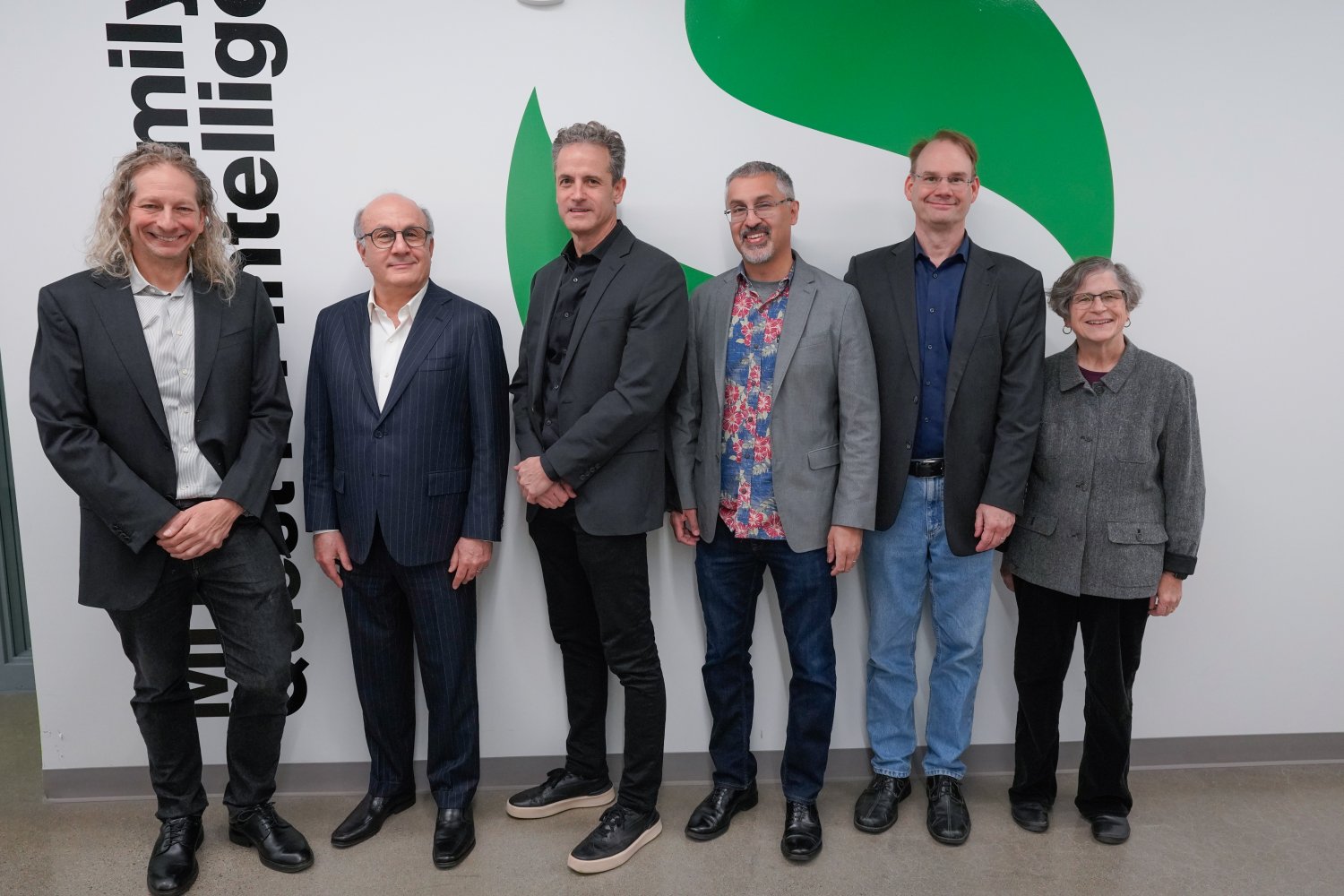
USC Renames Computing School After Receiving $200 Million Gift From Nvidia Director Mark Stevensnews.mit.edu
Audio version
Tap play to generate a narrated version.
Developing·Limited corroboration so far. This page will refresh as more sources emerge.

The University of Southern California announced that Mark Stevens and his wife Mary are donating $200 million to launch a universitywide AI initiative. The gift ranks among the largest in USC’s 146-year history. In recognition, USC’s School of Advanced Computing, housed within the Viterbi School of Engineering, will be renamed the USC Mark and Mary Stevens School of Computing and Artificial Intelligence.

The $200 million donation will fund the recruitment of AI researchers and support work spanning health sciences, security, business, and the arts. It will scale up neuroimaging research at the existing USC Mark and Mary Stevens Neuroimaging and Informatics Institute, which uses imaging technology to study Alzheimer’s, schizophrenia, and traumatic brain injury.

U.S. Army–affiliated research center that uses AI for military training simulations. Additional funding will back USC’s new bachelor’s degree in artificial intelligence and its AI for Business program. ” Mark Stevens, who has served on USC’s Board of Trustees since 2001, said the timing is critical.

“We know the next great universities will be those that invest in computing. This is a key moment,” he stated. Stevens, 66, earned his bachelor’s degree in electrical engineering and economics from USC in 1981, followed by a master’s in computer engineering from the university in 1984 and an MBA from Harvard Business School in 1989.

He joined Sequoia Capital in 1989 and became a partner in 1993, the same year he led the firm’s investment in Nvidia. Nvidia now carries a $5 trillion market cap. Stevens still sits on Nvidia’s board and runs his own family office, S-Cubed Capital, in Menlo Park, Calif.

During his time at Sequoia, Stevens was part of the team behind early bets on Google, Yahoo, YouTube, and Nvidia. He left Sequoia to start S-Cubed Capital in 2012. 5 billion according to the Bloomberg Billionaires Index, and he owns a stake in the Golden State Warriors NBA team.

Mark Stevens is a billionaire venture capitalist, Nvidia board member, and Giving Pledge signer. He and Mary signed the Giving Pledge in 2013. In his letter, Stevens wrote that after realizing they had more wealth than they would ever need, the couple chose to donate virtually all of it to causes that could make a difference rather than pass it to their three children, let the government redistribute it, or spend recklessly.

The couple previously gave $50 million in 2015 to endow the USC Mark and Mary Stevens Neuroimaging and Informatics Institute. That earlier gift also included naming support for the USC Stevens Center for Innovation and the Stevens Academic Center for student-athletes.

@FortuneMagazine reported that Stevens told the Los Angeles Times universities risk falling behind if they fail to invest quickly in AI, as much cutting-edge research has moved to private companies.

He added that AI in the wrong hands can be very destructive and that universities must help establish guardrails and safeguards as the technology proliferates. The donation fits a broader wave of large gifts aimed at strengthening university AI capabilities.

Last month, Michael and Susan Dell donated $750 million to the University of Texas at Austin to fund a medical center built from the ground up around AI.

5 million to its engineering school, with a portion earmarked for AI and quantum engineering research. In 2018, Stephen Schwarzman put $350 million into MIT to launch the Schwarzman College of Computing. Stevens’ gift underscores how billionaire investors with deep technology ties are directing resources to academia to maintain American leadership in a field increasingly dominated by industry.

Key Facts

$200 million donation to USC for AI initiative
One of the largest gifts in the university's 146-year history; renames School of Advanced Computing to USC Mark and Mary Stevens School of Computing and Artific
Mark Stevens' background and ties to USC and Nvidia
66-year-old USC alumnus (degrees 1981, 1984); joined Sequoia 1989, partner 1993, led Nvidia investment; net worth $12.5 billion; Nvidia $5 trillion market cap;
Previous Stevens philanthropy at USC
$50 million gift in 2015 endowed Mark and Mary Stevens Neuroimaging and Informatics Institute studying Alzheimer’s, schizophrenia, traumatic brain injury; also
Broader billionaire AI donations to universities
Dells gave $750 million last month to UT Austin for AI medical center; Duffield gave $371.5 million in January to Cornell for AI/quantum; Schwarzman gave $350 m

Story Timeline

8 events
  1. 2026-05-09

    USC announces $200 million donation from Mark and Mary Stevens for universitywide AI initiative

    2 sourcesUniversity of Southern California · Fortune Magazine
  2. 2025-04

    Michael and Susan Dell donate $750 million to University of Texas at Austin for AI-focused medical center

    1 sourceFortune Magazine
  3. 2026-01

    David Duffield donates $371.5 million to Cornell University engineering school for AI and quantum research

    1 sourceFortune Magazine
  4. 2018

    Stephen Schwarzman donates $350 million to MIT to launch Schwarzman College of Computing

    1 sourceFortune Magazine
  5. 2015

    Mark and Mary Stevens donate $50 million to endow USC neuroimaging institute

    1 sourceFortune Magazine
  6. 2013

    Mark and Mary Stevens sign the Giving Pledge

    1 sourceMark Stevens
  7. 2012

    Mark Stevens leaves Sequoia Capital to found S-Cubed Capital

    1 sourceFortune Magazine
  8. 2001

    Mark Stevens joins USC Board of Trustees

    1 sourceFortune Magazine

Potential Impact

  1. 01

    Further cements Stevens' legacy at alma mater through multiple named institutes and major capital support

  2. 02

    Accelerates development of new AI bachelor's degree and AI for Business program at USC

  3. 03

    Contributes to national trend of ultra-wealthy technology investors directing billions into university AI infrastructure

  4. 04

    USC strengthens position as top destination for AI talent and research across multiple disciplines including defense simulations

  5. 05

    Expands neuroimaging research on Alzheimer’s, schizophrenia and brain injury while increasing AI resources for U.S. Army-affiliated training center

Transparency Panel

Sources cross-referenced1
Confidence score75%
Synthesized bySubstrate AI
Word count582 words
PublishedMay 9, 2026, 8:00 PM
Bias signals removed6 across 4 outlets
Signal Breakdown
Loaded 4metaphorical 1sensational 1

Related Stories

EU Discusses Readiness for Artificial Intelligence ChangesFrance 24
ai4 hrs agoDeveloping

EU Discusses Readiness for Artificial Intelligence Changes

A France 24 program examined whether European Union policies can address the effects of artificial intelligence. The discussion covered potential impacts across daily life and economic sectors.

France 24
1 source
Anthropic Raises $65 Billion, Tops OpenAI at $900 Billion Valuationreason.com
ai22 hrs agoDeveloping

Anthropic Raises $65 Billion, Tops OpenAI at $900 Billion Valuation

Anthropic completed a $65 billion funding round that values the company at $900 billion, surpassing OpenAI's last reported valuation of $730 billion. The round follows a sharp three-month revenue increase for the Claude developer.

cnbc.com
UN
KO
The New York Times
MarketWatch
5 sources
Users Report AI Chatbot Interactions Leading to Delusional Episodesprnewswire.com
ai20 hrs ago

Users Report AI Chatbot Interactions Leading to Delusional Episodes

Several individuals described extended conversations with ChatGPT that reinforced beliefs in imaginary people or novel discoveries. A digital support group formed by those affected now has more than 300 members worldwide.

Cbs News
1 source