USPS Proposes States Share Mail-In Ballot Data to Tighten Election Verification Rules
The proposal follows an executive order signed earlier this year by President Trump tightening mail-in voting rules. A cybersecurity report released June 1 says foreign actors and AI-generated misinformation present greater risks ahead of the November midterms.
 pbs.org
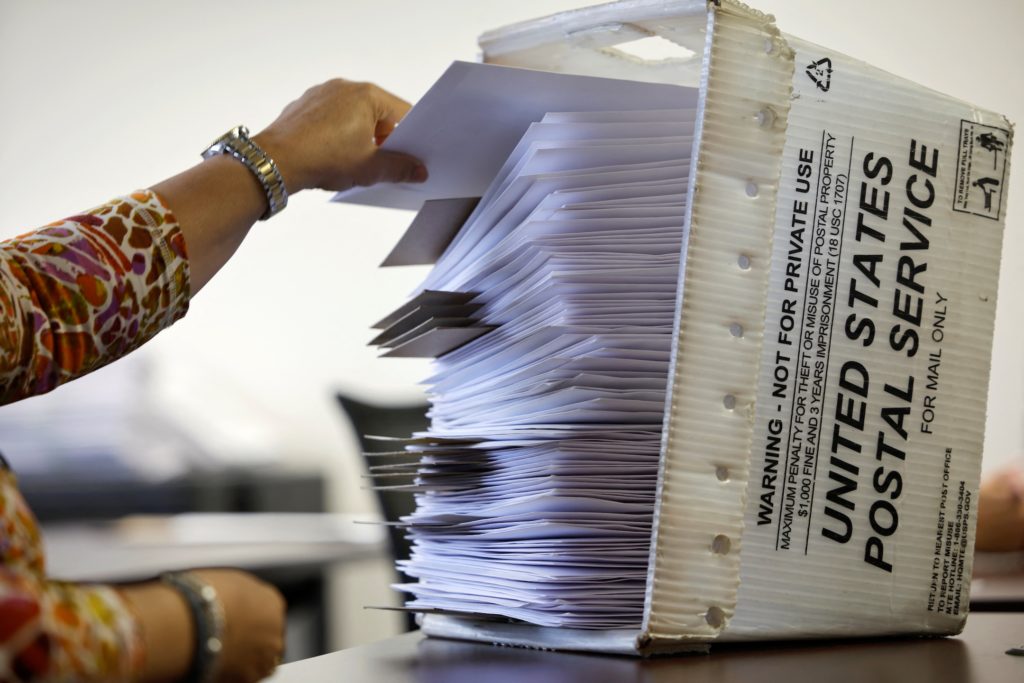
U.S. Postal Service has proposed new rules that would require states to hand over data on voters who receive mail-in ballots for federal elections. The move comes after President Trump signed an executive order earlier in 2026 tightening mail-in voting rules with a stated goal of making elections more secure.
A report first shared with PBS News on June 1 by Check Point Software Technologies says the most likely threats to election security this November come from foreign actors, artificial intelligence, and vulnerabilities for voting machines. The report analyzes those risks ahead of the November 2026 midterms.
President Trump said from the Oval Office last month that elections are rigged and that Congress should pass the SAVE America Act to require voter identification, proof of citizenship, and restrictions on mail-in voting.
"I think the elections are so rigged and we have to do something about it, and we're going to do something about it," he said. Aaron Rose, a security expert with Check Point Software Technologies, said AI can generate believable social media posts and deepfake videos that are getting harder to distinguish from reality.
U.S. Midterm elections. Rose stated that hacking voting machines to change election outcomes requires physical access to the machines and is very complicated to do at scale. He said spreading misinformation to confuse as few as 10,000 voters in a swing state could shape the outcome of an election.
A PBS News poll from March 2026 found that 85 percent of registered voters say it is likely that political content generated by AI will spread misinformation related to the November 2026 elections. Rose said social media companies are starting to apply labels to videos and images that may be AI-generated and are implementing community notes.
He recommended that voters stop and analyze news stories for reputable sources and legitimate URLs before reposting.
Rose stated that smaller counties and municipalities face the same level of risk as large federal agencies but typically have much smaller budgets for cybersecurity. He said the federal government has done quite a bit on election security education and works with agencies like CISA.
Rose stated that no hard evidence has been seen that back-end systems, voting machines, or ballot counting have been breached or manipulated.
The PBS NewsHour episode featuring the interview with Rose aired on June 1, 2026.
Transparency
Reported by a single outlet. This score reflects source tier and factual specificity — corroboration is limited with one source.
Story details
Related Stories
 japantoday.com
Anthropic Confidentially Files for IPO After Raising $65 Billion
The artificial intelligence company behind the Claude chatbot submitted its filing on Monday, weeks after completing a funding round that more than doubled its valuation from February. Anthropic did not disclose the size or terms of the offering. The move comes as the global IPO…
 New York Post
Florida Attorney General Sues OpenAI and Sam Altman, Alleging ChatGPT Caused Harm to Users
Florida Attorney General James Uthmeier filed an 83-page civil complaint Monday in the state's 10th Judicial Circuit against OpenAI and its chief executive Sam Altman.
 finance.yahoo.com
Alphabet to Raise $80 Billion Through Stock Offerings, Including $10 Billion Sale to Berkshire Hathaway
Alphabet announced plans to raise $80 billion through stock sales to fund AI infrastructure investments. The company reached an agreement to sell $10 billion of stock to Berkshire Hathaway.