Virginia Voters Decide Redistricting Referendum
Virginia voters are casting ballots today on a referendum that could allow the Democratic-controlled legislature to redraw congressional districts temporarily, potentially shifting the balance in the U.S. House. President Donald Trump and other Republicans urged rejection of the measure during a tele-rally, while supporters including Gov. Abigail Spanberger argue it counters redistricting in…
 Substrate placeholder — needs review
Virginia voters headed to the polls on April 21, 2026, to decide on a constitutional amendment referendum that would permit the state legislature to redraw congressional districts ahead of the next census cycle. The measure, if passed, would shift redistricting authority from the bipartisan commission approved by voters in 2020 to the Democratic-majority legislature for the 2026, 2028, and 2030 elections.
Post by @ABC on X
A new map already passed by Democratic lawmakers would take effect, potentially giving Democrats an advantage in up to 10 of the state's 11 congressional districts, compared to the current 6-5 split. President Donald Trump participated in a tele-rally on April 20, 2026, alongside House Speaker Mike Johnson, urging voters to reject the referendum.
Trump described the proposal as a partisan effort by Democrats to reshape the map in their favor. Johnson stated that Virginia has the chance to preserve the Republican majority in the House.
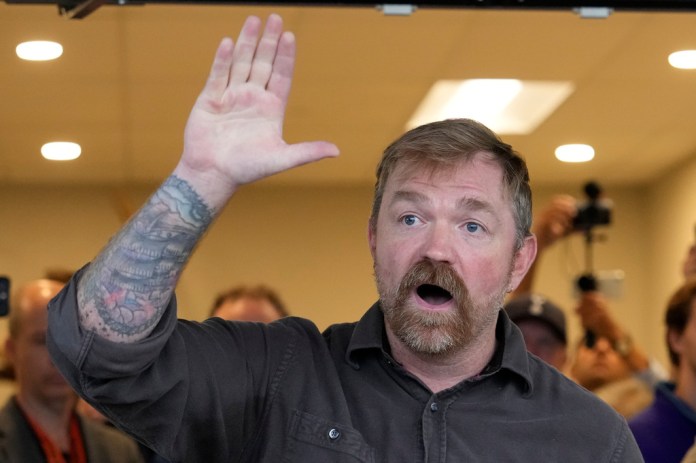
Glenn Youngkin campaigned against the measure on April 20, 2026, joined by former state Attorney General Jason Miyares, making stops across the state. Youngkin called the proposed map the most gerrymandered in America and a power grab that would dilute conservative voters' influence.
He noted that the referendum has united Republicans, independents, and some Democrats in opposition. Trump, during the tele-rally, highlighted that Gov. Abigail Spanberger had promised not to pursue such a move. He said the referendum would eliminate four out of five congressional seats, wiping out representation.
Polls show the race is tight, with support for the measure ahead by only a few percentage points or within the margin of error.
“This referendum is a blatant partisan power grab that nobody's really ever seen anything like it. It's the liberal extremist governor, Abigail Spanberger, too bad. And the far-left Democrats in Richmond after Spanberger promised Virginia voters that she would never do this. Abigail Spanberger and former President Barack Obama, argue the redistricting is needed to counter aggressive map changes in Republican-led states like Texas. Obama stated in a video that voting yes would push back against Republicans seeking an unfair advantage in the midterms. Democratic Sen. Tim Kaine acknowledged the maps do not fully reflect Virginia's partisan breakdown but emphasized respecting election results. The referendum has seen about $93 million in spending, much from undisclosed donor groups, with supporters outspending opponents by roughly three to one. Early voting surged, and Republicans reported higher turnout rates than in 2025. Legal challenges have occurred, with courts allowing the vote to proceed, though more litigation is expected. Republican-controlled states like Texas, under Gov. Greg Abbott, passed new maps adding GOP-leaning seats, while Democratic states like California, led by Gov. Gavin Newsom, responded with their own changes via Proposition 50, creating more Democratic districts.”
Other states involved include Missouri, Ohio, and North Carolina, where GOP legislatures drew new maps. Florida is set for a special legislative session starting April 28, 2026, where Gov. Ron DeSantis aims to add three to five GOP-leaning seats. The U.S. Supreme Court is expected to rule in Louisiana v.
Callais, which could affect majority-minority districts nationwide and favor Republicans if it overturns a Voting Rights Act provision.
“By voting yes, you have the chance to do something important — not just for the Commonwealth, but for our entire country. By voting yes, you can push back against the Republicans trying to give themselves an unfair advantage in the midterms.”
The outcome could influence control of the U.S. House in the 2026 midterms, where the GOP holds a slim majority. Polls close at 7 p.m. on April 21, 2026.