science
Volunteers in Poland Assist Amphibians Crossing Road During Spring Migration Near Warsaw
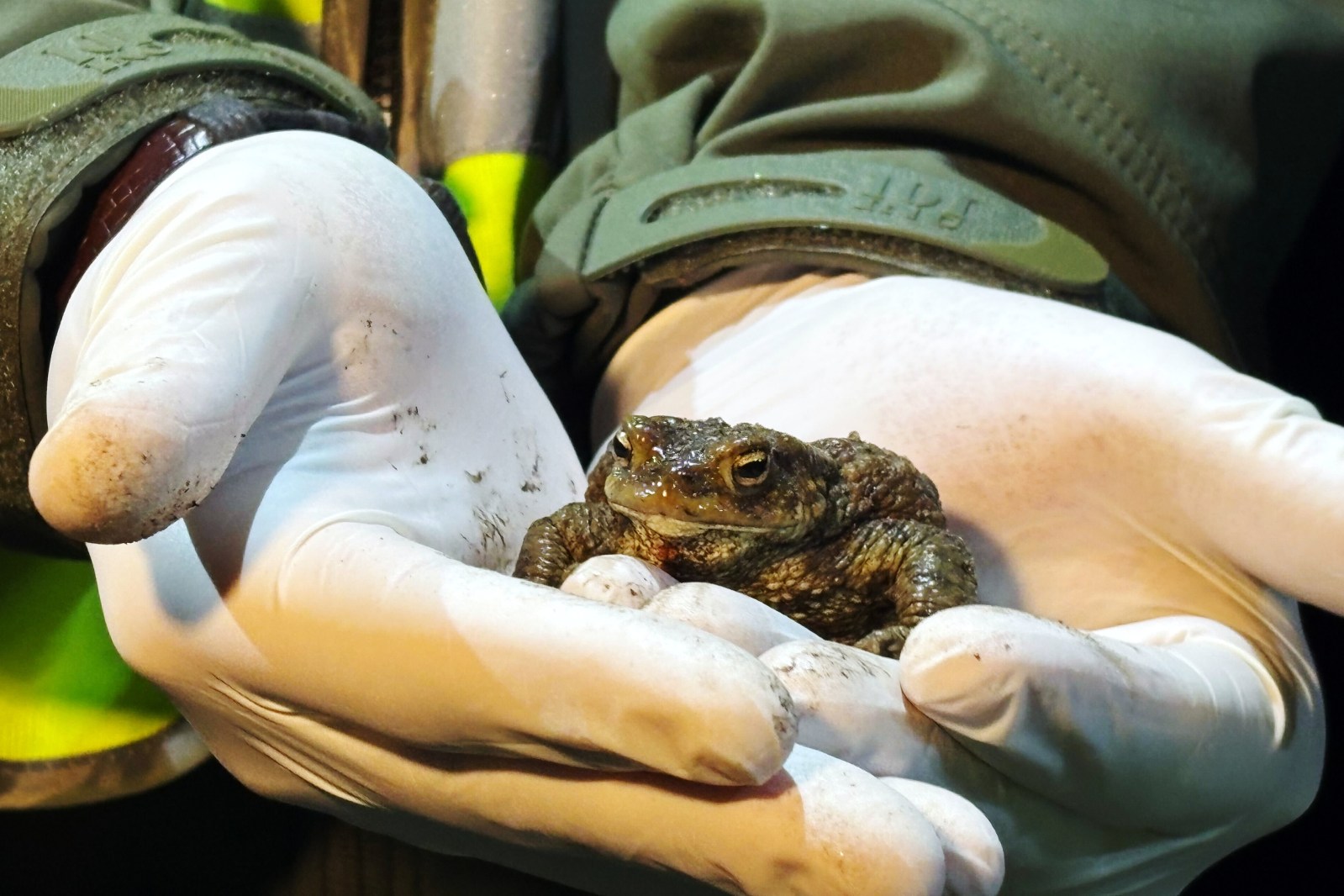
Volunteers in Otrębusy near Warsaw form a patrol each spring to help frogs and toads cross a busy road during migration. The initiative, active for three years, has moved about 18,000 amphibians to nearby marshes. Biologists note that road deaths can number in the hundreds per night, affecting local populations.
 winnipegfreepress.com
Audio version
Tap play to generate a narrated version.
Volunteers in Otrębusy, a locality near Warsaw, Poland, participate in an annual effort to assist amphibians during their spring migration. Each year from March to April, residents patrol a busy road that intersects traditional migration routes to breeding grounds. The road was constructed in the past decade, placing amphibian populations at risk from vehicle traffic.
Participants wear reflective vests and carry buckets to transport frogs and toads safely across the road, particularly in the evenings after rain. The patrol focuses on moving the animals to nearby marshes where they breed. This local initiative, known as the Frog Patrol, has saved thousands of amphibians, as reported in recent coverage.
Biologists note that road mortality can affect amphibian populations during peak migration. Such deaths reduce reproduction rates and threaten the sustainability of local frog and toad populations. The effort addresses these risks by providing a direct intervention along the affected route.
Similar volunteer programs exist in Germany and the United States, where participants help amphibians navigate roads and barriers. In Otrębusy, the patrols include families and children, which contributes to community awareness of wildlife protection. The initiative operates without formal government involvement, relying on local residents.
The migration season typically spans March to April, aligning with increased amphibian activity after winter. Future patrols will continue annually unless infrastructure changes alter the migration paths. Local authorities have not commented on potential road modifications to accommodate wildlife.