world
Wisconsin Court Hears Challenge to Act 10 Public Sector Union Reforms
Wisconsin's Act 10, enacted in 2011, limited collective bargaining rights for public sector unions. The law has faced ongoing legal challenges. A recent court hearing addresses its constitutionality, with potential implications for state finances and union operations.
 reason.com
Audio version
Tap play to generate a narrated version.
Wisconsin's Act 10, enacted in 2011, restricted collective bargaining for most public employees, excluding police and firefighters. The legislation required public workers to contribute more to their pension and health insurance costs and limited union dues collection to voluntary payments. These changes applied to teachers, state employees, and local government workers across the state.
Act 10 has faced ongoing legal challenges. A recent court hearing addresses its constitutionality, with potential implications for state finances and union operations.
A legal challenge to Act 10 reached the Wisconsin Supreme Court in 2024, questioning whether the law violates the state constitution's provisions on equal protection and home rule. The case, brought by unions and affected employees, argues that the exclusions for public safety workers create unequal treatment.
The challenge stems from a lower court ruling that partially invalidated parts of the law.
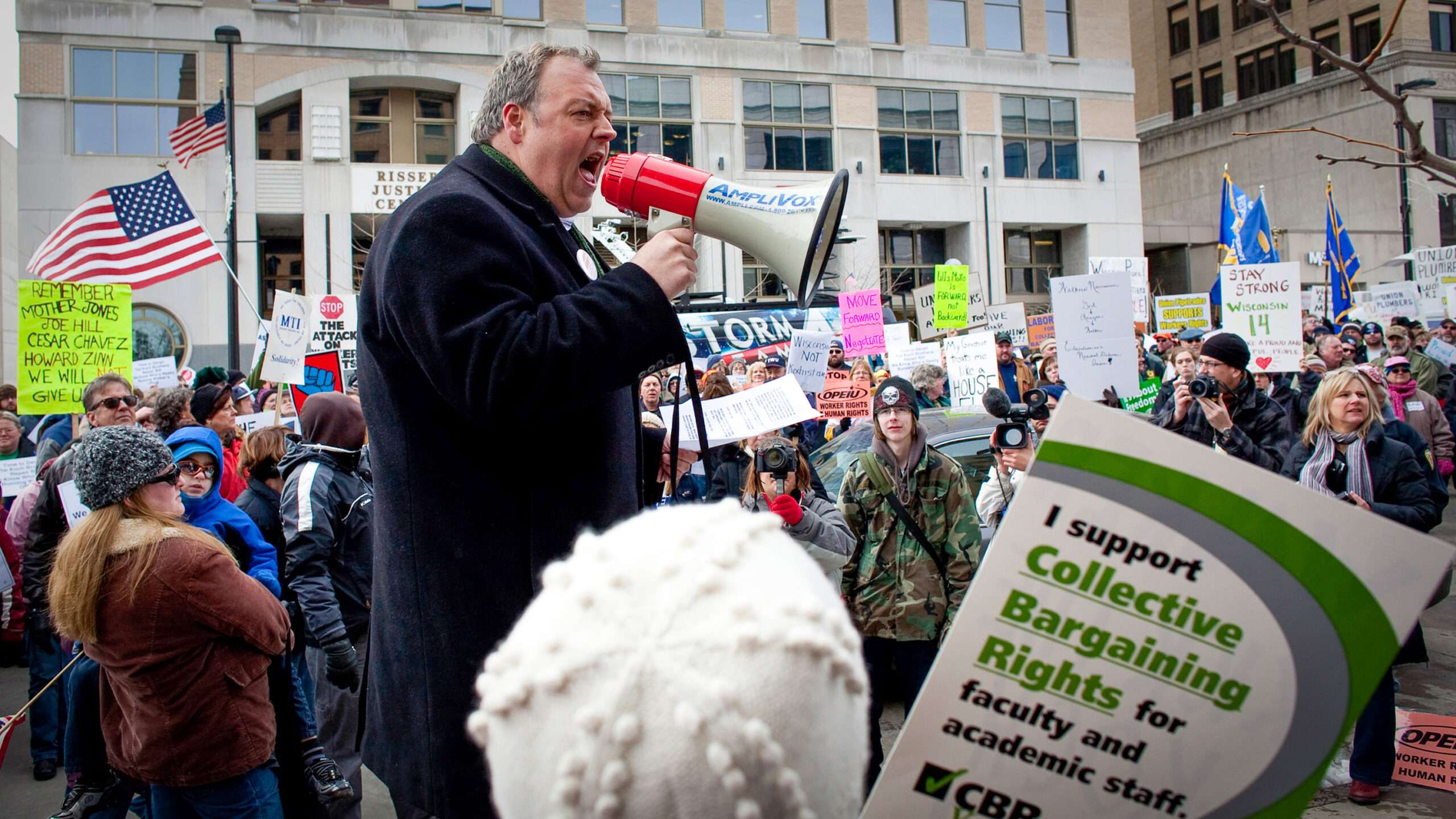
10 Implementation Act 10 was passed amid protests in Madison in 2011, following budget shortfalls in the state. The law survived multiple court challenges in the years after its enactment. Unions have sought to overturn the law through legislative efforts and ballot initiatives, but these have not succeeded.
The current case before the Wisconsin Supreme Court, heard in oral arguments in late 2024, could lead to reinstatement of broader bargaining rights if the challengers prevail. A decision is expected in 2025.
the court upholds Act 10, the existing limits on bargaining and benefits contributions would remain in place.
An overturn could require renegotiation of contracts and increased state and local spending on employee benefits. Teachers' unions, municipal governments, and taxpayers in Wisconsin would be directly affected by the outcome. The case highlights ongoing tensions between labor rights and fiscal policy in public sector employment.