NASA's Artemis II Mission Concludes with Successful Splashdown After Lunar Flyby
NASA's Artemis II mission ended with a safe splashdown in the Pacific Ocean on April 10, 2026, marking the first human lunar voyage in over 50 years. The crew of three Americans and one Canadian traveled farther from Earth than any previous mission, collecting data during a flyby of the moon's far side. The mission served as a test for future lunar landings planned in the Artemis program.
 Usa Today
NASA's Artemis II mission concluded successfully on April 10, 2026, with the Orion spacecraft splashing down in the Pacific Ocean off the coast of California. The crew, consisting of three Americans and one Canadian, returned safely after a nine-day journey that took them around the moon. This marked the first crewed lunar mission since 1972.
m. Pacific Time near San Diego. NASA reported the landing as perfect, with all crew members in good health. The mission launched on April 1 from the Kennedy Space Center in Florida. During the flight, the crew traveled an estimated 252,760 miles from Earth, farther than any previous human mission.
They performed a flyby of the moon's far side, collecting observations and data for scientists. The astronauts also witnessed a total solar eclipse and identified new craters on the lunar surface.
Mission Objectives and Achievements Artemis II served as a test flight for NASA's Space Launch System and Orion spacecraft.
The crew orbited the moon and gathered imagery of previously unseen areas. They described the lunar south pole as a steep and challenging landscape for future landings. From their position near the moon, the astronauts observed the three-dimensional topography of the surface, noting differences in brightness in young craters.
They reported seeing colors not visible from Earth, including brownish patches and a greenish tint in certain regions. One mission specialist described crater centers as resembling a lampshade with light shining through pinprick holes. The crew also observed multiple impact flashes from small meteorites hitting the moon during the eclipse.
Such observations will inform the safety of future lunar bases under NASA's Artemis program.
Crew Activities and Observations The astronauts took photos during the flyby and conducted scientific tasks.
They noted jagged terrain around the lunar south pole, relevant to planned landings as early as 2028. Volcanic terrain was suspected in areas showing greenish hues, based on communications with NASA scientists. Understanding meteorite impacts is crucial for establishing a moon base, as thousands of tons of extraterrestrial material reach Earth annually but behave differently on the airless moon.
The mission pushed into deep space, carrying real risks to test systems for upcoming ventures. NASA's Artemis program aims to return humans to the lunar surface, build a moon base, and prepare for further exploration. This mission set the stage for those goals.
Post-Mission and Future Plans The crew was scheduled to return to Houston on April 12, 2026.
NASA's administrator described the astronauts as ambassadors to the stars and emphasized the workforce's role in the success. Upcoming missions include Artemis III in 2027, where astronauts will dock with commercial lunar landers developed by private companies. Artemis IV is planned for a moon landing in 2028.
The program involves testing one or both commercial landers in Earth orbit beforehand. " — Jared Isaacman, April 10, 2026 (TechCrunch) The mission inspired public interest, including a parody sketch on Saturday Night Live aired on April 11, 2026. The skit depicted crew interruptions during a reflective video recording aboard the spacecraft.
Story Timeline
5 events- April 10, 2026 — 5:07 p.m. PT
Orion spacecraft splashed down safely in Pacific Ocean off San Diego.
4 sourcesUSA Today · TechCrunch · Wired · The New York Times - April 11, 2026
Saturday Night Live aired parody skit of Artemis II mission.
1 sourceUSA Today - April 1, 2026
Artemis II mission launched from Kennedy Space Center in Florida.
2 sourcesUSA Today · TechCrunch - During mission (April 2026)
Crew conducted lunar flyby, collected data, and observed eclipse.
3 sourcesUSA Today · TechCrunch · Wired - April 12, 2026
Crew returned to Houston after splashdown.
1 sourceThe New York Times
Potential Impact
- 01
NASA advances testing of SLS and Orion for future crewed missions.
- 02
Artemis program progresses toward lunar surface return in 2028.
- 03
Commercial landers from private companies integrate into Artemis III.
- 04
Data from lunar flyby informs south pole landing site selection.
- 05
Observations of meteorite impacts guide moon base safety protocols.
- 06
Public interest in space exploration increases following mission success.
Transparency Panel
Related Stories
 NASA Johnson Space Center / Wikimedia (Public domain)
NASA's Artemis II Completes First Manned Moon Mission Since 1972, Sets Distance Record
NASA's Artemis II mission completed a flight around the moon and splashed down in the Pacific Ocean on Saturday. The mission marks the first manned moon mission since 1972 and set a record for the furthest humans have travelled into space at 252,756 miles (406,771km). Meanwhile,…
 Science News
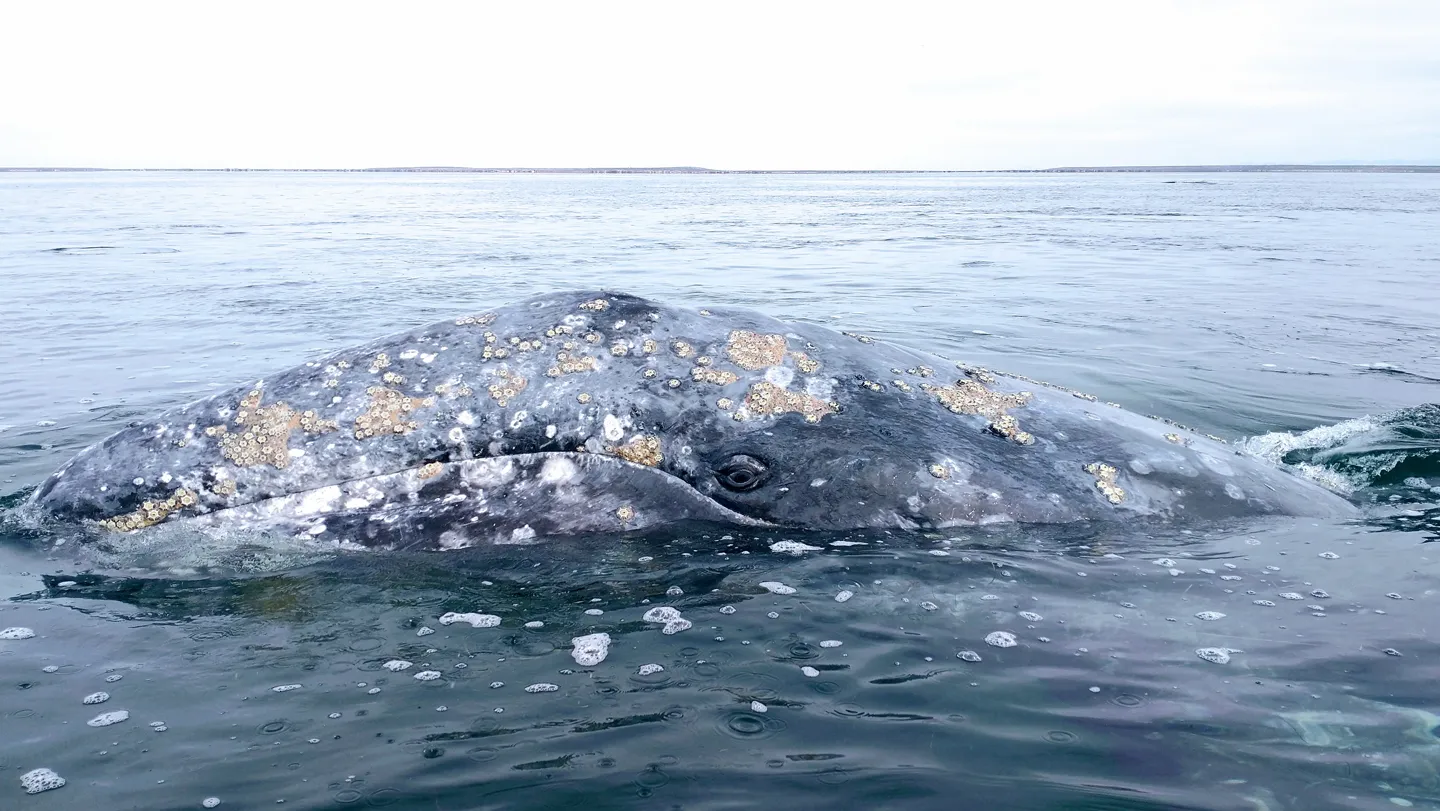
Nearly 1 in 5 Gray Whales Entering San Francisco Bay Die There, Study Finds
Researchers report that approximately 18 percent of photo-identified gray whales visiting San Francisco Bay from 2018 to 2025 died after entering the area. The deaths, often from vessel strikes, coincide with a population decline linked to reduced Arctic food availability. The fi…
 Stat
StatSpyre Therapeutics' SPY001 Drug Meets Primary Goal in Phase 2 Ulcerative Colitis Trial
Spyre Therapeutics announced positive results from the first batch of data in its Phase 2 SKYLINE study for SPY001, an experimental treatment for ulcerative colitis. The drug achieved a 9.2-point decrease in disease activity and induced remission in about 40% of participants afte…