Nearly 1 in 5 Gray Whales Entering San Francisco Bay Die There, Study Finds
Researchers report that approximately 18 percent of photo-identified gray whales visiting San Francisco Bay from 2018 to 2025 died after entering the area. The deaths, often from vessel strikes, coincide with a population decline linked to reduced Arctic food availability. The findings highlight risks along the whales' migration route amid climate change.
 Science News
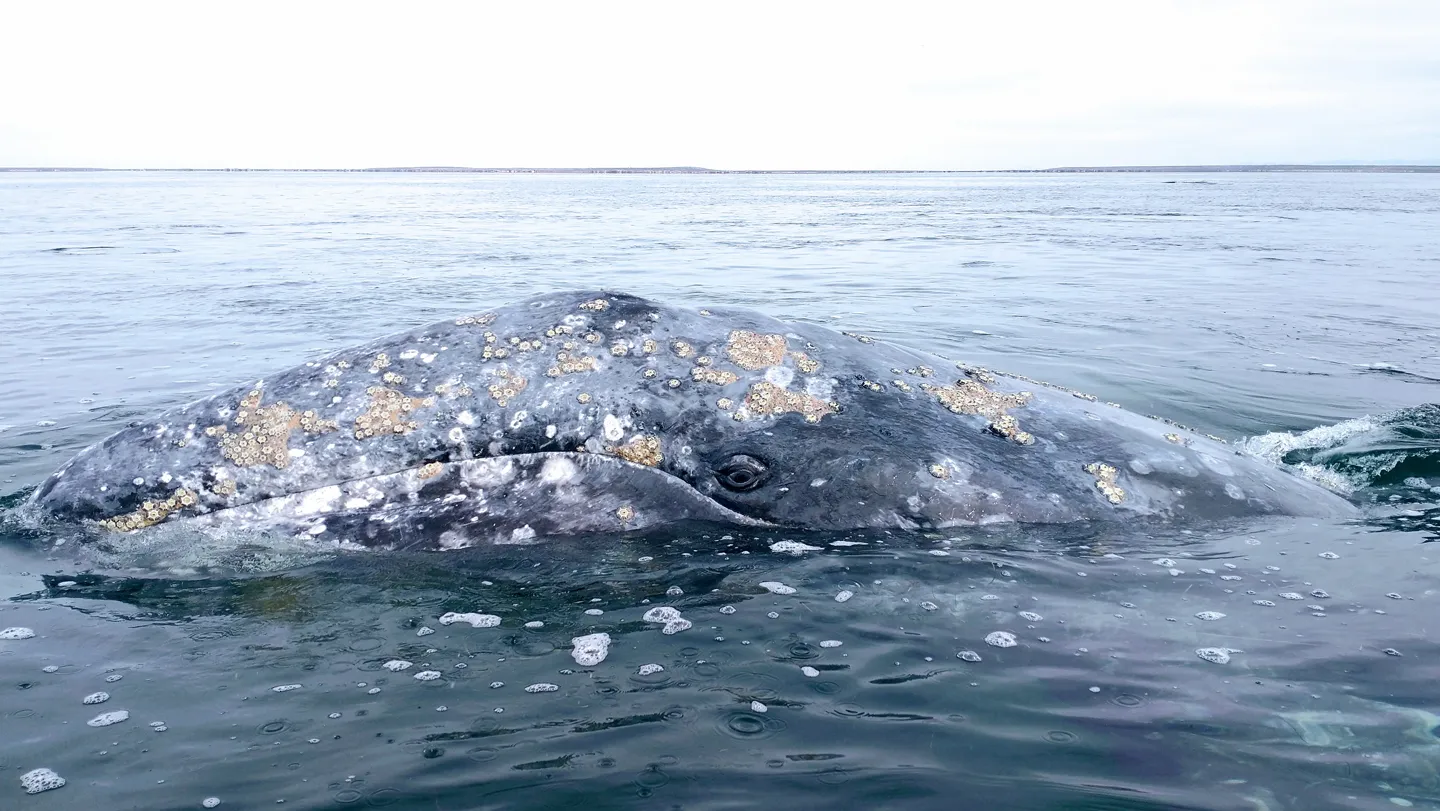
A study published on April 13, 2026, in Frontiers in Marine Science reveals that nearly 1 in 5 gray whales entering San Francisco Bay die there. Researchers analyzed 100,000 photos taken from 2018 to 2025 and identified 114 individual gray whales that visited the bay. Of these, 21 matched to documented carcasses, indicating an 18 percent mortality rate.
The study documented 70 gray whale carcasses in the region during the same period. Most of the remaining 49 carcasses were found in or near the bay, suggesting they also died after entering. Many carcasses were too decomposed for photo identification, so the actual rate may be higher.
Examination of the carcasses showed that vessel strikes caused nine of the 21 identified deaths and 30 of the 70 where a cause could be determined. Gray whales typically migrate 16,000 kilometers from Arctic feeding grounds to Mexico for mating and birthing, then return, without stopping in the bay.
Shift in Migration Behavior Since 2018, some gray whales have begun entering San Francisco Bay, possibly to forage due to hunger.
This behavior started alongside a large die-off attributed to decreased food in the Arctic. A similar trend occurred in the late 1990s. The gray whale population has lost hundreds of individuals in recent years.
Researchers noted that the bay visits coincide with these losses along the migration route. Gray whales have also been spotted in unusual feeding areas off Florida, New England, and Hawaii. These explorations may indicate adaptation to changing conditions.
Implications for Conservation The pit stops in San Francisco Bay pose significant risks from ship traffic.
Protecting whales in these new areas could enhance population resilience to warming seas. However, climate change is altering historical migration patterns. Feeding in different areas might not fully compensate for Arctic food shortages.
“If you’re desperate, and you go into San Francisco Bay, it looks like you’ve got a really, really high chance of not making it back out." — Joshua Stewart, marine ecologist at Oregon State University, April 13, 2026 (Science News) > "The animals might be entering the Bay in search of food as climate change disrupts traditional sources.”
Story Timeline
4 events- April 13, 2026
Researchers publish study in Frontiers in Marine Science on gray whale deaths in San Francisco Bay.
2 sourcesScience News · The New York Times - 2018-2025
114 gray whales identified visiting San Francisco Bay via 100,000 photos; 21 matched to carcasses.
1 sourceScience News - 2018
Gray whales begin making pit stops in San Francisco Bay, coinciding with Arctic food shortages and die-off.
1 sourceScience News - Late 1990s
Similar trend of gray whales entering San Francisco Bay occurs during prior food scarcity period.
1 sourceScience News
Potential Impact
- 01
Gray whale population faces further decline if Arctic food shortages persist.
- 02
Conservation groups expand monitoring of gray whale movements in unusual feeding areas.
- 03
Increased vessel speed restrictions implement in San Francisco Bay to reduce whale strikes.
- 04
Research funding rises for marine mammal protection amid climate-driven migration shifts.
- 05
Public awareness campaigns launch to report whale sightings and avoid collisions.
- 06
Shipping routes adjust in coastal areas to accommodate whale foraging behaviors.
Transparency Panel
Related Stories
 NASA Johnson Space Center / Wikimedia (Public domain)
NASA's Artemis II Completes First Manned Moon Mission Since 1972, Sets Distance Record
NASA's Artemis II mission completed a flight around the moon and splashed down in the Pacific Ocean on Saturday. The mission marks the first manned moon mission since 1972 and set a record for the furthest humans have travelled into space at 252,756 miles (406,771km). Meanwhile,…
 Stat
StatSpyre Therapeutics' SPY001 Drug Meets Primary Goal in Phase 2 Ulcerative Colitis Trial
Spyre Therapeutics announced positive results from the first batch of data in its Phase 2 SKYLINE study for SPY001, an experimental treatment for ulcerative colitis. The drug achieved a 9.2-point decrease in disease activity and induced remission in about 40% of participants afte…
 Controladoria-geral da União do Brasik / Wikimedia (CC BY-SA 3.0)
Brazil Federal Police Arrest Researcher for Taking Virus Samples from Biosafety Lab
Brazil's federal police arrested a researcher late last month for allegedly taking samples of viruses from a high-security biosafety laboratory. The incident occurred in a controlled environment designed to handle hazardous materials. Authorities have not released further details…