AI Models from Major Companies Show Low Accuracy in Predicting Premier League Soccer Outcomes
A study reported by Ars Technica evaluated the performance of AI systems from Google, OpenAI, Anthropic, and xAI in predicting soccer match results in the English Premier League. The models, including xAI's Grok, achieved low success rates in betting simulations. The findings highlight limitations in AI's ability to handle sports predictions based on available data.
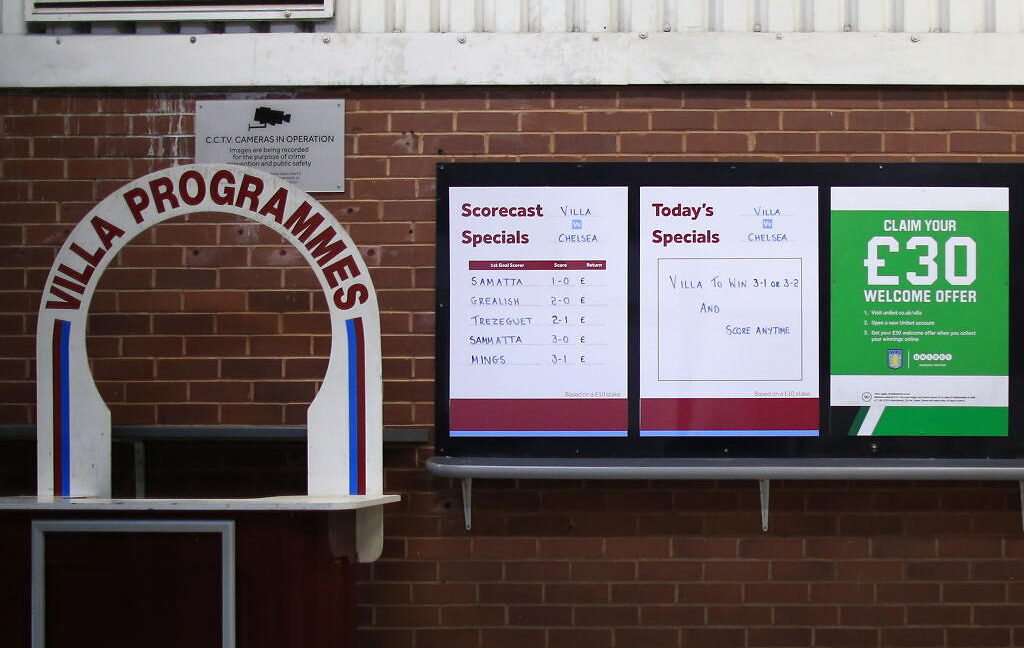 Ars Technica
AI systems developed by several leading technology companies have demonstrated limited effectiveness in predicting outcomes of soccer matches in the English Premier League. According to a report from Ars Technica, models from Google, OpenAI, Anthropic, and xAI were tested on their ability to simulate betting decisions.
The evaluation focused on the 2023-2024 Premier League season, where teams compete in a 38-match schedule per club.
The study involved prompting the AI models with match details, team statistics, and historical performance data to forecast winners and scorelines. xAI's Grok model, along with others, frequently mispredicted results, leading to simulated betting losses.
Ars Technica reported that across multiple tests, the overall accuracy remained below 50 percent, indicating challenges in processing complex variables like player injuries, weather conditions, and tactical shifts.
Performance Across Models Specific tests highlighted inconsistencies among the systems.
For instance, Google's Gemini model correctly predicted fewer than one-third of match outcomes in a sample of 20 games. OpenAI's GPT-4 and Anthropic's Claude showed similar patterns, with success rates varying by 5 to 10 percentage points depending on the prompt structure. The report noted that none of the models consistently outperformed random chance in high-stakes scenarios.
xAI's Grok, released in late 2023, was particularly scrutinized due to its integration of real-time data capabilities. In simulations, Grok achieved an accuracy of around 40 percent for outright winner predictions but dropped to 25 percent for exact scorelines.
Ars Technica's analysis included comparisons to baseline betting odds from bookmakers, where AI predictions aligned poorly with market consensus.
Background and Methodology The evaluation was conducted by researchers who fed the models publicly available data sources, such as league tables, player stats from sites like Transfermarkt, and recent form guides.
No proprietary training data specific to soccer was used beyond the models' general knowledge. The Premier League, featuring 20 teams including Manchester City and Arsenal, provides a dataset of over 380 matches annually, making it a standard benchmark for predictive testing.
Stakes in such predictions extend to sports betting industries, where accurate forecasts influence odds and user decisions.
Fans, bettors, and analysts rely on tools for insights, but the study's results suggest AI remains unreliable for precise wagering. Future improvements may involve specialized fine-tuning for sports data, though no timelines were specified in the report.
Those affected include AI developers seeking to expand applications in entertainment and finance, as well as soccer enthusiasts using tech for game analysis.
Next steps could involve broader testing across other leagues or sports to assess generalizability. Regulatory bodies in gambling may monitor AI's role in betting platforms for fairness.
Story Timeline
2 events- 2023-2024 Season
AI models tested on Premier League match predictions using historical and statistical data.
1 sourceArs Technica - Late 2023
xAI releases Grok model, later evaluated for soccer betting accuracy.
1 sourceArs Technica
Potential Impact
- 01
AI developers may prioritize sports-specific training data improvements.
- 02
Sports analytics firms might integrate hybrid human-AI systems.
- 03
Bettors could reduce reliance on AI tools for soccer predictions.
Transparency Panel
Related Stories
 Semafor
Anthropic Co-Founder Warns of Upcoming AI Capabilities for Exploiting Web Vulnerabilities
Anthropic's co-founder stated that powerful AI models capable of exploiting website vulnerabilities will emerge soon. The company's new model, Claude Mythos, identified unknown security flaws in major web browsers and operating systems. Financial authorities have responded by dis…
 Los Angeles Times
Gallup Poll Shows Increasing AI Use Among US Workers with Persistent Skepticism
A Gallup poll conducted in February indicates that more American workers are using artificial intelligence in their jobs, with about 3 in 10 using it frequently. However, skepticism remains common, with many non-users citing preferences for traditional methods, ethical concerns,…
 Federal Bureau of Investigation / Wikimedia (Public domain)
AI Assistant Poke Charges Billionaire $136,000 Monthly Fee
Poke, an AI assistant without a price ceiling, charged one billionaire $136,000 a month. Marvin von Hagen stated this pricing detail. The information highlights Poke's premium service model.