Study Reveals Discrepancy in Mars Surface Water Accounting
Researchers have conducted an accounting of water that once existed on Mars's surface and later disappeared. The analysis identified a discrepancy in the water volume estimates. This finding highlights gaps in current understanding of Mars's hydrological history.
 NASA/JPL/Cornell University, Maas Digital LLC / Wikimedia (Public domain)
A new study has examined the amount of water that was present on Mars's surface in the past and subsequently lost. The research, reported by NewScientist, focused on reconstructing the planet's hydrological history through geological evidence and models.
The accounting process involved estimating water volumes based on observed features such as ancient river valleys, lake beds, and mineral deposits formed by water.
Scientists calculated the total water that should have been available during Mars's wetter periods billions of years ago. These estimates drew from data collected by orbiters, landers, and rovers exploring the planet.
Key Findings on Water Loss The study found a discrepancy between the expected volume of surface water and the evidence of its loss.
Much of Mars's water is believed to have escaped into space, frozen in polar ice caps, or seeped into the subsurface. However, the accounting revealed inconsistencies in how much water remains unaccounted for, suggesting incomplete models of atmospheric escape and geological processes. This gap indicates that current scientific understanding of Mars's water cycle is limited.
For instance, models of atmospheric loss may underestimate the rate at which water vapor escaped due to solar wind interactions. The research underscores the need for further data to resolve these inconsistencies.
Implications for Mars Exploration Understanding Mars's water history is essential for assessing the planet's past habitability.
Water is a key ingredient for life as known on Earth, and its presence could inform searches for ancient microbial fossils. The discrepancy affects predictions about underground water reserves, which could be targets for future missions. Ongoing NASA and international missions, such as the Perseverance rover, continue to gather samples and data to refine these models.
Future orbiters may provide higher-resolution maps of water-related features. Resolving the water accounting issue could guide decisions on resource utilization for human exploration. The study contributes to broader efforts in planetary science to piece together Mars's environmental evolution.
It highlights how integrated analyses of geological and atmospheric data can reveal planetary histories. Additional research is expected to build on these findings in the coming years.
Story Timeline
2 events- Recent study publication
Researchers published an accounting of Mars surface water volumes revealing a discrepancy.
1 source@NewScientist - Billions of years ago
Mars experienced wetter periods with surface water that later disappeared.
1 source@NewScientist
Potential Impact
- 01
Discrepancy affects estimates of subsurface water reserves for exploration.
- 02
Study may prompt refined models of Mars atmospheric escape processes.
- 03
Findings could influence target selection for future rover missions.
- 04
Research highlights need for additional orbital data collection on water features.
Transparency Panel
Related Stories
 NASA Johnson Space Center / Wikimedia (Public domain)
NASA's Artemis II Completes First Manned Moon Mission Since 1972, Sets Distance Record
NASA's Artemis II mission completed a flight around the moon and splashed down in the Pacific Ocean on Saturday. The mission marks the first manned moon mission since 1972 and set a record for the furthest humans have travelled into space at 252,756 miles (406,771km). Meanwhile,…
 Science News
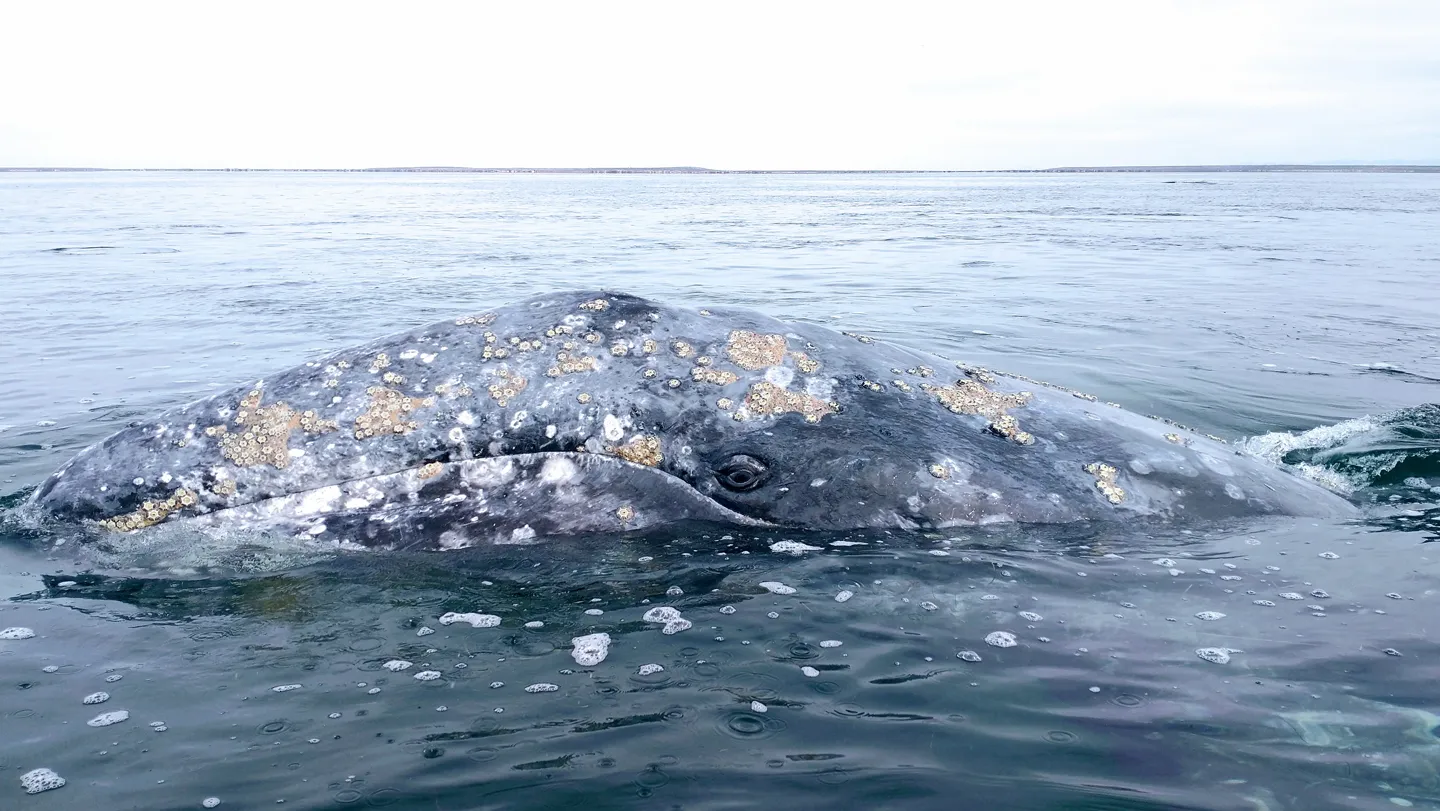
Nearly 1 in 5 Gray Whales Entering San Francisco Bay Die There, Study Finds
Researchers report that approximately 18 percent of photo-identified gray whales visiting San Francisco Bay from 2018 to 2025 died after entering the area. The deaths, often from vessel strikes, coincide with a population decline linked to reduced Arctic food availability. The fi…
 Stat
StatSpyre Therapeutics' SPY001 Drug Meets Primary Goal in Phase 2 Ulcerative Colitis Trial
Spyre Therapeutics announced positive results from the first batch of data in its Phase 2 SKYLINE study for SPY001, an experimental treatment for ulcerative colitis. The drug achieved a 9.2-point decrease in disease activity and induced remission in about 40% of participants afte…