Commercial Salmon Fishing to Resume Along California Coast After Three-Year Closure
Commercial salmon fishing along the California coast is scheduled to resume this spring for the first time since 2022. The Pacific Fishery Management Council plans to approve a season with strict catch limits following an increase in salmon populations. The reopening addresses impacts from a prior ban due to declining Chinook salmon numbers.
 Los Angeles Times
Commercial salmon fishing along the California coast will resume this spring after a three-year shutdown that began in 2023. The Pacific Fishery Management Council, a federal body that manages West Coast ocean fisheries, is set to vote on a plan to reopen the season under strict limits. This follows observations of increased Chinook salmon populations.
The closure in 2023, 2024, and 2025 was the longest in state history and resulted from a sharp decline in Chinook salmon. Biologists attribute the population decline to factors including dams that block spawning areas, loss of floodplain habitats, and warming river temperatures from droughts. The 2020-2022 drought exacerbated these conditions by raising water temperatures downstream from dams.
Economic Effects on Fishing Industry The shutdown led to significant income losses for commercial fishing crews.
Some shifted to catching crabs or other fish, while others left the industry or the state. 6 million in disaster relief funds for affected California fishing communities in response to the 2023 closure. Fishermen in the San Francisco region will be allowed to catch up to 160 Chinook salmon per vessel during open periods in May and August, and 100 in September.
Limits vary by region, and the plan sets a total cap on fall-run Chinook catches for the season. These restrictions aim to protect recovering populations while permitting limited fishing.
Perspectives from Fishermen Vance Staplin, executive director of the Golden State Salmon Association, described the reopening as providing some financial relief to crews.
Chris Pedersen, a 66-year-old fisherman from Half Moon Bay, moved to Arizona after the 2023 closure and now fishes in Oregon. He received $8,000 from the relief funds but stated it did not cover his losses. Sarah Bates, who operates a commercial fishing boat from San Francisco's Fisherman's Wharf, noted that many have left the port for other work.
She expressed concern about the long-term viability of coastal fishing communities. Bates added that the limited season offers a boost but does not restore pre-shutdown operations.
Broader Context and Next Steps The closure also impacted recreational anglers and sportfishing charter businesses.
Recreational ocean fishing reopened for several days last year after a two-year ban, also under strict limits. The Pacific Fishery Management Council's vote is expected on Sunday, with fishing to begin this spring if approved.
Story Timeline
5 events- Spring 2026
Commercial salmon fishing resumes along California coast under strict limits.
1 sourceLos Angeles Times - 2025
Commercial salmon fishing remains closed due to population concerns.
1 sourceLos Angeles Times - 2024
Commercial salmon fishing closure continues for second year.
1 sourceLos Angeles Times - 2023
Commercial salmon fishing banned following decline in Chinook populations.
1 sourceLos Angeles Times - 2020-2022
Drought contributes to salmon population decline through warmer river temperatures.
1 sourceLos Angeles Times
Potential Impact
- 01
Salmon populations face ongoing risks from environmental factors.
- 02
Fishing crews gain limited income from spring catch allowances.
- 03
Coastal communities see partial economic recovery in fishing sector.
- 04
Some displaced fishermen may return to California operations.
- 05
Recreational fishing may expand if populations stabilize.
Transparency Panel
Related Stories
 NASA Johnson Space Center / Wikimedia (Public domain)
NASA's Artemis II Completes First Manned Moon Mission Since 1972, Sets Distance Record
NASA's Artemis II mission completed a flight around the moon and splashed down in the Pacific Ocean on Saturday. The mission marks the first manned moon mission since 1972 and set a record for the furthest humans have travelled into space at 252,756 miles (406,771km). Meanwhile,…
 Science News
Nearly 1 in 5 Gray Whales Entering San Francisco Bay Die There, Study Finds
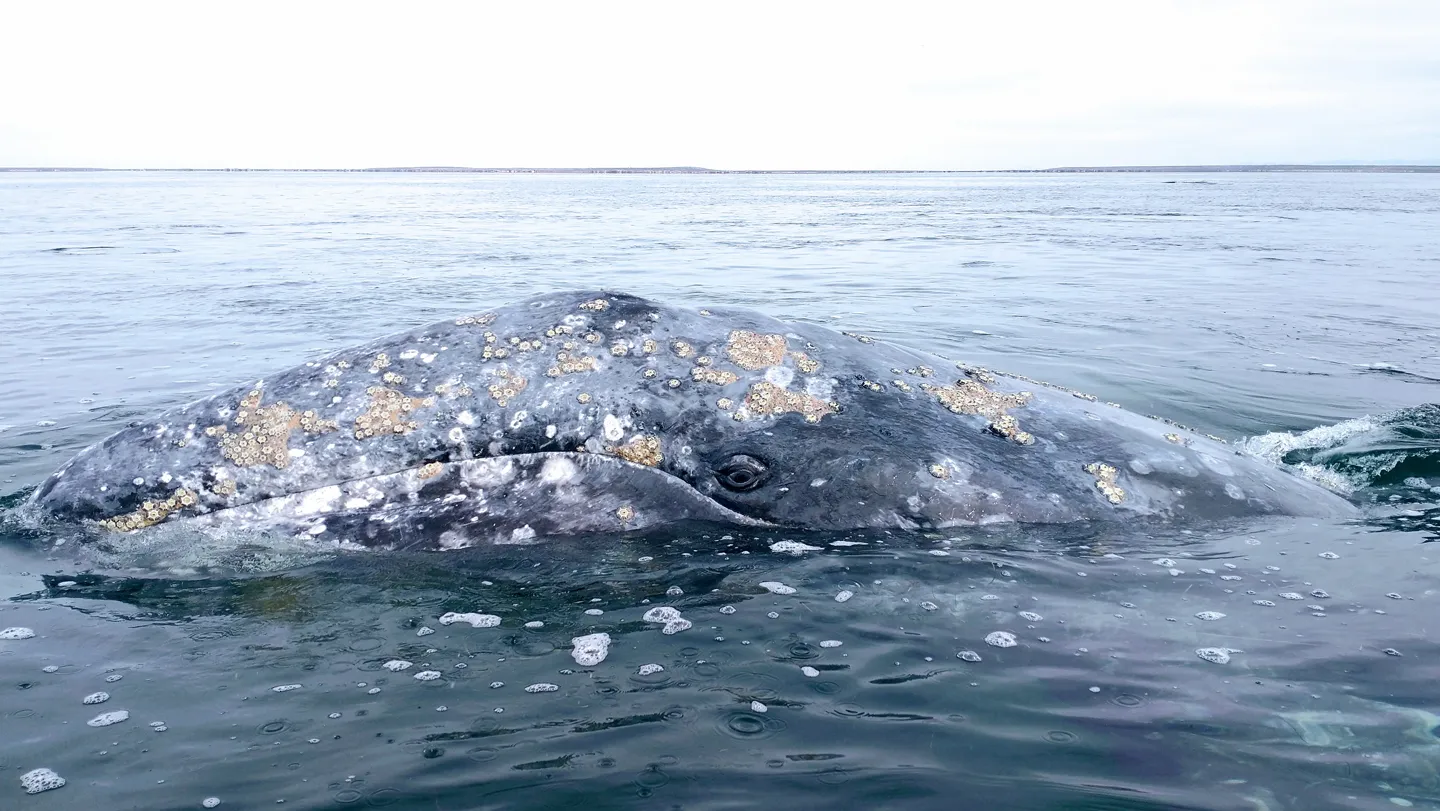
Researchers report that approximately 18 percent of photo-identified gray whales visiting San Francisco Bay from 2018 to 2025 died after entering the area. The deaths, often from vessel strikes, coincide with a population decline linked to reduced Arctic food availability. The fi…
 Stat
StatSpyre Therapeutics' SPY001 Drug Meets Primary Goal in Phase 2 Ulcerative Colitis Trial
Spyre Therapeutics announced positive results from the first batch of data in its Phase 2 SKYLINE study for SPY001, an experimental treatment for ulcerative colitis. The drug achieved a 9.2-point decrease in disease activity and induced remission in about 40% of participants afte…