Stranded Humpback Whale in Bay of Wismar Faces Uncertain Fate as Biologists Plan Autopsy
A humpback whale stranded in the Bay of Wismar has prompted discussions among marine biologists about rescue efforts. Officials in Mecklenburg-Western Pomerania are considering a minimally invasive method to mobilize the animal using underwater recordings of whale songs. Researchers from the German Oceanographic Museum are preparing for a potential autopsy while addressing public criticism.
 Euronews
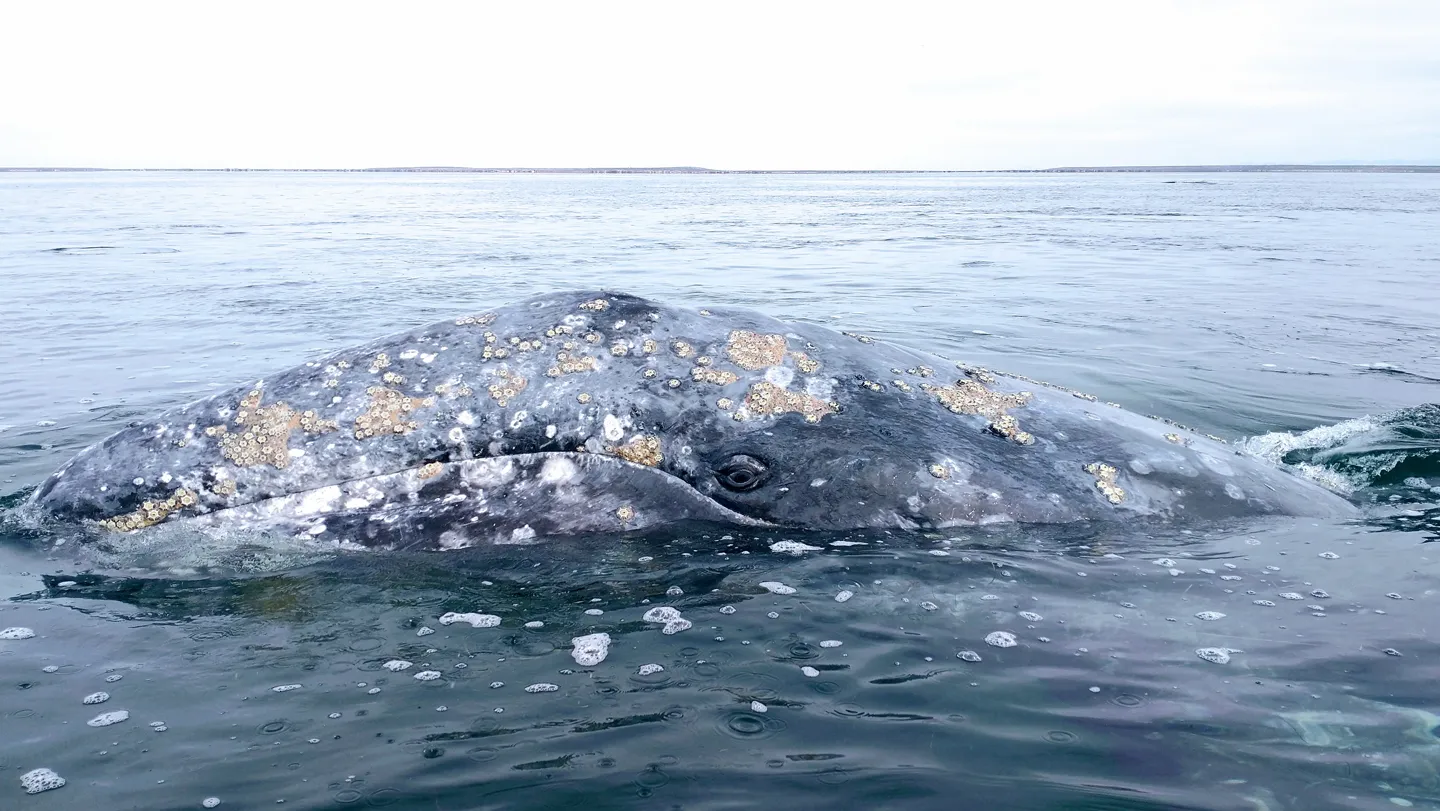
A humpback whale, referred to by some as Timmy, has been stranded in the shallow waters of the Bay of Wismar off the island of Poel for several days. Marine biologists have assessed the situation and concluded that rescue attempts involving moving the weakened animal to deeper water are not feasible.
The whale has repeatedly returned to the coastal shallows instead of swimming into open sea, indicating possible injury.
Environment officials in Mecklenburg-Western Pomerania stated that there is no realistic hope of saving the whale. However, on Saturday night, the animal made unusual noises, prompting the scientific team to evaluate playing underwater recordings of humpback whale songs as a minimally invasive mobilization attempt. This approach aims to encourage the whale to move without physical intervention.
Biologists' Perspectives on Treatment and Care Marine biologists from the German Oceanographic Museum in Stralsund, including Lisa Klemens and Anja Gallus, emphasized that the whale is a wild animal and not a pet.
They noted that while efforts are made to assist, anthropomorphizing the animal can complicate scientific work. Klemens, who is preparing for an autopsy, reported receiving online insults and threats amid public attention to the case. The ministry published a report on the whale's assessment to address public criticism.
Researchers highlighted that some accusations from protesters lack foundation, often coming from individuals not directly involved in marine conservation. The report details the whale's condition and the rationale behind the limited intervention options.
Potential Cause and Broader Environmental Concerns Biologists suspect the whale became entangled in a gillnet, a common hazard in the Baltic Sea that also affects harbor porpoises and other marine life.
Gillnets, which can reach 15 meters in height and 15 kilometers in length, lead to bycatch of birds, mammals, and other species unable to detect the thin nylon material. Environmental organizations have criticized these nets for causing significant unintended deaths. No one can predict how long the whale will survive, as humpback whales can endure without food for up to six months.
Gallus explained that the animal may need to starve before death occurs, a process that could take time despite its weakened state from recent low feeding. This waiting period underscores the challenges in managing stranded marine mammals. The case has drawn public interest, but researchers like Klemens pointed out that it overshadows larger issues such as the dangers of fishing gear to marine life.
Efforts to help the whale continue, with monitoring ongoing to assess any changes in its behavior. An autopsy, if needed, will provide insights into the cause of stranding and potential injuries.
Story Timeline
4 events- Saturday night
The stranded whale made unusual noises, leading to consideration of playing song recordings.
1 sourceEuronews - End of March
The whale growled at experts approaching by boat during monitoring.
1 sourceEuronews - Past few weeks
The whale repeatedly returned to shallow coastal waters instead of open sea.
1 sourceEuronews - Recent days
Marine biologists assessed the whale's condition and ruled out major rescue efforts.
1 sourceEuronews
Potential Impact
- 01
Biologists' monitoring efforts could document whale behavior for scientific records.
- 02
Autopsy results could reveal entanglement details, informing future net regulations.
- 03
Environmental groups may advocate for gillnet restrictions based on this case.
- 04
Public attention may increase awareness of bycatch risks in the Baltic Sea.
- 05
Criticism of rescue limits might prompt reviews of marine stranding protocols.
Transparency Panel
Related Stories
 NASA Johnson Space Center / Wikimedia (Public domain)
NASA's Artemis II Completes First Manned Moon Mission Since 1972, Sets Distance Record
NASA's Artemis II mission completed a flight around the moon and splashed down in the Pacific Ocean on Saturday. The mission marks the first manned moon mission since 1972 and set a record for the furthest humans have travelled into space at 252,756 miles (406,771km). Meanwhile,…
 Science News
Nearly 1 in 5 Gray Whales Entering San Francisco Bay Die There, Study Finds
Researchers report that approximately 18 percent of photo-identified gray whales visiting San Francisco Bay from 2018 to 2025 died after entering the area. The deaths, often from vessel strikes, coincide with a population decline linked to reduced Arctic food availability. The fi…
 Stat
StatSpyre Therapeutics' SPY001 Drug Meets Primary Goal in Phase 2 Ulcerative Colitis Trial
Spyre Therapeutics announced positive results from the first batch of data in its Phase 2 SKYLINE study for SPY001, an experimental treatment for ulcerative colitis. The drug achieved a 9.2-point decrease in disease activity and induced remission in about 40% of participants afte…