James Webb Space Telescope Detects Galaxy Hebe from 400 Million Years After Big Bang
The James Webb Space Telescope has observed a galaxy named Hebe that formed approximately 400 million years after the Big Bang. This galaxy appears to contain stars that are young and composed of highly pure elements. The discovery provides insights into the early universe's star formation processes.
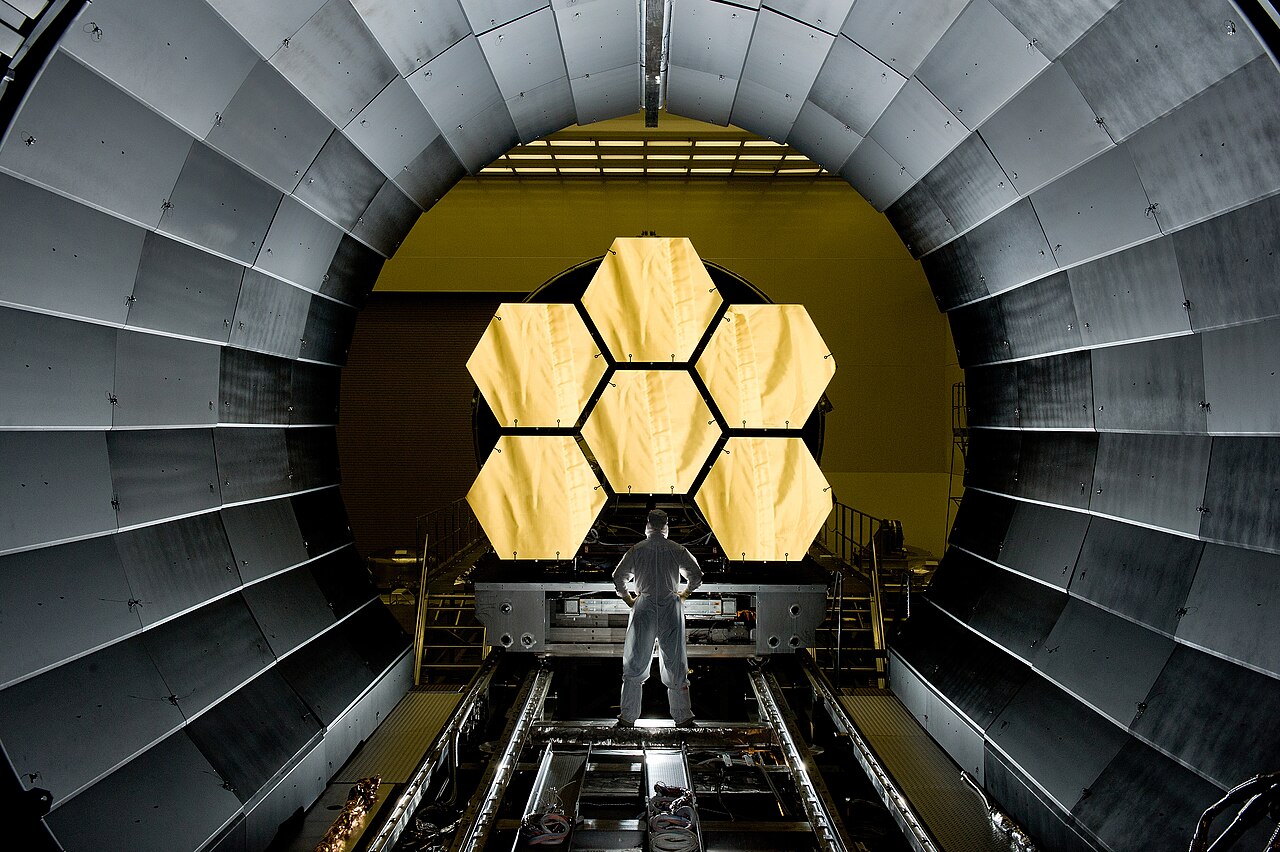 NASA/MSFC/David Higginbotham / Wikimedia (Public domain)
The James Webb Space Telescope has identified a distant galaxy known as Hebe, which existed about 400 million years after the Big Bang. Observations indicate that Hebe contains stars that are notably young and made up of extremely pure materials, primarily hydrogen and helium. This finding sheds light on the composition of early cosmic structures.
Hebe's detection highlights the telescope's capability to observe faint, distant objects from the universe's infancy. The galaxy's stars show minimal contamination from heavier elements, which typically form through stellar processes over time. Such purity suggests these stars formed shortly after the universe's initial expansion.
Early Universe Insights The presence of pure stars in Hebe aligns with models of the early universe, where simple elements dominated before complex stellar nucleosynthesis occurred.
Researchers analyzed the telescope's spectral data to determine the stars' age and composition. This data confirms the galaxy's redshift, placing it at a time when the universe was less than 3% of its current age. The discovery contributes to understanding how the first galaxies assembled.
Hebe's structure appears compact, with ongoing star formation activity. Future observations may reveal more about its evolution and interaction with surrounding cosmic gas.
Implications for Cosmology This observation supports theories on the rapid formation of the first stars and galaxies.
The James Webb Space Telescope continues to target similar high-redshift objects to map the universe's early history. Such studies help refine models of cosmic expansion and matter distribution. No immediate follow-up actions have been announced, but the data from Hebe will likely be integrated into broader astronomical databases.
The finding underscores the telescope's role in probing periods previously inaccessible to other instruments.
Story Timeline
2 events- Recent observation
James Webb Space Telescope spots galaxy Hebe existing 400 million years after Big Bang.
1 source@NewScientist - Data analysis phase
Analysis reveals Hebe contains pure and young stars based on spectral observations.
1 source@NewScientist
Potential Impact
- 01
Advances models of early star formation in cosmology research.
- 02
Informs future telescope targeting of high-redshift galaxies.
- 03
Contributes data to astronomical databases for analysis.
Transparency Panel
Related Stories
 NASA Johnson Space Center / Wikimedia (Public domain)
NASA's Artemis II Completes First Manned Moon Mission Since 1972, Sets Distance Record
NASA's Artemis II mission completed a flight around the moon and splashed down in the Pacific Ocean on Saturday. The mission marks the first manned moon mission since 1972 and set a record for the furthest humans have travelled into space at 252,756 miles (406,771km). Meanwhile,…
 Science News
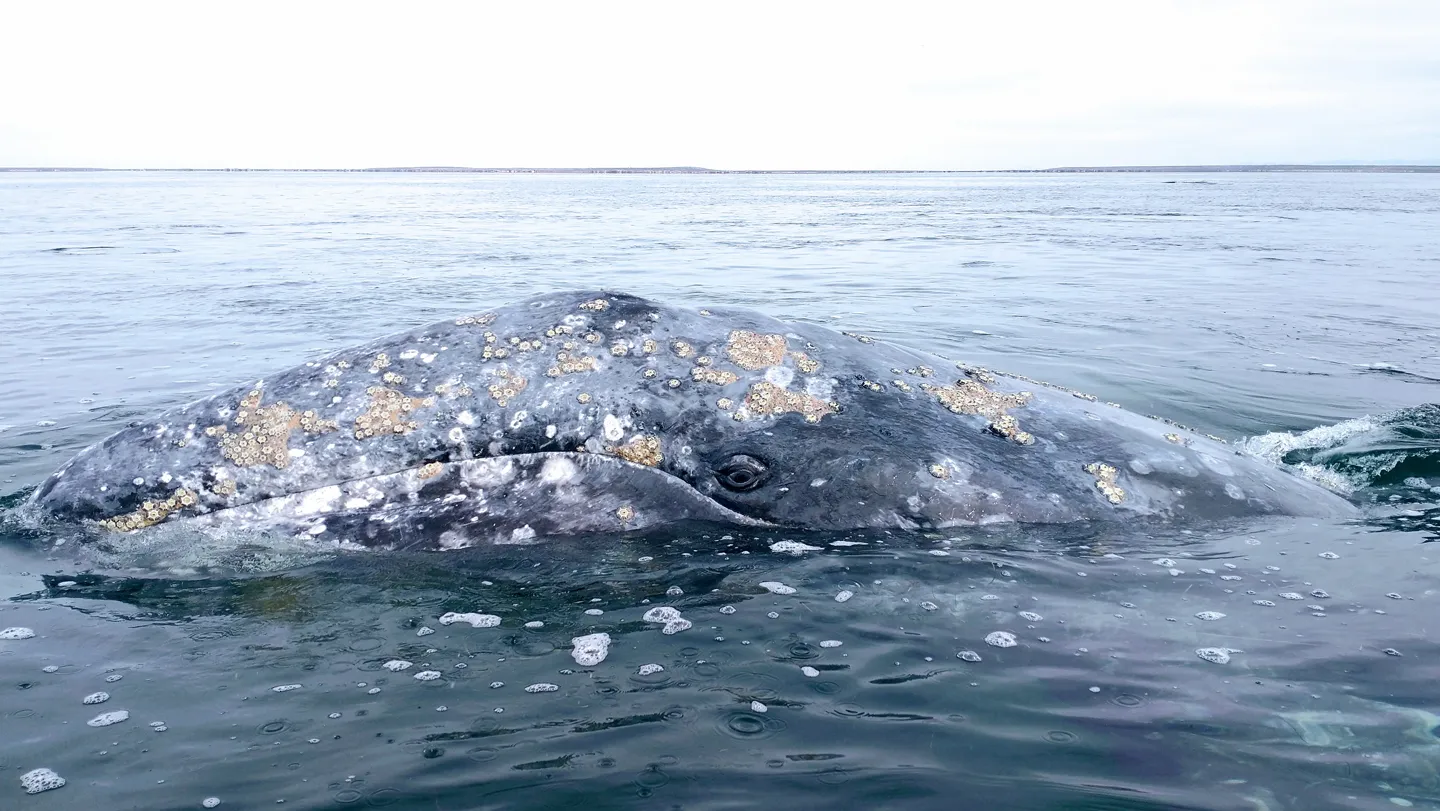
Nearly 1 in 5 Gray Whales Entering San Francisco Bay Die There, Study Finds
Researchers report that approximately 18 percent of photo-identified gray whales visiting San Francisco Bay from 2018 to 2025 died after entering the area. The deaths, often from vessel strikes, coincide with a population decline linked to reduced Arctic food availability. The fi…
 Stat
StatSpyre Therapeutics' SPY001 Drug Meets Primary Goal in Phase 2 Ulcerative Colitis Trial
Spyre Therapeutics announced positive results from the first batch of data in its Phase 2 SKYLINE study for SPY001, an experimental treatment for ulcerative colitis. The drug achieved a 9.2-point decrease in disease activity and induced remission in about 40% of participants afte…