Utah Officials Seek $1 Billion Federal Funding to Restore Great Salt Lake Ahead of 2034 Olympics
The Great Salt Lake has declined due to water use and reduced precipitation from climate change. Utah officials and supporters are pursuing a plan to refill the lake with federal assistance. The effort aims to address environmental and economic concerns before the 2034 Winter Olympics in Utah.
 Usa Today
The Great Salt Lake in Utah has experienced declining water levels for decades, primarily due to water diversion for agriculture and reduced precipitation linked to climate change. In 2022, water levels reached their lowest point in recorded history, though they have increased slightly since then.
The lake serves as a habitat for migrating birds, supports a brine shrimp industry, and is a recreation site near Salt Lake City.
Utah officials and supporters of the 2034 Winter Olympics have proposed a plan to restore the lake. President Donald Trump announced $1 billion in federal funding to acquire water and address environmental issues. The plan focuses on voluntary measures to reduce water use while maintaining agricultural activities.
Factors Contributing to Decline Agricultural water use accounts for about 80% of the lake's decline, with the remainder due to climate change and drought, according to Ben Abbott, a professor of ecology at Brigham Young University and executive director of the nonprofit Grow the Flow.
Farmers divert water from snowmelt and rain to irrigate crops such as alfalfa for cattle. Population growth in Utah, which increased by 1% from 2024 to 2025 according to the Census Bureau, has also increased water demand, including for residential lawns.
Climate change has altered weather patterns in the western United States, leading to higher temperatures, increased evaporation, and lower snowpack.
This year's low snowfall is expected to affect water availability for the lake. Experts note that these trends pose challenges to restoration efforts.
Restoration Plan Details Restoring the lake may require up to 260 billion gallons of water, equivalent to the amount used by New York City residents and businesses over nine months.
The total cost could reach $5 billion. The plan emphasizes voluntary participation from farmers to ensure economic viability.
“I am fully convinced we're going to fix this. This is a fixable problem.”
Josh Romney, a Utah businessman, stated that discussions with farmers must consider their livelihoods. The initiative seeks to provide options for continued farming with reduced water consumption. Success of the plan could influence the lake's condition by the 2034 Olympics.
The lake's ecosystem supports industries and wildlife, and its decline affects local economies in Utah, Idaho, and Wyoming. Restoration efforts involve coordination among officials, businesses, and nonprofits. Monitoring water levels and weather patterns will be necessary to assess progress.
Story Timeline
4 events- 2026 (current year)
Low snowfall affects Great Salt Lake restoration efforts ahead of 2034 Olympics.
1 sourceUsa Today - 2024-2025
Utah population grows by 1%, increasing water demand.
1 sourceUsa Today - 2022
Great Salt Lake water levels reach lowest point in recorded history.
1 sourceUsa Today - Recent decades
Lake shrinks due to agricultural water diversion and climate change.
1 sourceUsa Today
Potential Impact
- 01
Federal funding may enable voluntary water reductions in agriculture.
- 02
Low snowfall could delay lake refilling efforts before 2034 Olympics.
- 03
Restoration success could preserve brine shrimp industry and wildlife habitat.
- 04
Plan implementation could affect economies in Utah, Idaho, and Wyoming.
- 05
Population growth may continue to strain regional water resources.
Transparency Panel
Related Stories
 NASA Johnson Space Center / Wikimedia (Public domain)
NASA's Artemis II Completes First Manned Moon Mission Since 1972, Sets Distance Record
NASA's Artemis II mission completed a flight around the moon and splashed down in the Pacific Ocean on Saturday. The mission marks the first manned moon mission since 1972 and set a record for the furthest humans have travelled into space at 252,756 miles (406,771km). Meanwhile,…
 Science News
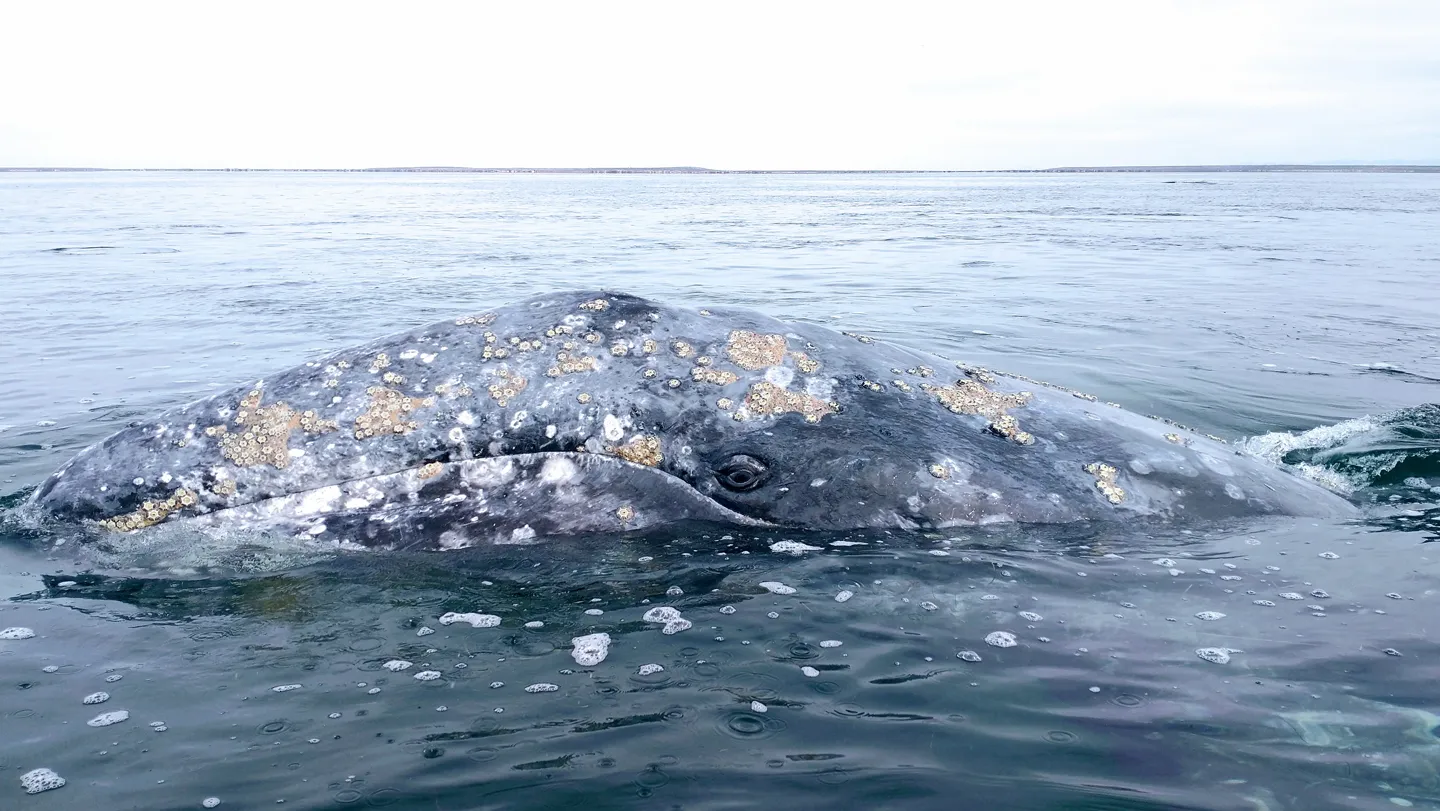
Nearly 1 in 5 Gray Whales Entering San Francisco Bay Die There, Study Finds
Researchers report that approximately 18 percent of photo-identified gray whales visiting San Francisco Bay from 2018 to 2025 died after entering the area. The deaths, often from vessel strikes, coincide with a population decline linked to reduced Arctic food availability. The fi…
 Stat
StatSpyre Therapeutics' SPY001 Drug Meets Primary Goal in Phase 2 Ulcerative Colitis Trial
Spyre Therapeutics announced positive results from the first batch of data in its Phase 2 SKYLINE study for SPY001, an experimental treatment for ulcerative colitis. The drug achieved a 9.2-point decrease in disease activity and induced remission in about 40% of participants afte…