science
AI recovers 1.5-metre text from damaged Herculaneum scroll core using 3D scans
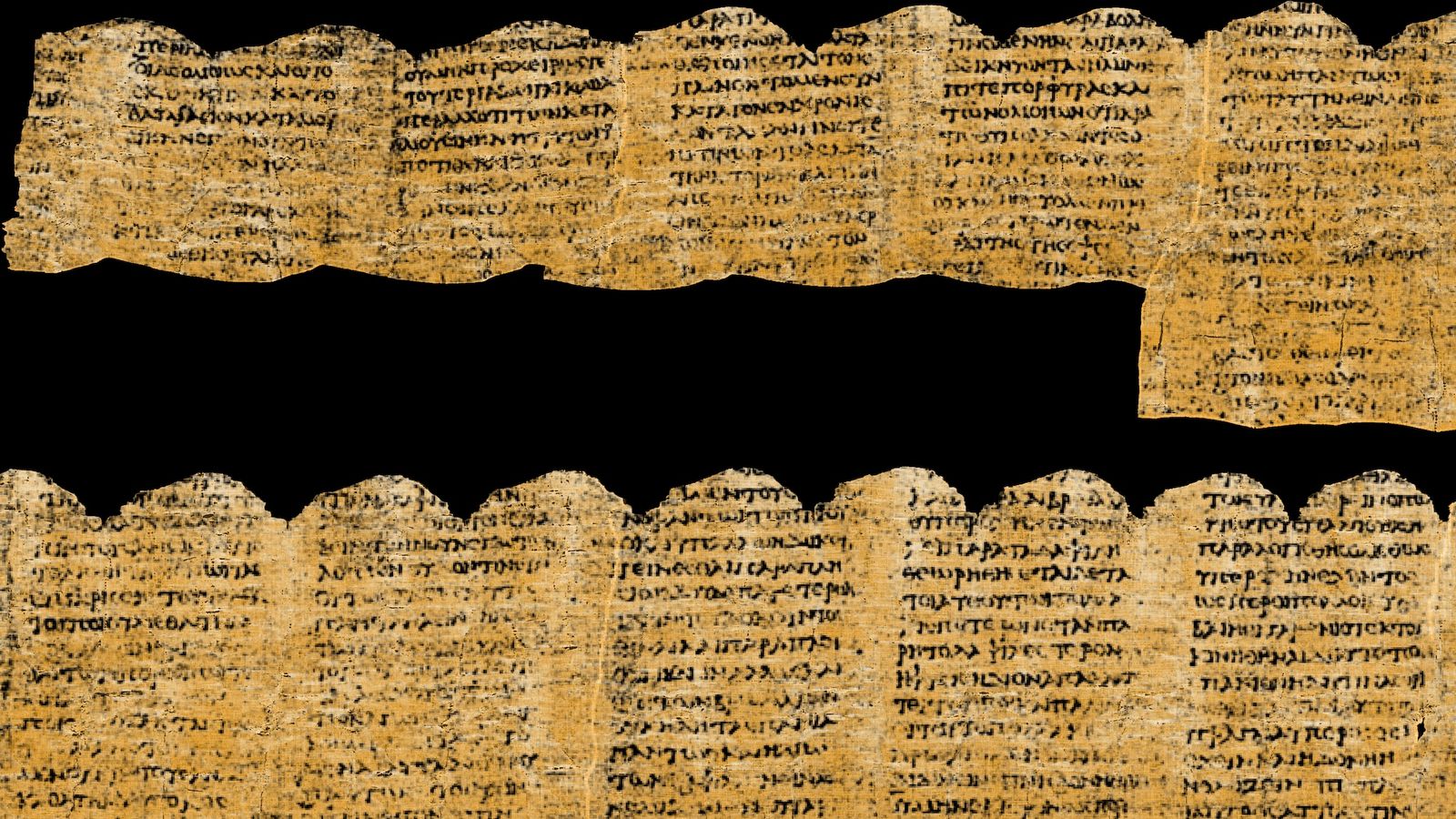
Researchers extracted 1.5 metres of continuous text from a 2-centimetre scroll core using high-resolution scans and AI. The work comes from the library buried by the AD 79 Vesuvius eruption and discovered in 1752.
 news.sky.com
Audio version
Tap play to generate a narrated version.
Developing·Limited corroboration so far. This page will refresh as more sources emerge.
Researchers have extracted the surviving text from a damaged carbonised scroll core from the Herculaneum library using 3D scans and AI, without further physical unrolling. The text runs 1.5 metres across 22 columns and was recovered from a 2-centimetre-wide core whose outer layers had been stripped by earlier scholars.
The Vesuvius Challenge project began scanning dozens of scrolls with particle accelerators in 2023.
The new extraction used 3D scans at 2-micrometre resolution and AI software trained on the data. Federica Nicolardi at the University of Naples Federico II said earlier physical attempts left only a couple of readable letters. The recovered text discusses ethics, art and human nature and contains multiple references to Stoic doctrine.
Its script matches examples from the 2nd century BC. Nicolardi said the mention of the nephew of the Greek Stoic philosopher Chrysippus makes Chrysippus the most natural candidate for authorship. A second scroll scanned in the same project has been identified as On Gods, Book 8 by the philosopher Philodemus.
The identification extends Philodemus’s previously known work On Gods, Book 1 to at least an eight-book series. The Herculaneum library was sponsored by Lucius Calpurnius Piso Caesoninus, Julius Caesar’s father-in-law. Brent Seales, a Vesuvius Challenge co-founder at the University of Kentucky, said the higher resolution and larger training data sets now allow longer sections of previously unreadable scrolls to be recovered.
He noted that the AI models are still adapted to individual scrolls because of differences in inks. Seales said the goal is to reach a point where the models can detect ink on any scroll in the collection. Classicist Thomas Coward at the University of Bristol said access to source texts rather than later quotes and summaries is important for understanding lost works.