science
Global Map Shows Underground Fungal Networks Span 110 Quadrillion Kilometers and Hold 300 Megatons of Carbon
Researchers compiled 322 prior studies and 16,000 soil samples to produce the first global map of arbuscular mycorrhizal fungal networks. The networks total 110 quadrillion kilometers in length and store 300 megatons of carbon. Agricultural conversion of grasslands threatens their density and carbon-storage capacity.
 theconversation.com
Audio version
Tap play to generate a narrated version.
Developing·Limited corroboration so far. This page will refresh as more sources emerge.
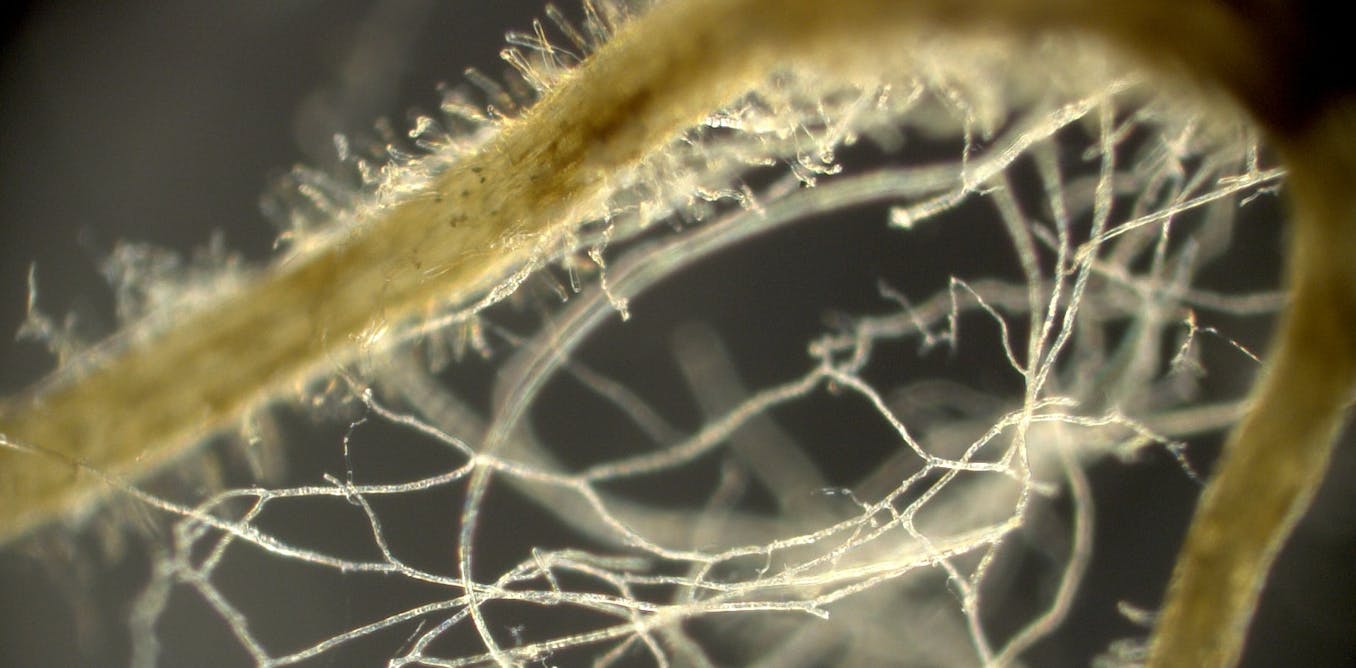
Researchers have produced the first global map of arbuscular mycorrhizal fungal networks that link plant roots across terrestrial ecosystems. The map draws on data from 322 earlier studies and 16,000 soil samples collected worldwide. The underground networks extend an estimated 110 quadrillion kilometers and contain roughly 300 megatons of carbon in biomass, equivalent to four to six times the mass of all living humans.
Wired reported that the networks move the equivalent of 4 billion metric tons of carbon dioxide into soil each year, or about 11 percent of annual human-caused emissions. A single teaspoon of soil can hold up to 10 meters of fungal filaments. Approximately 70 percent of plant species rely on these partnerships to obtain water and nutrients in exchange for carbon from photosynthesis.
The study found that fungal density in agricultural soils is about half the level recorded in natural ecosystems. Grasslands, which hold an estimated 40 percent of global arbuscular mycorrhizal biomass, are being converted to farmland at four times the rate of forests.
“With the advent of new technologies in high-resolution imaging, machine learning, and robotics, we are beginning to reveal what has long remained hidden beneath our feet,” said coauthor Corentin Bisot.
Lead author Justin Stewart of the Society for the Protection of Underground Networks added that the scale of the networks is difficult to overstate. Coauthor Merlin Sheldrake noted that the infrastructure of these living transport systems has remained poorly quantified until now.