Appeals Court Allows Pentagon to Require Escorts for Journalists Pending Appeal
A federal appeals court stayed a district court order, permitting the Pentagon to enforce a policy requiring journalists to be escorted inside the building while it appeals an earlier ruling. The decision came in a case brought by The New York Times challenging restrictions on press access.
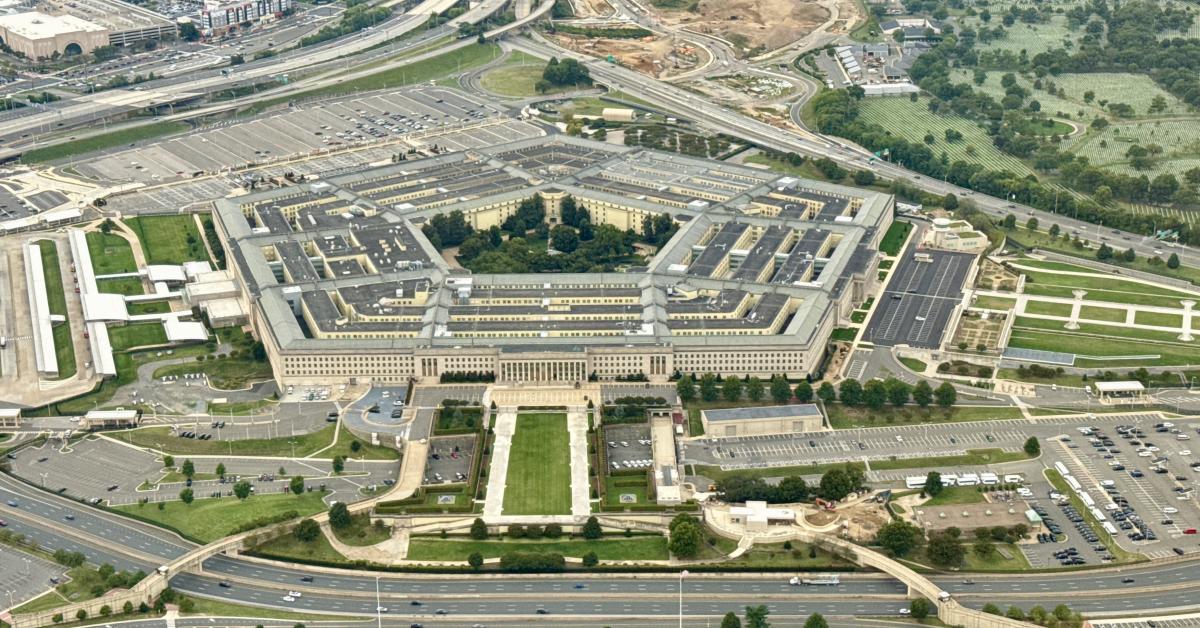
Indy beetle / Wikimedia (CC0)A federal appeals court has allowed the Pentagon to temporarily require journalists to be escorted while inside the building, staying a district court order that had blocked such restrictions. The U.S. Court of Appeals for the District of Columbia Circuit issued the stay in a 2-1 decision, concluding that the Pentagon had demonstrated the policy served national security interests.
The ruling permits the escort requirement to remain in effect during the appeal process.
The case stems from a Pentagon policy announced last fall that restricted access for holders of Pentagon Facility Alternate Credentials, used by journalists to enter the building. The New York Times and reporter Julian E. Barnes sued, claiming the rules violated the First and Fifth Amendments and were arbitrary under administrative law.
A district court granted summary judgment to the plaintiffs in March, finding parts of the policy unconstitutionally vague and designed to limit access for disfavored journalists. The court ordered the reinstatement of access levels as they existed before the policy changes.
The Pentagon responded by issuing a new interim policy the next business day, which included the escort requirement and limited entry to specific purposes such as press briefings and interviews. It also closed the Correspondents' Corridor workspace and planned a new one in an annex.
The district court later ruled that the new policy violated its order and compelled compliance, requiring unescorted access. The Pentagon sought a stay, which the district court denied but granted a brief administrative stay. In the appeals court, Judges Justin Walker and Bradley Garcia formed the majority, finding the Pentagon likely to succeed on merits because the escort rule was a new provision not addressed in the prior judgment.
They noted the department's declaration that unescorted access had led to journalists obtaining sensitive information monthly.
“Unescorted access to the Pentagon was, according to the Department, 'a significant contributing factor' to that pattern because it enabled reporters to 'observe activity patterns' and identify potential sources of sensitive information." — Majority opinion, April 27, 2026 (reason.com). The majority balanced national security risks against burdens on newsgathering, determining neither side's interests strongly predominated but the merits favored the Pentagon. Judge Michelle Childs dissented, arguing the new policy circumvented the district court's injunction by restoring credentials without meaningful access. She emphasized the district court's authority to interpret its own order and found the escort rule preserved the same restrictions the injunction aimed to prevent.”
“The Department responded by restoring the credentials but stripping away much of what made them matter: regular, unescorted access to the Pentagon and the press workspace inside it.”
Under the interim policy, journalists with credentials must be escorted at all times and can enter only for approved activities. The Pentagon stated no advance requests for escorts are needed and none would be denied. The dispute highlights tensions between security needs and press freedoms, with historical unescorted access dating back decades, including after the September 11, 2001 attacks.
The case continues as the Pentagon appeals the underlying district court decision. Defense Secretary Pete Hegseth has been involved in the ongoing battle, as noted in coverage of the policy changes.
Key Facts
Story Timeline
4 events- Apr 27, 2026
D.C. Circuit Court issued a 2-1 stay allowing Pentagon to require journalist escorts pending appeal.
5 sourcesreason.com · The New York Times · The Washington Post - Mar 20, 2026
District court granted summary judgment to plaintiffs, invalidating parts of Pentagon's press policy as unconstitutional.
2 sourcesreason.com · The Washington Post - Mar 23, 2026
Pentagon announced interim policy with escort requirements and workspace closure.
1 sourcereason.com - Fall 2025
Pentagon announced original policy restricting journalist access credentials.
1 sourcereason.com
Potential Impact
- 01
Pentagon journalists will need escorts, potentially delaying newsgathering activities.
- 02
The case will proceed to full appeal, possibly leading to further policy changes.
- 03
Public access to military information might face temporary restrictions.
- 04
Press organizations may file additional challenges to the interim policy.
- 05
National security protocols for media access could be revised based on the outcome.
Transparency Panel
Related Stories
Trump Signs Memorandum to Revive Presidential Physical Fitness Award at White House Event
President Donald Trump signed a memorandum on May 5, 2026, restoring the Presidential Physical Fitness Award and reintroducing a competitive fitness test in U.S. schools. The event featured student athletes on the White House South Lawn, where Trump demonstrated his signature dan…
Spirit Airlines Cancels All Flights and Begins Wind-Down After Failed $500M Bailout Talks
Spirit Airlines announced the immediate wind-down of its operations on Saturday, canceling all flights and stranding passengers and workers. The decision followed the collapse of discussions with the Trump administration for a $500 million bailout. Other U.S. airlines offered res…
Democrats in Congress Urge Trump Administration to Acknowledge Israel's Nuclear Program
A group of Democrats in Congress sent a letter to the U.S. Secretary of State urging public acknowledgment of Israel's nuclear weapons program. The lawmakers cited risks of escalation amid the war in Iran and argued that U.S. silence on the issue affects credibility on global nuc…