Unbiased AI-powered news
Archaeological work in the West Bank uncovers ancient sites along historical routes, amid ongoing debates over ownership and preservation. Israeli officials and archaeologists emphasize protecting artifacts, while Palestinian residents and critics point to impacts on local communities and land access.
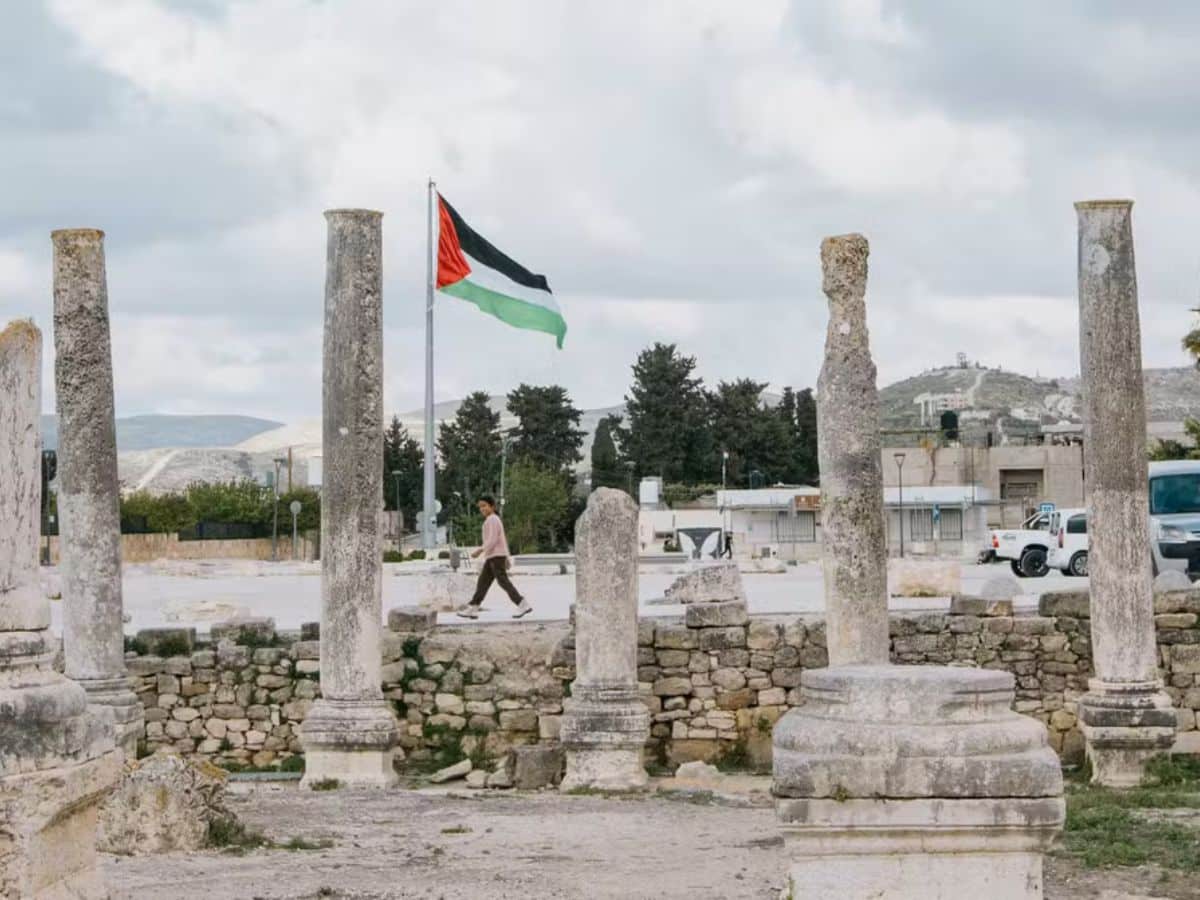
thecanary.coThe West Bank, home to at least 5,000 archaeological sites, features excavations that reveal layers of history from ancient Judea to later empires. One site at Tala'at Ad-Dam in the Judean Desert lies along an ancient pilgrimage route to Jerusalem, reportedly used by Jesus' parents.
The area, historically known as Judea after the people who became known as Jews, has been conquered by various empires over centuries. The United Nations designates the West Bank as occupied Palestinian territory, while some refer to it by its ancient or Biblical names, Judea and Samaria.
Eyal Freiman, deputy staff officer for archaeology in Israel's Civil Administration of Judea and Samaria, oversees excavations in the region. He stated, "I don't act by political views. " When asked if his role as an Israeli working in the area is inherently political, Freiman replied, "I'm just an employee of a civil administration.
" These efforts occur amid broader tensions over land rights and historical narratives.
Talya Ezrahi, from the left-wing Israeli archaeology group Emek Shaveh, discussed how excavations relate to contemporary claims. She said, "Archaeology has become a way of proving that we were here. " Ezrahi added that such work has been used to restrict Palestinian access to certain lands and support settlement expansion on areas previously inhabited by Palestinians.
The stakes involve balancing heritage preservation with the rights of current residents, affecting communities through land use and development restrictions.
At Nebi Samuel, believed to be the burial site of the prophet Samuel from about 1,000 years before Christ, a Palestinian village was dismantled in the past to develop the area into a tourist site. Eid Barakat was displaced when his house was demolished and has lived in temporary housing since 1971, citing difficulties in obtaining a building permit.

Israel has allocated nearly $100 million to develop archaeological and tourism sites in the West Bank. Ezrahi noted of the site, "First of all, it is a beautiful site. " This illustrates conflicts between excavation priorities and the documentation of recent local history.
In the West Bank town of Sebastia, once the capital of the Kingdom of Israel, Israeli archaeologist Adi Shragai works with the group Preserving the Eternal to protect sites. She stated, "So many parts of history were completely erased just because someone decided to come and build on top of it," and emphasized that proper excavations have not occurred there for 100 years.
Shragai's team identifies sites needing preservation, including a theater over 2,000 years old, but access requires navigating high tensions, such as driving off-road around the Palestinian town. When asked if Israeli-led excavations constitute a land grab, she replied, "My main mission is to have these sites safe, protected and preserved.
If it were to be done by the Palestinian Authority, fine.
Zaid Azhari, a Palestinian resident of Sebastia whose family has lived there for at least 20 generations, provides tours of sites like the theater for a living. He reported that he is not permitted near the sites during Israeli excavations. " These restrictions affect local employment and participation in heritage management, raising questions about equitable access.
Looking ahead, ongoing excavations could influence tourism development and international relations, with funding like Israel's $100 million allocation potentially expanding site accessibility. Preservation efforts by groups like Emek Shaveh and Preserving the Eternal aim to address destruction risks, but coordination between Israeli and Palestinian authorities remains limited.
Affected parties include displaced residents, archaeologists, and tourists, with future outcomes depending on negotiations over land and heritage rights.
Single source — no framing comparison available.
ABC NewsThe Secret Service recommended President Trump depart Turkey aboard an older presidential plane rather than the newer aircraft gifted by Qatar. Officials cited precautionary security concerns tied to the ongoing war with Iran. The White House maintained the newer plane meets requ…
ABC NewsPresident Trump left Turkey in an older Air Force One aircraft after the Secret Service advised against using the newer Qatari-donated jet. The switch raises questions about the security capabilities of the new plane that entered service on July 3.
ForbesWorkers hung large tarps over the North Portico on Thursday to conceal scaffolding while crews repair stone columns. The project is one of several construction efforts underway at the White House and across Washington.