finance
Artemis II Astronaut Captures Earth Image Revealing Atmospheric and Astronomical Features
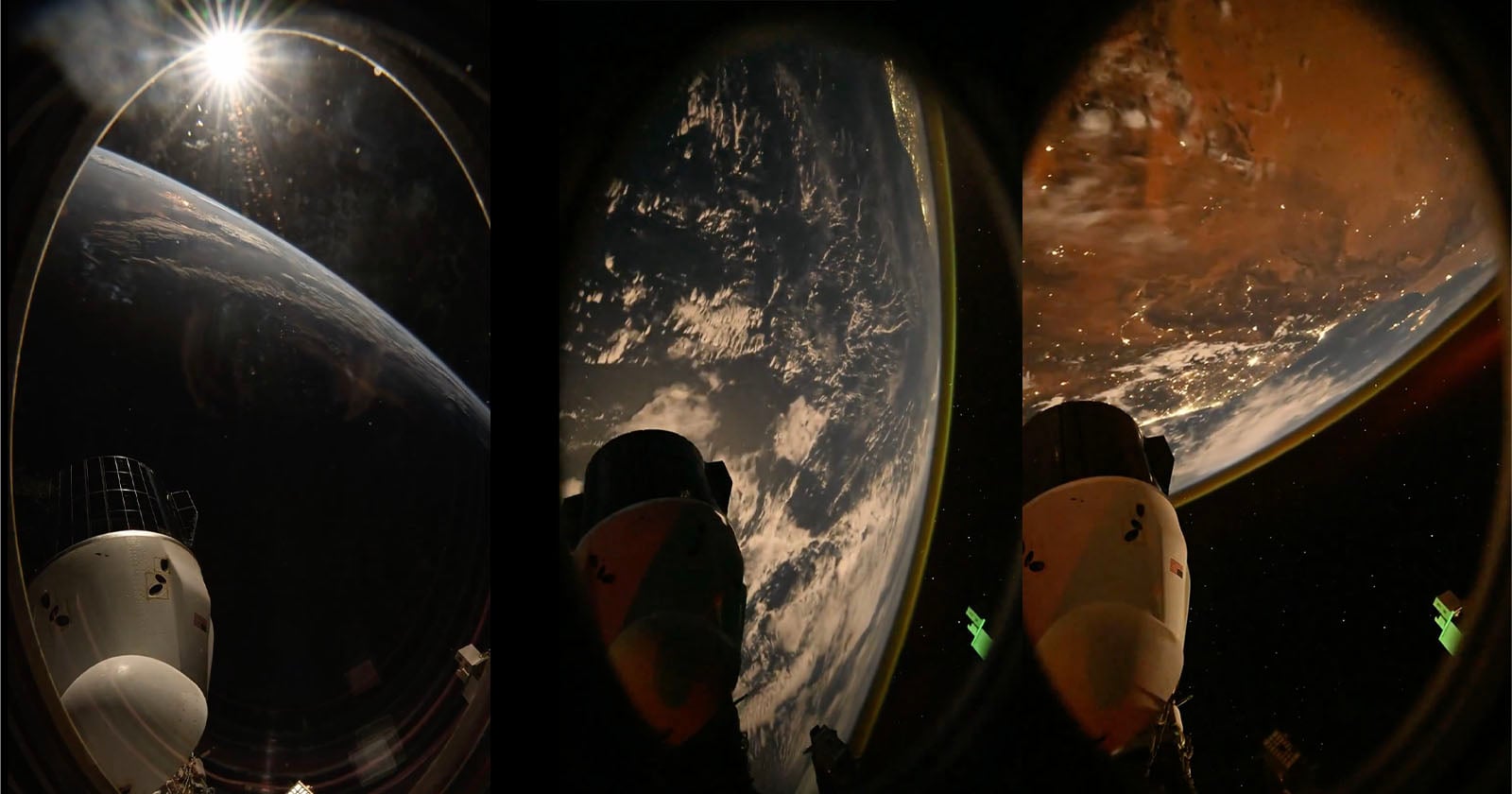
Astronaut Reid Wiseman photographed Earth from the Orion spacecraft during the Artemis II mission en route to the Moon. The image shows auroras, the thin atmosphere, zodiacal light, moonlight illumination, water coverage, and Venus. These features highlight Earth's environmental and space weather characteristics.
 petapixel.com
Audio version
Tap play to generate a narrated version.
The Artemis II mission, launched on September 16, 2024, involves NASA astronauts Reid Wiseman, Victor Glover, Christina Koch, and Canadian Space Agency astronaut Jeremy Hansen orbiting the Moon. The crew departed Earth aboard the Orion spacecraft and is conducting tests to prepare for future lunar landings under NASA's Artemis program.
By the time of the mission's progress, the spacecraft had traveled farther from Earth toward the Moon, allowing for observations of previously unseen lunar regions. During this journey, Wiseman captured an image of Earth from space, which illustrates several scientific phenomena.
The photograph depicts faint auroras near both poles. A greenish feature near the North Pole represents the aurora borealis, or northern lights, visible as a subtle layer around the planet. Near the South Pole, the aurora australis appears similarly.
NASA's website describes auroras as displays resulting from interactions between solar particles and Earth's magnetic field, part of space weather dynamics.
Earth's atmosphere appears as a thin layer in the image relative to the planet's size. NASA states that Earth has a diameter of about 8,000 miles, while the atmosphere extends roughly 60 miles from the surface. If scaled to a basketball, the atmosphere would equate to a thin sheet of plastic wrapped around it.
This layer, held by gravity, influences weather patterns, with visible clouds and weather systems in the photo.
Zodiacal light is evident as a faint haze in the lower right of the image. NASA defines zodiacal light as a pyramid-shaped glow of scattered sunlight from interplanetary dust, often visible near the spring or autumn equinox. From space, it appears as diffuse light rather than the cone shape seen from Earth's surface. This phenomenon underscores the presence of dust in the solar system.