Austrian President van der Bellen Comments on Middle East Situation and Calls for Negotiations
Austrian President Alexander van der Bellen issued statements on X regarding the Middle East conflict. He expressed hope for serious negotiations following a realization that war rhetoric and escalation cannot resolve disputes. Van der Bellen also condemned military strikes on civilian infrastructure and described recent threats as alarming.
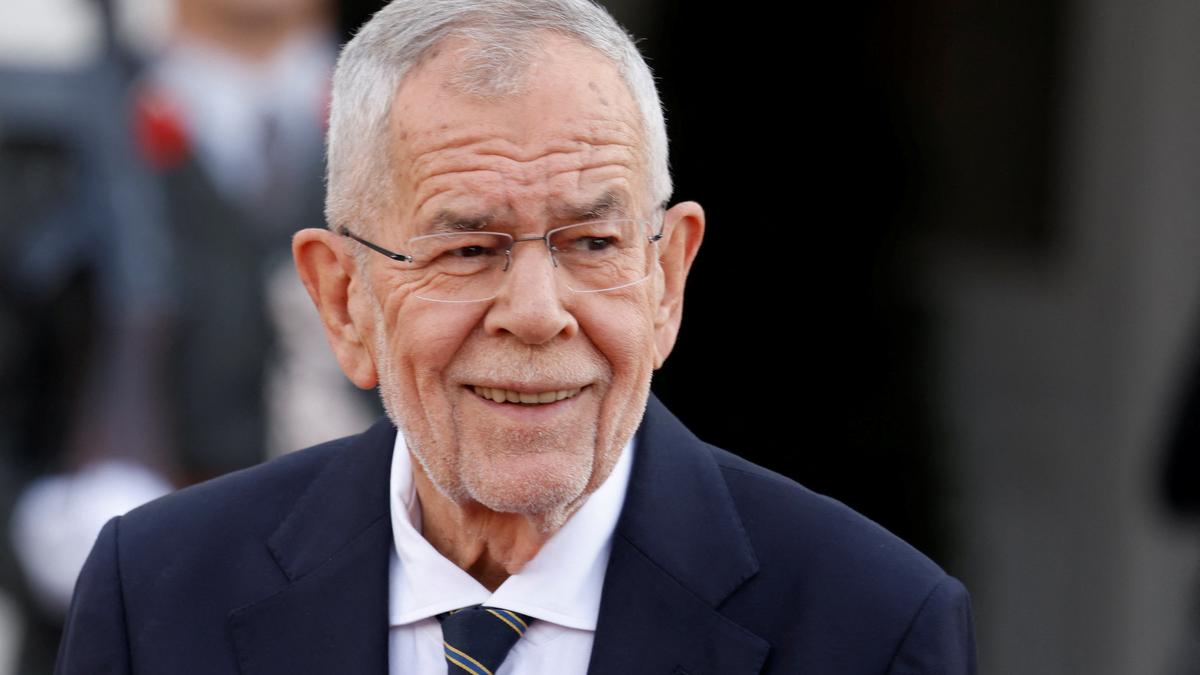 thehindu.com
Austrian President Alexander van der Bellen made several statements on X about the ongoing situation in the Middle East. He highlighted the need for diplomatic efforts amid recent escalations. The comments address war rhetoric, military actions, and the potential for negotiations.
Van der Bellen stated that military strikes on civilian infrastructure with no direct military use violate international law. He described threats made in recent days as alarming. These remarks underscore Austria's position on adherence to global norms during conflicts.
der Bellen noted a positive development in the recognition that war rhetoric and escalation cannot resolve conflicts.
This realization, he said, is good for the region. The president emphasized the importance of moving toward dialogue rather than further tension. " — Alexander van der Bellen, X (via FirstSquawk) The statements were posted on X, formerly known as Twitter, and reported by FirstSquawk.
They reflect Austria's neutral stance on international affairs.
The comments come amid heightened tensions in the Middle East, though specific events prompting them were not detailed in the sources.
Van der Bellen's remarks align with Austria's tradition of promoting peace and international law. No further actions by Austrian officials were mentioned. The president's statements urge all parties to prioritize negotiations.
They also reinforce prohibitions under international humanitarian law against targeting civilian sites.
Key Facts
Story Timeline
4 events- Recent days
Threats were made in the Middle East, described as alarming by Austrian President van der Bellen.
1 sourceFirstSquawk - Today
Van der Bellen posted on X hoping for serious negotiations in the Middle East.
1 sourceFirstSquawk - Today
Van der Bellen stated on X that strikes on civilian infrastructure violate international law.
1 sourceFirstSquawk - Today
Van der Bellen commented on X that realization against war rhetoric is positive for resolving conflicts.
1 sourceFirstSquawk
Potential Impact
- 01
Global attention increases on de-escalation efforts in the region.
- 02
Parties in Middle East conflict initiate serious negotiations following international calls.
- 03
Austria advocates for stronger enforcement of international law on civilian protections.
- 04
Neutral countries like Austria issue further statements on conflict resolution.
Transparency Panel
Related Stories
 yna.co.kr
U.S. Halts Naval Escorts in Strait of Hormuz as Iran Enforces New Transit Rules
President Trump announced Tuesday that the United States would pause its days-old naval operation escorting ships through the Strait of Hormuz. The decision followed claims of great progress on a potential agreement and requests from Pakistan and other countries. Oil prices fell…
 Jashuah / Wikimedia (CC BY-SA 3.0)
Oil Prices Drop After Reports of U.S.-Iran Talks on Ending War and Reopening Strait of Hormuz
Oil prices dropped significantly following reports that the U.S. and Iran are close to a memorandum of understanding to halt fighting and begin nuclear talks. President Trump announced a pause in the U.S. naval escort operation in the Strait of Hormuz. Iran is expected to respond…
 The Japan Times
Iran's Revolutionary Guard Navy Announces New Procedures for Strait of Hormuz and Halts Ship Assistance
Iran's Revolutionary Guard navy stated on May 6 that safe passage through the Strait of Hormuz will resume once U.S. threats end and new procedures take effect. The announcement follows the U.S. pause of escort operations and coincides with Iran's launch of a new regulatory autho…