Chicxulub Impact Crater Hosted Hydrothermal System for Eight Million Years, Four Times Longer Than Previously Estimated
A University of Glasgow-led study found that the 66-million-year-old impact created the longest-lived hydrothermal system yet documented, with conditions suitable for microbial life.
 indiatoday.intoday.in
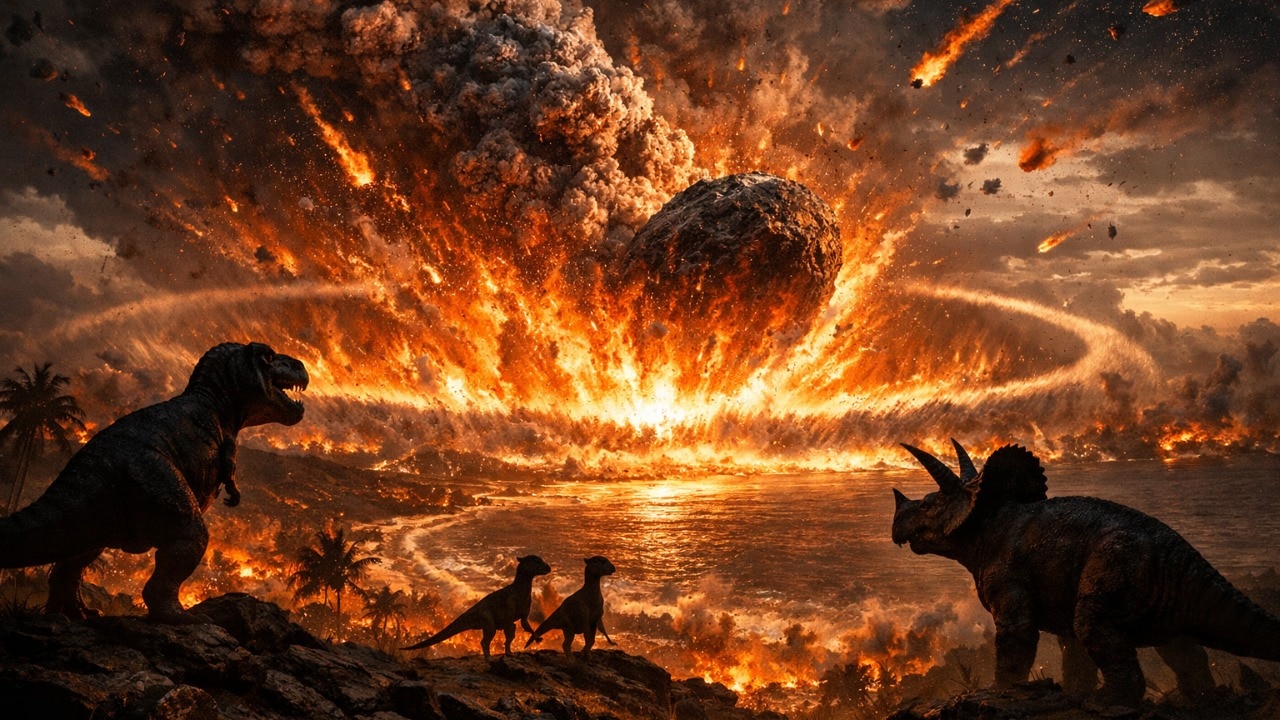
A hydrothermal system created by the Chicxulub impact in Mexico persisted for eight million years, according to a study published in Communications Earth & Environment. The system formed when the 10 km-wide asteroid struck 66 million years ago, melting rocks that mixed with seawater from the Gulf of Mexico and producing porous material filled with heated water pockets.
Researchers analyzed samples drilled from the crater in 2016.
Dr Annemarie Pickersgill of the Scottish Universities Environmental Research Centre applied argon-argon dating and found mineral ages ranging from 66 million years ago to approximately 58 million years ago. The crater itself measures nearly 200 km across. The impact wiped out around three-quarters of Earth’s plant and animal species, including all non-avian dinosaurs.
Earlier computer models from the early 2000s had estimated the hydrothermal activity lasted about two million years. The new data show the system endured four times longer, making it the longest-lived impact-generated hydrothermal system documented to date.
Computer modelling indicated that high rock permeability, sustained heat from the impact, and background geothermal conditions allowed the system to continue.
She added that previous findings were based on computer models regarded as conservative estimates at the time. The team included researchers from universities in Scotland, England, Germany, the United States and Canada. Dr Pickersgill noted that planets such as Mars lack a thick atmosphere and have experienced repeated impacts.
She said the porous, fractured rocks created by such events form microenvironments that can shield microorganisms from radiation and extreme temperatures.