technology
China Advances Humanoid Robotics Development as National Priority
A Beijing-based company demonstrated a bionic face prototype with artificial skin and hair to NBC News. Chinese firms showed improved robot performance in a marathon and a state television gala compared with the previous year. Unitree Robotics unveiled a nearly 9-foot-tall humanoid robot capable of carrying a human inside.
May 15, 11:20 AM·2m read1 source
 Nbc News
Audio version
Tap play to generate a narrated version.
Developing·Limited corroboration so far. This page will refresh as more sources emerge.
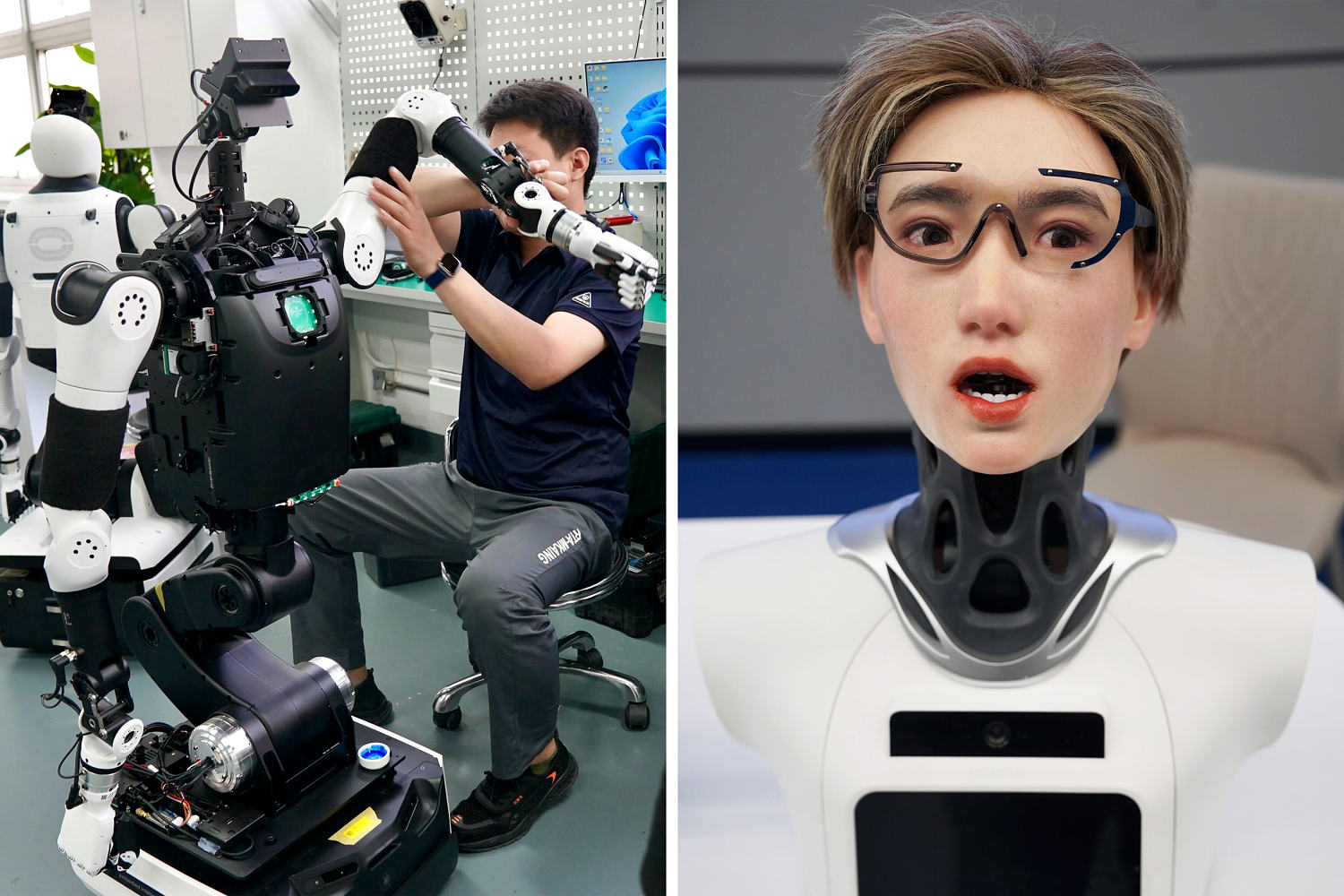
A Beijing robotics company gave NBC News a tour of its facility on Thursday and demonstrated a bionic face prototype equipped with hair and artificial skin. The company is working to make robots appear more human-like to expand the range of tasks they can perform.
"If the robots look more like humans, they can do a lot of stuff that humans can do," said Nikita Gao, who handles the overseas market for the company. Beijing has identified the robotics industry as a national priority. Officials see potential for humanoid robots to assist with care for the country's aging population.
Last year only six robots completed a marathon in Beijing. This year more than 100 robots participated and the winner finished the 13-mile course in just over 50 minutes, surpassing the current human world record for a half-marathon by seven minutes.
A Lunar New Year gala broadcast on state television this year featured robots performing somersaults and coordinated martial arts movements, an advance over the previous year's demonstration.
Tuesday, Unitree Robotics unveiled a nearly 9-foot-tall humanoid robot equipped with a cockpit that can carry a human. The machine, priced at $650,000, is the first of its kind, according to the company. A video posted by Unitree Robotics showed its chief executive, XingXing Wang, standing beside the robot.
The GD01 normally walks on two legs but can transform into a quadruped. It weighs more than 1,100 pounds with a person inside.
Significant work is still required before humanoid robots can operate with full autonomy. Joanna Stern, NBC News’ chief technology analyst, said the industry must improve the software and artificial intelligence that control robot behavior in homes and industrial settings.